



Eli Lilly and Company (LLY)








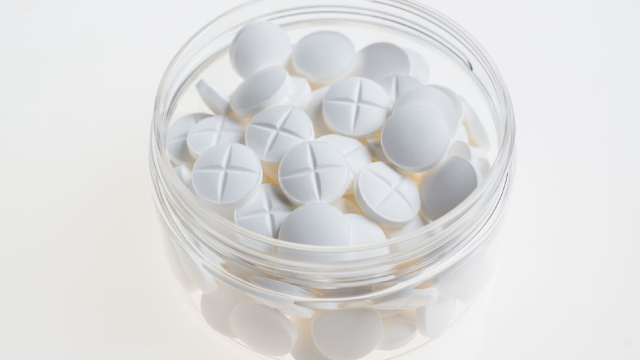
Eli Lilly's Zepbound causes greater weight loss than Novo Nordisk's Wegovy in head-to-head trial
Eli Lilly said its obesity drug Zepbound led to more weight loss than its main rival, Novo Nordisk's Wegovy, in the first head-to-head clinical trial on the two weekly injections. The findings suggest Zepbound may be a superior treatment for weight loss, helping patients with obesity or who are overweight lose 20.2% of their body weight on average after 72 weeks.
Why Is Lilly (LLY) Down 5% Since Last Earnings Report?
Lilly (LLY) reported earnings 30 days ago. What's next for the stock?
Eli Lilly and Company (LLY) Is a Trending Stock: Facts to Know Before Betting on It
Zacks.com users have recently been watching Lilly (LLY) quite a bit. Thus, it is worth knowing the facts that could determine the stock's prospects.

Eli Lilly: An Early Christmas Present Has Just Arrived (Rating Upgrade)
Eli Lilly investors have suffered an unexpected bear market as recent headwinds buffeted the stock. Notwithstanding near-term execution challenges, Lilly's weight loss drugs are gaining more share. Potential policy changes under the Biden administration could benefit Lilly, but they are unlikely to be resolved before Trump takes office.

Down More Than 20% From Its High, Is Now the Time to Buy Eli Lilly Stock?
Eli Lilly (LLY -0.14%) is the most valuable healthcare stock in the world, with a market capitalization of nearly $700 billion. But in recent weeks, its share price has been falling.
Eli Lilly (LLY) Stock Price Prediction and Forecast 2025-2030
Since the start of 2020, Eli Lilly’s (NYSE: LLY) stock price chart has been straight up and to the right, up 496.79% and currently trading at $789.02. The company has been around since 1876 and the stock didn’t go public until 1952 but in the last 4 years, Eli Lilly went from a $100 billion market capitalization to $740 billion today, which also makes it a potential stock split stock. However, as investors, we care about the stock price years down the line and what Eli Lilly will do in the next 3 to 5 years and beyond. That is why 24/7 Wall Street looks at projected revenue and net income to give you our best estimate of future stock prices from 2025 to 2030. Other “experts” look at past growth rates and assign future stock prices to those past numbers. However, we will walk you through our assumptions and give you the key drivers we see propelling Eli Lilly’s stock in the future. Recent Eli Lilly Stock Updates and News 11/27/2024 Eli Lilly has been downgraded by Ersete Gropu from a “Buy” to a “Hold” rating. While Eli Lilly’s pipeline remains promising, the concern stems from a recent spike in the company’s inventory and receivables relative to sales. 11/26/2024 Eli Lilly’s stock is rising after a new proposal from President Joe Biden. The proposal suggests that Medicaid and Medicare should cover the cost of weight-loss drugs for patients, which could lead to increased demand for drugs like Mounjaro. 11/22/2024 The FDA is still evaluating the supply situation for Eli Lilly’s weight-loss drug, tirzepatide. They are reassessing their previous decision to remove it from the drug shortage list. Until the FDA makes a final decision, compounders of tirzepatide will not face regulatory action. 11/21/2024 Eli Lilly recently announced a new partnership with Laekna Therapeutics, a Hong Kong-based biotech firm. The partnership will work on advancing the development of LAE102, an antibody targeting the ActRIIA receptor, primarily aimed at treating obsesity. 11/20/2024 Eli Lilly and Verge Genomics have made great strides in their joint venture to combat amyotrophic lateral sclerosis (ALS). Leveraging Verge’s AI-powered CONVERGE platform, the partnership has successfully identified two promising drug targets for the debilitating neurodegenerative disease. 11/19/2024 The Canadian Drug Agency (CDA) has announced its final recommendation for Ebglyss. The CDA-AMC has determined that Ebglyss should not be covered by public drug plans (except in Quebec) for the treatment of moderate-to-severe atopic dermatitis in adults and adolescents aged 12 and older. Eli Lilly, however, is unhappy with this decision, with representatives asserting the company will continue to fight for both public and private reimbursement in Canada. 11/18/2024 Eli Lilly’s experimental drug, muvalaplin, has demonstrated potential in reducing a specific type of cholesterol. Data presented at the American Heart Association meeting in Chicago revealed that the highest dose of the drug led to a 70% reduction in lipoprotein(a) (or Lp(a)) levels measured by a traditional blood test. A more specific test developed by Eli Lilly further showed an even more impressive reduction of nearly 86%. 11/15/2024 Eli Lilly is taking legal action against the Department of Health and Human Services. The lawsuit seeks a court order that will let the company reduce the discounts they give to hospitals for their drugs. 11/14/2024 Eli Lilly’s weight-loss drug, tirzepatide, has shown promising results in preventing diabetes. After three years of weekly injections, nearly 99% of patients remained diabetes-free. This suggests that for every nine patients treated with tirzepatide, one new case of diabetes could be prevented. 11/12/2024 Eli Lilly’s CEO, Dave Ricks, has been named the recipient of the 2024 August M. Watanabe Life Sciences Champion of the Year Award by BioCrossroads. Under Ricks’ leadership, the company has invested billions of dollars in research and development to address critical health challenges, particularly in areas like oncology, obesity, immunology, and neurodegenerative diseases. Eli Lilly’s Recent Stock Success How did Eli Lilly’s stock price soar so much in the past few years? Let’s take a look at the numbers: Share Price Revenues* Net Income* 2016 $80.36 $21.22 $2.74 2017 $77.55 $19.94 ($0.21) 2018 $122.13 $21.49 $3.23 2019 $140.83 $22.32 $8.32 2020 $206.46 $24.54 $6.19 2021 $238.31 $28.32 $5.58 2022 329.07 $28.54 $6.25 2023 $745.91 $34.12 $5.24 *Revenue and Net Income in Billions Since 2016, Eli Lilly’s revenue grew by 60% but income grew by 91%. Typically you wouldn’t expect a company growing at its top line by 7% annually to see an 828% increase in share price, however, investor sentiment for the next line of drugs front ran the stock price. For example, in 2016 Eli Lilly was trading 13 times the trailing 12 months earnings and the market has increased its valuation each year and currently trades at a 125 times earnings multiple. This raises the valid question, is Eli Lilly overvalued or will future revenues make up for the expensive valuation? 3 Key Drivers of Eli Lilly Stock Innovated Drug Pipeline: The current drug pipeline is loaded with several very high-potential drugs in development. Mounjaro, Zepbound, and Jardiance in the cardiometabolic category, Taltz in immunology, and Verzenio in oncology are the future of Eli Lilly’s growth. While the aforementioned are the safer bets, the company has a handful of other drugs that could hold blockbuster potential. Strategic Acquisitions: The acquisition of Morphic, with its promising drug candidate MORF-057, is a testament to Lilly’s strategic vision. This drug, if successful in late-stage trials, could become a major success in the treatment of inflammatory bowel disease (IBD). Lilly’s focus on acquiring mid-sized companies (13 since 2020) with promising pipelines has bolstered its own research and development efforts, positioning it well for future growth. Operational Efficiency: With a sound balance sheet, Eli Lilly should continue to improve operational efficiency and manage costs to have net income growth rates above revenue growth. Eli Lilly (LLY) Stock Price Prediction in 2025 The current Wall Street consensus 1-year price target of Eli Lilly stock is $1030.00, which is 30.54% higher than today’s price of $789.02. Of the 26 analysts covering Eli Lilly stock, the current rating is 1.67 or “Outperform” with 1-year price targets as high as $1,100 and as low as $540.00. 24/7 Wall Street sets its 1-year price target at $1,040. Taking a look at the sum of its parts, we see Eli Lilly’s vertices valued as follows: Endocrinology $735/ share Oncology $122/ Share Cardiovascular $4/ Share Neuroscience $16/ Share Immunology $38/ Share Others and Pipeline $110/ Share Cash $17/ Share Eli Lilly’s Share Price Estimates 2025-2030 Valuing Eli Lilly’s stock price for the coming years, we will take a look at expected revenue and net income and give our best estimate of the market value of the company by assigning a price-to-earnings multiple. Revenue Net Income EPS 2025 $52.8 $17.29 19.11 2026 $62.5 $22.49 25.03 2027 $70.87 $27.12 30.39 2028 $80.68 $32.2 25.97 2029 $87.99 $36.45 40.58 2030 $96.67 $41.12 46.29 *Revenue and net income reported in billions How Eli Lilly’s Next 5 Years Could Play Out We expect Eli Lilly’s P/E ratio in 2025 to be 60 with an EPS of $19.11, resulting in a price target of $1140.00 This prediction is based on strong revenue growth of 18.37% to $52.80 billion and net income expansion to $17.29 billion, continuing the upward trajectory from previous years. For 2026, we anticipate a P/E ratio of 50 with an EPS of $25.03, leading to a price target of $1250.00. This reflects significant revenue growth of 18.37% to $62.50 billion and an increase in net income to $22.49 billion, driving higher earnings per share. Heading into 2027, we project the P/E ratio to remain at 50, with EPS increasing to $30.39. This results in a price target of $1520.00. Continued revenue growth of 13.39% to $70.87 billion and net income expansion to $27.12 billion justifies this substantial increase in stock price. With an EPS of $25.97 and a P/E ratio of 50 in 2028, we forecast the stock price to be $1300.00. A slight dip in EPS growth is expected, but sustained strong performance in net income to $32.20 billion and revenue growth of 13.84% to $80.68 billion keeps the stock highly valued. By 2029, we estimate Eli Lilly’s EPS to rise to $40.58, with the P/E ratio adjusting to 40. This gives us a price target of $1623.00. The continuous revenue growth of 9.06% to $87.99 billion and net income expansion to $36.45 billion supports this higher valuation. Eli Lilly Stocks Price Target for 2030 Price Target: $1850.00 Upside: 134.47% By 2030, we estimate Eli Lilly’s EPS to rise to $46.29, with the P/E ratio adjusting to 40. This gives us a price target of $1850.00. The continuous revenue growth of 9.86% to $96.67 billion and net income expansion to $41.12 billion supports this higher valuation. Year Price Target % Change From Current Price 2025 $1140.00 Upside of 44.48% 2026 $1250.00 Upside of 58.42% 2027 $1520.00 Upside of 92.64% 2028 $1300.00 Upside of 64.76% 2029 $1623.00 Upside of 105.70% 2030 $1850.00 Upside of 134.47% The Easy Way To Retire Early You can retire early from the lottery, luck, or loving family member who leaves you a fortune. But for the rest of us, there are dividends. While everyone chases big name dividend kings, they’re missing the real royalty: dividend legends. It’s a rare class of overlooked income machines that you could buy and hold – forever. Click here now to see two that could help you retire early, without any luck required. The post Eli Lilly (LLY) Stock Price Prediction and Forecast 2025-2030 appeared first on 24/7 Wall St..

LLY, NVO Stock Up as Biden Proposes Medicare Cover for Obesity Drugs
The Biden administration believes that including obesity drugs in Medicare coverage will reduce out-of-pocket costs for the drugs and make them affordable.

The Ultimate Pharmaceutical Stock to Buy With $1,000 Right Now
Pharmaceutical stocks make great additions to any portfolio in any market environment. A good one promises steady revenue growth thanks to the fact that patients need their medicines -- so will continue with them no matter what the economy is doing.

Tradepulse Power Inflow Alert: Eli Lilly & Company Climbs Over 22 Points After Alert
STOCK RISES OVER 2.8% AT ITS HIGH FOR THE DAY
Eli Lilly, Novo Nordisk Stocks Gain as Biden Moves to Expand Coverage of Weight-Loss Drugs
Eli Lilly (LLY) and Novo Nordisk (NVO) shares rose Tuesday after the Biden administration proposed expanding coverage of the companies' popular weight-loss drugs in government-backed healthcare plans including Medicare and Medicaid.

Eli Lilly: Steep Pullback, Still Compelling Here
LLY's recent sell-off has been unwarranted indeed, since the lowered FY2024 guidance is attributed to the complexities of inventory management and non-cash/ one-time IPR&D charges. Even so, the pullback has been a gift for opportunistic investors, with the stock now trading nearer to our recommended buy zones. If anything, LLY is even cheaper at FWD PEG non-GAAP ratio of 0.85x, well below historical trends and its direct peer.

Billionaire Israel Englander Increased His Stake In Eli Lilly During the Third Quarter: Should You?
After flying high during the first half of the year, pharmaceutical giant Eli Lilly (LLY -0.26%) has lost some momentum; the company's shares are down by 11% since June 1. However, the healthcare leader still has plenty of fans on Wall Street, including Israel Englander, the billionaire owner of Millennium Management, a hedge fund.



