











Summary
DAL Chart
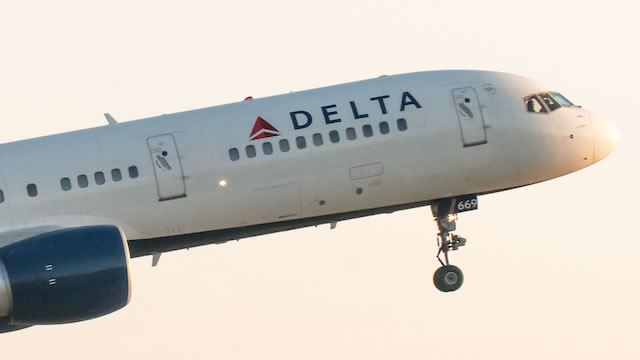
Delta Air Lines (DAL) Advances While Market Declines: Some Information for Investors
In the closing of the recent trading day, Delta Air Lines (DAL) stood at $71.27, denoting a +2.09% move from the preceding trading day.

3 Airline Stocks to Keep an Eye on Despite Industry Headwinds
Service disruption during the government shutdown has hit the participants of the Zacks Transportation - Airline industry hard. Stocks like DAL, LTM and SKYW are well-positioned to escape industry challenges.
Americans Are Down on the Economy. This Expert Likes Travel Stocks Anyway
Data says times are tough. The unemployment rate rose and inflation accelerated in September.
dynamic Archistructures Limite (DAL) FAQ
What is the stock price today?
On which exchange is it traded?
What is its stock symbol?
Does it pay dividends? What is the current yield?
What is its market cap?
When is the next earnings date?
Has dynamic Archistructures Limite ever had a stock split?
dynamic Archistructures Limite Profile
| Passenger Airlines Industry | Industrials Sector | Edward H. Bastian CEO | MSE Exchange | INE874E01012 ISIN |
| US Country | 100,000 Employees | 16 Oct 2025 Last Dividend | - Last Split | 3 May 2007 IPO Date |
Overview
Delta Air Lines, Inc. stands as a major figure in the aviation sector, providing essential scheduled air transportation services for both passengers and cargo on a global scale. Founded in 1924, the company has grown to establish a significant presence, operating through two main segments: Airline and Refinery. Delta's operational strategy is anchored around its robust domestic and international networks. Domestically, it focuses on core hubs located in strategic cities such as Atlanta, Minneapolis-St. Paul, Detroit, and Salt Lake City, alongside coastal hubs in Boston, Los Angeles, New York-LaGuardia, New York-JFK, and Seattle. On the international front, Delta boasts hubs and a strong market presence in key cities including Amsterdam, Bogota, Lima, Mexico City, London-Heatherow, Paris-Charles de Gaulle, Sao Paulo, Seoul-Incheon, and Tokyo. Headquartered in Atlanta, Georgia, Delta has established itself as a key player in the aviation industry by leveraging its extensive fleet of approximately 1,273 aircraft and a multi-channel distribution strategy that includes both digital and traditional platforms.
Products and Services
Ticket Sales: Delta Air Lines offers its customers the convenience of purchasing tickets through a variety of channels. This includes digital platforms like delta.com and the Fly Delta app, where customers can easily browse and book flights. Additionally, Delta makes its fares available through reservations specialists and both online travel and traditional brick-and-mortar travel agencies, catering to a wide range of customer preferences.
Aircraft Maintenance and Engineering Support: Beyond just transporting passengers and cargo, Delta provides comprehensive aircraft maintenance and engineering support services. These services encompass repair and overhaul operations, ensuring that not only Delta’s fleet but also those of third-party clients are maintained to the highest standards of safety and efficiency. This aspect of Delta’s operations underscores its commitment to operational excellence and safety in the aviation industry.
Vacation Packages: Recognizing the diverse needs of travelers, Delta also ventures into the provision of vacation packages. These packages are designed to offer third-party consumers comprehensive travel solutions that combine flights with hotel stays, car rentals, and other travel experiences. This service highlights Delta’s endeavors to cater to the broader travel needs and preferences of its global clientele, making it a versatile player in the travel and tourism sector.




