








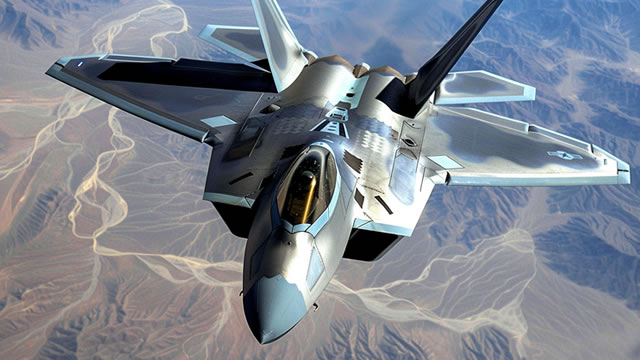
Lockheed Secures a $139M Deal to Support Stinger Missile Program
LMT is a well-known producer of combat-proven missiles like Hellfire II, THAAD, JASSM and LRASM. It boasts more than 65 years of experience partnering with the U.S. Air Force on ICBM.
Lockheed Rides on Solid Order Growth Despite Labor Shortage
LMT is expected to benefit from its steady inflow of orders and strong international demand for its broad range of products amid the shortage of skilled labor.
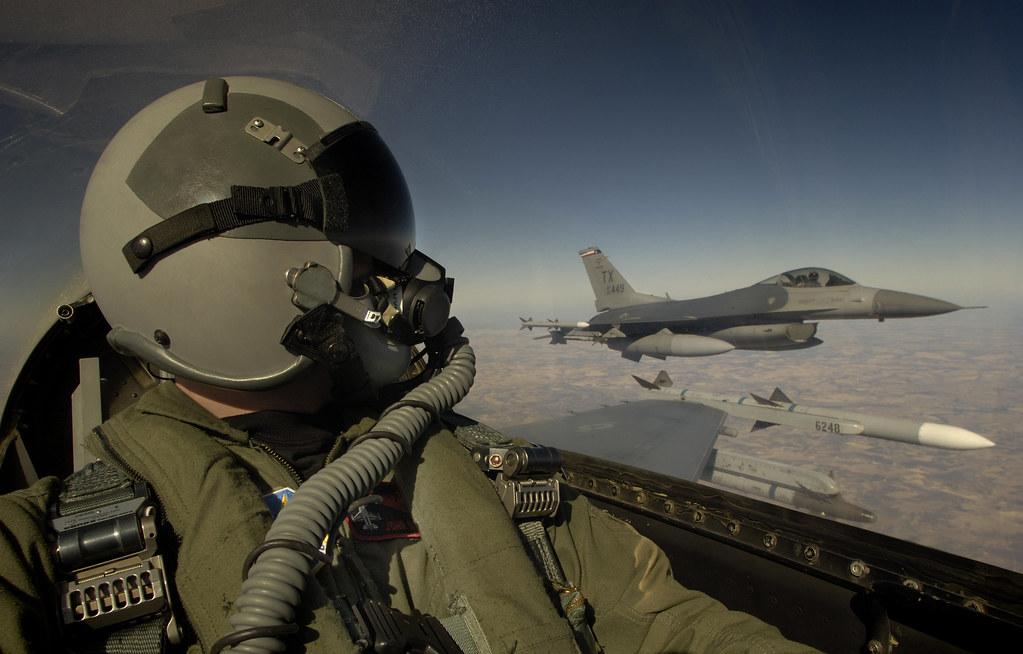
The Top Combat Aircraft in the US Air Force Has Been Flying Since 1978
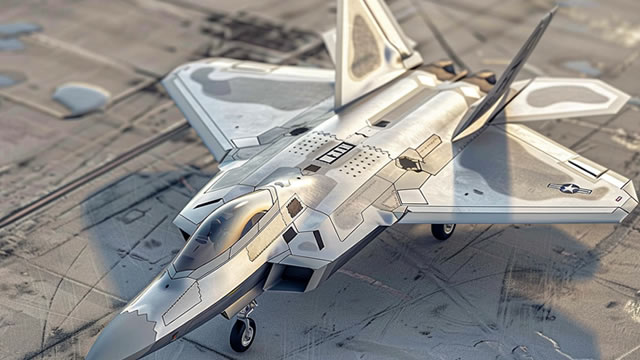
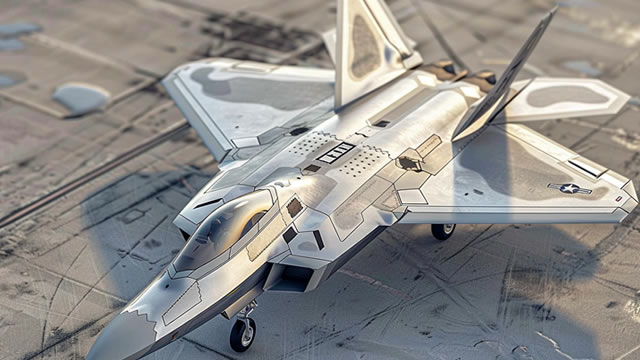
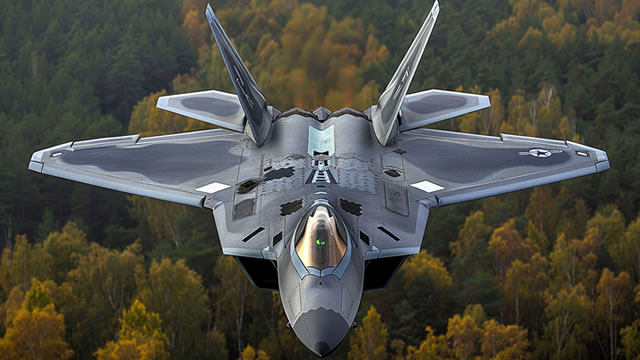
The US Air Force is a formidable power with aircraft ranging from bombers to fighter jets to helicopters, and more. Newer models, like the 5th generation F-22 Raptor play a key role in the Air Force. However, some of the top-used aircraft have been around since the 1970s and are still dominating the fleet. (Also see every fighter plane in the US Air Force for the past 90 years.) 24/7 Wall St. took a close look at all of the currently active combat aircraft within the U.S. Air Force. To identify every combat aircraft in service, we reviewed data from the 2024 World Air Forces report from FlightGlobal, an aviation and aerospace industry website. Aircraft are ranked by active unit, and we’ve included supplemental information on the aircraft type, top speed, and armament, excluding trainer aircraft. Here is a look at every combat aircraft in the U.S. Air Force: Why Are We Covering This? Understanding the aircraft in the US Air Force is important because these aircraft play a pivotal role in maintaining national security and global stability. Each aircraft is designed for specific missions, from air superiority to strategic bombing and reconnaissance, which are essential for defending the country and projecting power abroad. Also knowing which aircraft are in service gives context to military capabilities and a better understanding of national defense. 16. B-21 Raider Type: Long range strategic stealth bomber Year introduced: Expected 2028 Active aircraft: 100 on order Top speed: 621 mph Armament: Conventional drop bombs, precision-guided bombs, nuclear-tipped bombs/missiles Within the next decade, the B-21 Raider is expected to enter service to augment the B-2 Spirit stealth bombers. It will be capable of carrying both conventional and precision-guided bombs, as well as nuclear-tipped bombs and missiles. So far 100 of these stealth bombers are on order, with test flights already having taken place within the past year. 15. Mi-171 Hip-H Type: Medium-lift transport helicopter Year introduced: 1981 Active aircraft: 1 Top speed: 158 mph Armament: Shturm missiles, rocket pods, 23mm cannon pods, 7.62mm machine guns Originally designed by the Soviets at the Mil Moscow Helicopter Plant, this has been a staple for the Russian Air Force for years. While this is a widely used helicopter for many militaries around the world, the U.S. Air Force only has one. However, American engineering for other more advanced helicopters like the Black Hawk or Apache is more of a priority for the U.S. Air Force. 14. AC-130W Stinger II Type: Special operations fixed-wing gunship Year introduced: 2010 Active aircraft: 3 Top speed: 300 mph Armament: 30mm Bushmaster II GAU-23/A gatling gun, Viper Strike missiles, Griffin missiles, Hellfire missiles The Stinger II is a step up from the legacy AC-130 gunships, notably integrating advanced missile systems. Built by Lockheed Martin, this gunship only recently entered service in 2010. Armed with a 30mm Bushmaster II GAU-23/A gatling gun, along with Viper Strike, Griffin, and Hellfire missiles, The Stinger II is designed to deliver serious firepower in support of ground forces. 13. Leonardo AW139 Type: Medium-lift utility helicopter Year introduced: 2003 Active aircraft: 4 Top speed: 193 mph Armament: 7.62mm general purpose machine guns Originally designed and constructed by Leonardo, the AW139 is used by both the military and civilians. There are currently four in active service of the U.S. Air Force. Originally, these helicopters were designed for search-and-rescue missions, but they have been adopted for other purposes since then. The military version can equip small machine guns, but its primary designation is not for combat. 12. B-2 Spirit Type: Strategic stealth heavy bomber Year introduced: 1997 Active aircraft: 17 Top speed: 628 mph Armament: Air-launched cruise missiles, strategic free-fall nuclear bombs, conventional drop bombs, joint direct attack munitions, JASSM missiles Introduced in 1997, the B-2 Spirit is a strategic stealth heavy bomber with a top speed of 628 mph. It is designed to deliver a wide range of ordnance including nuclear bombs. Although there are only 17 of these aircraft in active service, they can punch far above their class in terms of what they can deliver in payload. 11. AC-130J Ghostrider Type: Ground attack / close-air support Year introduced: 2017 Active aircraft: 29 Top speed: 416 mph Armament: 30mm ATK GAU-23/A automatic cannon, 105mm M102 field howitzer, Griffin missiles, Viper Strike precision-guided bombs, Hellfire missiles, drop bombs The Ghostrider is the latest in the AC-130 gunship series. Although these gunships do not carry nukes, they can equip practically any other ordnance even a gun meant for ground artillery. The Ghostrider is easily one of the most heavily armed aircraft in the U.S. Air Force. Most notably in Ghostrider’s arsenal is its 105mm howitzer, which is typically seen on ground artillery platforms. This big gun delivers serious firepower with pinpoint accuracy from far above the battlefield, giving it an incredible tactical advantage. Outside of the 105mm howitzer, Ghostrider can equip a variety of missiles like Hellfires or Griffins, precision-guided bombs, or even just the basic conventional drop bombs. 10. B-1B Lancer Type: Strategic heavy bomber Year introduced: 1986 Active aircraft: 42 Top speed: 833 mph Armament: Joint direct attack munitions, general purpose bombs, naval mines, cluster munitions, SRAM missiles, JASSM missiles, JSOW missiles, freefall nuclear bombs Introduced in 1986, the B-1B Lancer is a strategic heavy bomber that is capable of reaching speeds up to 833 mph, which makes it one of the fastest bombers in the U.S. Air Force. It carries a wide range of armaments, including joint direct attack munitions, general-purpose bombs, JASSM missiles, and even freefall nuclear bombs. 9. CV-22 Osprey Type: Tilt rotor VTOL aircraft Year introduced: 2007 Active aircraft: 52 Top speed: 316 mph Armament: 7.62mm machine guns, 12.7mm machine guns Known for its unique ability to takeoff and land vertically like a helicopter and then adjust its rotors to operate like a turboprop plane, the CV-22 Osprey is one of the more unique aircraft in the U.S. Air Force. It is manufactured by Bell Boeing and plays key roles in U.S. special operations missions like infiltration, extraction, and resupply. The U.S. Marine Corps uses this aircraft extensively for troop deployment and extraction, or even just for logistical purposes. The Osprey also can refuel mid-flight which significantly extends its range for longer missions. 8. UH-1N Twin Huey Type: Multi-role utility helicopter Year introduced: 1970 Active aircraft: 64 Top speed: 150 mph Armament: 12.7mm GAU-16 machine gun, 7.62mm machine guns, 70mm rocket pods The UH-1N Twin Huey is a multi-role utility helicopter introduced in 1970, with a top speed of 150 mph and a wide range of armaments, including 12.7mm GAU-16 machine guns and 70mm rocket pods. It was manufactured by Bell Helicopter, and it has been widely used by the U.S. military since the 1970s. There have been many variations of the UH-1 Huey that span a number roles, but mainly combat. Other notable variants are the UH-1 Iroquois, UH-1Y Venom, and AH-1 Cobra. 7. B-52H Stratofortress Type: Long range strategic heavy bomber Year introduced: 1955 Active aircraft: 72 Top speed: 595 mph Armament: ACLM cruise missiles, Harpoon missiles, CALCM cruise missiles, joint direct attack munitions, freefall nuclear bombs The B-52 is one of the longest serving aircraft in the U.S. Air Force, introduced in 1955. It was originally developed in the post-World War II years to succeed the B-29 Superfortress, which dropped the bomb on Japan. The B-52s were designed to carry larger payloads than the B-29, including nuclear weapons. The Stratofortress acted as a strong nuclear deterrent throughout the Cold War as well. 6. S-70 Black Hawk Type: Medium-lift multi-mission helicopter Year introduced: 1979 Active aircraft: 96 Top speed: 183 mph Armament: 7.62mm machine guns, Hellfire missiles, 12.7mm gatling guns, M134 gatling guns, rocket pods, 30mm chain gun Black Hawk helicopters have played important roles in conflicts around the globe. One infamous instance was the conflict in Somalia in 1993, particularly the Battle of Mogadishu. The Black Hawk played a significant role in urban combat and casualty evacuation under intense fire. This story would go on to make it as a blockbuster movie famously titled “Black Hawk Down.” It is by far one of the most iconic helicopters ever built. It is the workhorse of the U.S. military with over a few thousand units currently in service across all branches. The Black Hawk features twin turboshaft engines, a single four-bladed main rotor, and a four-bladed tail rotor, which allow for top speeds over 180 mph. Typically, this helicopter carries a crew of two pilots and two crew chiefs and can transport up to 11 fully equipped soldiers. In total, the Black Hawk can carry a payload of roughly 9,000 pounds. 5. F-22 Raptor Type: 5th generation air dominance fighter aircraft Year introduced: 2005 Active aircraft: 178 Top speed: 1,599 mph Armament: 20mm automatic cannon, Sidewinder missiles, AMRAAM missiles, joint drop munitions, drop bombs, air-launched cruise missiles The F-22 Raptor is one of the elite fifth-generation aircraft, introduced in 2005. It features some of the newest stealth technology and can hit speeds around Mach 2. It comes equipped with a 20mm automatic cannon standard and can be outfitted with Sidewinder and AMRAAM missiles, as well as joint drop munitions and air-launched cruise missiles. In addition to its impressive speed and firepower, the F-22 Raptor is known for its unmatched agility and advanced avionics, making it a dominant force in both air superiority and strike missions. One interesting fact about this aircraft is that the Raptor’s supercruise ability enables it to sustain high-speed flight without the need for afterburners. This sets it apart from most other fighters, which typically require afterburners to exceed the speed of sound. The F-22 Raptor can sustain speeds of Mach 1.5 to Mach 2 in supercruise mode. 4. F-35A Lightning II Type: Multirole 5th generation aircraft Year introduced: 2016 Active aircraft: 234 Top speed: 1,199 mph Armament: 25mm GAU-12/U automatic cannon, Sidewinder missiles, Paveway guided bombs, Rockeye II bombs, Brimstone missiles, Storm Shadow missiles, drop bombs Introduced in 2016, the F-35A Lightning II boasts a top speed of 1,199 mph and can equip a wide variety of weapons. It is one of the newest fifth-generation aircraft to enter the service. Currently, there are 234 in active service for the U.S. Air Force but hundreds more are on order from Lockheed Martin for the U.S. military at large. 3. A-10C Thunderbolt II Type: Close-air support / forward air control Year introduced: 1976 Active aircraft: 270 Top speed: 439 mph Armament: 30mm GAU-8/A gatling gun, Maverick missiles, Sidewinder missiles, rocket pods, drop bombs, cluster bombs, Paveway bombs Introduced in 1976, the A-10C Thunderbolt II is a specialized close-air support and forward air control aircraft. It is armed with a 30mm GAU-8/A gatling gun, which can fire up to 3,900 rounds per minute, along with a variety of missiles and bombs, including Mavericks and Sidewinders. Built by Fairchild Republic, the A-10 is known for its toughness, earning its nickname as the “Warthog”. One aspect about the A-10 is its “titanium bathtub” cockpit, which provides the pilot with protection from ground fire. 2. F-15 C/E/EX Eagle II Type: Air superiority fighter aircraft Year introduced: 1976 Active aircraft: 377 Top speed: 1,875 mph Armament: 20mm M61A1 automatic cannon, Sidewinder missiles, Sparrow missiles, Maverick missiles, HARM missiles, laser-guided bombs, joint direct attack munitions, cluster bombs, nuclear bombs Developed by McDonnell Douglas (now Boeing) in the 1970s, the F-15 Eagle and Strike Eagle variant stand as some of the most iconic and successful fighter jets in the world. With a top speed over Mach 2, the F-15 can outrun almost anything in the sky. Its twin-engine design provides serious thrust, allowing some variants to carry over 16,000 pounds of ordnance, including air-to-air missiles and bombs. One thing that stands out with this jet is its combat record. Since its introduction, the F-15 has claimed more than 100 air-to-air victories without a single loss in combat. The F-15 has been used in several conflicts, including Operation Desert Storm, where it proved its air superiority by downing numerous Iraqi aircraft. The Strike Eagle has seen extensive combat as well, especially in ground-attack operations in Iraq, Afghanistan, and Syria. 1. F-16C Fighting Falcon Type: Multirole 4th generation fighter aircraft Year introduced: 1978 Active aircraft: 738 Top speed: 1,317 mph Armament: 20mm M61 automatic cannon, Sidewinder missiles, AMRAAM missiles, Maverick missiles, Penguin missiles, Runway denial bombs, cluster bombs, laser-guided bombs, conventional drop bombs Introduced in 1978 to the U.S. Air Force, the Fighting Falcon is a multirole fourth generation fighter jet. Over the years this jet has undergone upgrades and improvements, but it is still relatively cheap compared to the newest generation of fighter jets. It has become popular with many militaries around the world, and many are looking to procure these jets. Early variants of the F-16 sell for roughly $13 million with more recent variants starting between $25 and $30 million. However, the most advanced versions of this aircraft can cost anywhere upwards of $60 million. The F-16 comes standard with a 20mm internal automatic cannon and can be equipped with a range of air-to-air missiles and air-to-ground missiles. It can reach speeds of roughly 1,300 mph and has an operational range of 2,600 miles. The Fighting Falcon fills a variety of roles for any air force but it is primarily used for interception and general strike missions. Take This Retirement Quiz To Get Matched With An Advisor Now (Sponsored) Are you ready for retirement? Planning for retirement can be overwhelming, that’s why it could be a good idea to speak to a fiduciary financial advisor about your goals today. Start by taking this retirement quiz right here from SmartAsset that will match you with up to 3 financial advisors that serve your area and beyond in 5 minutes. Smart Asset is now matching over 50,000 people a month. Click here now to get started. The post The Top Combat Aircraft in the US Air Force Has Been Flying Since 1978 appeared first on 24/7 Wall St..
Trade Tracker: Jim Lebenthal buys more Lockheed Martin
Jim Lebenthal, chief equity strategist at Cerity Partners, joins CNBC's 'Halftime Report' to discuss why he is buying more Lockheed Martin.

The Big 3: LMT, AMD, ET
Kenny Polcari believes there's positives in each of today's Big 3. He notes recent selloffs in each but expects better outlook for each.
Lockheed Martin Corporation (LMT) is Attracting Investor Attention: Here is What You Should Know
Lockheed (LMT) has received quite a bit of attention from Zacks.com users lately. Therefore, it is wise to be aware of the facts that can impact the stock's prospects.

Lockheed Martin: A Defense Stock Poised To Rise After Trump's Election
Lockheed Martin is a strong long-term investment due to geopolitical tensions in the world, limited competition in the sector, and potential defense spending increases under a Republican administration. The stock has outperformed its peers over a 3-year and 20-year period, with solid year-to-date performance and robust Q3 earnings. Management's compensation structure aligns with shareholder interests, ensuring continued growth and shareholder-friendly decisions.
Lockheed Martin Should Benefit From Trump's 'Peace Through Strength' Approach
Lockheed Martin's strong financials, stable revenues, and large backlog make it a 'Strong Buy', despite recent revenue slowdowns and slight margin deterioration. Trump's 'Peace Through Strength' approach is expected to boost defense spending, benefiting LMT's sales, margins, and EPS growth significantly over the next four years. LMT's valuation remains reasonable compared to peers, with the potential for higher multiples due to anticipated EPS growth under the Trump administration.
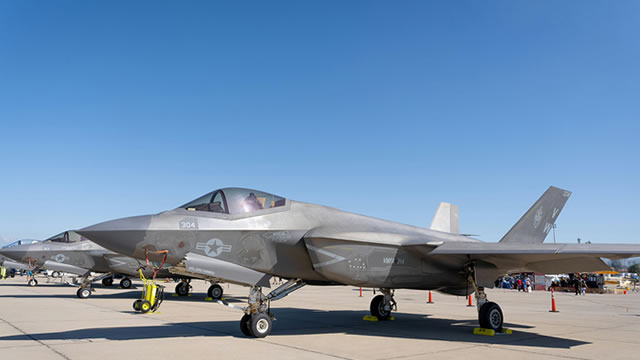
Lockheed Martin: Multiyear Growth Framework Forced Investors To Face The Truth
Lockheed Martin's Q2 surge was temporary, with Q3 results showing low-single-digit growth and missed estimates, reflecting supply chain constraints and limited margin expansion. Despite impressive backlog growth to $166 billion, the company's multi-year growth framework and narrowed full-year guidance disappointed investors. Lockheed trades at a peak multiple, with below-market-average growth prospects, making it unattractive for market-beating returns but suitable for low-risk portfolios.
Australia cancels Lockheed Martin military satellite project
Australia has cancelled a multi-billion dollar military satellite project with Lockheed Martin , with a Department of Defence statement on Monday saying the military will instead shift its focus to a multi-orbit system.

Aerospace Giant Lockheed Martin Performs Poorly in Both Aero and Space
Investors punished Lockheed Martin stock for anemic sales growth in Q3.
This Overlooked Indicator Could Hand You An Outsized 14.6% Yield
If you're like me, when you see an outsized dividend yield, you stop for a second and immediately do the mental math. How much would we get back in payouts from, say, a 9.3% payer if we were to invest $10,000?



