








Is It Worth Investing in Rio Tinto (RIO) Based on Wall Street's Bullish Views?
When deciding whether to buy, sell, or hold a stock, investors often rely on analyst recommendations. Media reports about rating changes by these brokerage-firm-employed (or sell-side) analysts often influence a stock's price, but are they really important?
RIO Moves Below 200-Day SMA Post FY24 Earnings: How to Play the Stock?
Rio Tinto shares plunge on delivering year-over-year declines in FY24 revenues and earnings. Let us analyze what stance investors should take on the stock.

Rio Tinto: Financial Weakness To Continue In 2025
Rio Tinto's 2024 performance was weak, with a 1% decline in sales revenue and an 8% drop in underlying EPS due to challenges with its chief commodity, iron ore. The financial outlook for 2025 isn't positive either, with projected declines in revenue and EPS, and continued weakness in iron ore prices and limited expected change to production. Dividends can drop again in 2025, though the forward yield still isn't too bad at 5.5%.
Rio Tinto off 1.5% after below-par results; rejects London de-listing calls
Rio Tinto Ltd (LSE:RIO, ASX:RIO, OTC:RTNTF) shares slipped 1.5% overnight after the miner reported its lowest full-year earnings in five years and pushed back against calls to consolidate its dual-listed structure in Sydney. The company posted underlying earnings of $10.87 billion for 2024, down from $11.76 billion the previous year and slightly below analyst forecasts.
Rio Tinto operated Aussie mine has new Japanese shareholder
Japan's Mitsui & Co is paying $5.34 billion for a 40% stake in the Rhodes Ridge iron ore project in Western Australia, operated by Rio Tinto Ltd (LSE:RIO, ASX:RIO, OTC:RTNTF). Rhodes Ridge is one of the world's largest untapped iron ore deposits, with 6.8 billion tonnes of mineral resources.
Will Rio Tinto cut its iron ore guidance? Here's why one investment bank thinks it will
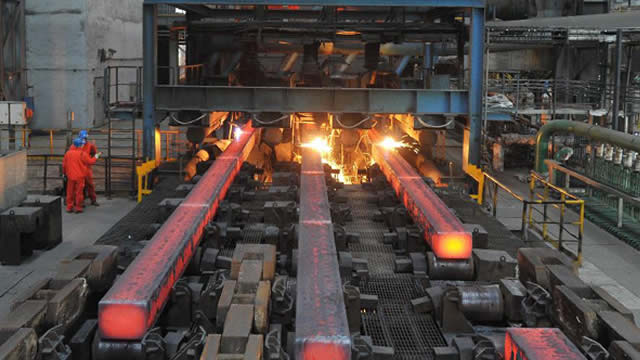
UBS has warned that Rio Tinto Ltd (LSE:RIO, ASX:RIO, OTC:RTNTF) is likely to lower its 2025 iron ore shipment forecast after storms and flooding disrupted operations in Western Australia. The bank said Rio's shipments have dropped 9 million tonnes year-on-year, marking their lowest level in more than six years.
Is Rio Tinto (RIO) a Buy as Wall Street Analysts Look Optimistic?
Investors often turn to recommendations made by Wall Street analysts before making a Buy, Sell, or Hold decision about a stock. While media reports about rating changes by these brokerage-firm employed (or sell-side) analysts often affect a stock's price, do they really matter?
Rio Tinto Eyes EV Future
The shares of diversified mining giant Rio Tinto (NYSE: RIO) has gained 5% year to date, outperforming the S&P500 index which has grown 3% during the same period. Rio Tinto is making a significant push into lithium to strengthen its position in the battery metals market.

Rio Tinto clears Western Australia ports due to cyclones
Rio Tinto , has begun clearing ships from two Western Australian ports due to high seas as a result of tropical cyclones Tahliah and Vince, it said on Tuesday.
Rio Tinto: Set For A Better 2025 And Attractive Yields Despite Iron Ore Challenges
Rio Tinto is diversifying beyond iron ore, investing heavily in lithium production, positioning itself as a major player in the battery metals sector. The correlation between Rio Tinto's stock and iron ore prices has weakened recently, dropping below 0.5x due to the company's increased focus on lithium. Iron ore prices are expected to fall to $75-$120/ton in 2025, though the company should still generate strong free cash flow.
Rio Tinto cannot comment on rumors of merger talks, says CEO
Jakob Stausholm, the CEO of Rio Tinto, discusses the outlook for the global mining industry at the World Economic Forum in Davos.
Is It Worth Investing in Rio Tinto (RIO) Based on Wall Street's Bullish Views?
When deciding whether to buy, sell, or hold a stock, investors often rely on analyst recommendations. Media reports about rating changes by these brokerage-firm-employed (or sell-side) analysts often influence a stock's price, but are they really important?



