



Visa Inc (V)










Why Visa Could Be A Smart Addition To Your Portfolio
Visa (V) stock may be a wise investment at this moment. Why? Because it offers high margins – indicative of pricing power and the ability to generate cash – at a discounted rate.

Buy Visa Stock Now
Visa (V) stock may be a wise investment at this moment. Why? Because it offers high margins – indicative of pricing power and the ability to generate cash – at a discounted rate.

Can Visa Gain More Ground as Cash App Flexes Into Pay-Over-Time?
V gains momentum as Cash App and Afterpay pilot a new pay-over-time debit feature that runs across its network.

Visa vs. AmEx: Which Payment Giant is the Better Pick Post-Earnings?
V's global scale, valuation edge and steady volume gains stand out over AXP as investors weigh post-earnings momentum between the payment giants.

Visa Inc. (V) Presents at Wells Fargo's 9th Annual TMT Summit Transcript
Visa Inc. ( V ) Wells Fargo's 9th Annual TMT Summit November 18, 2025 2:00 PM EST Company Participants Christopher Suh - Chief Financial Officer Conference Call Participants Jason Kupferberg - Wells Fargo Securities, LLC, Research Division Presentation Jason Kupferberg Wells Fargo Securities, LLC, Research Division Welcome, everybody. Thank you for being here for the Visa fireside chat.
Is RS2's New Visa Status a Game-Changer for Europe's Card Market?
V's new partnership elevates Beyond by RS2 to Principal Issuing Member, unlocking direct card issuance and broader payment capabilities across Europe.

Visa Inc. (V) is Attracting Investor Attention: Here is What You Should Know
Zacks.com users have recently been watching Visa (V) quite a bit. Thus, it is worth knowing the facts that could determine the stock's prospects.
Visa Inc. (V) Presents at KBW Fintech Payments Conference 2025 Transcript
Visa Inc. ( V ) KBW Fintech Payments Conference 2025 November 12, 2025 8:40 AM EST Company Participants Christopher Suh - Chief Financial Officer Conference Call Participants Sanjay Sakhrani - Keefe, Bruyette, & Woods, Inc., Research Division Presentation Sanjay Sakhrani Keefe, Bruyette, & Woods, Inc., Research Division I'll get started. Well, welcome to day 2 of our conference.
Visa Turns Up the Heat in Stablecoin Payments: Can Anyone Compete?
V's stablecoin pilot lets gig workers get instant crypto payouts via Visa Direct, marking a bold step toward blockchain-powered payments.
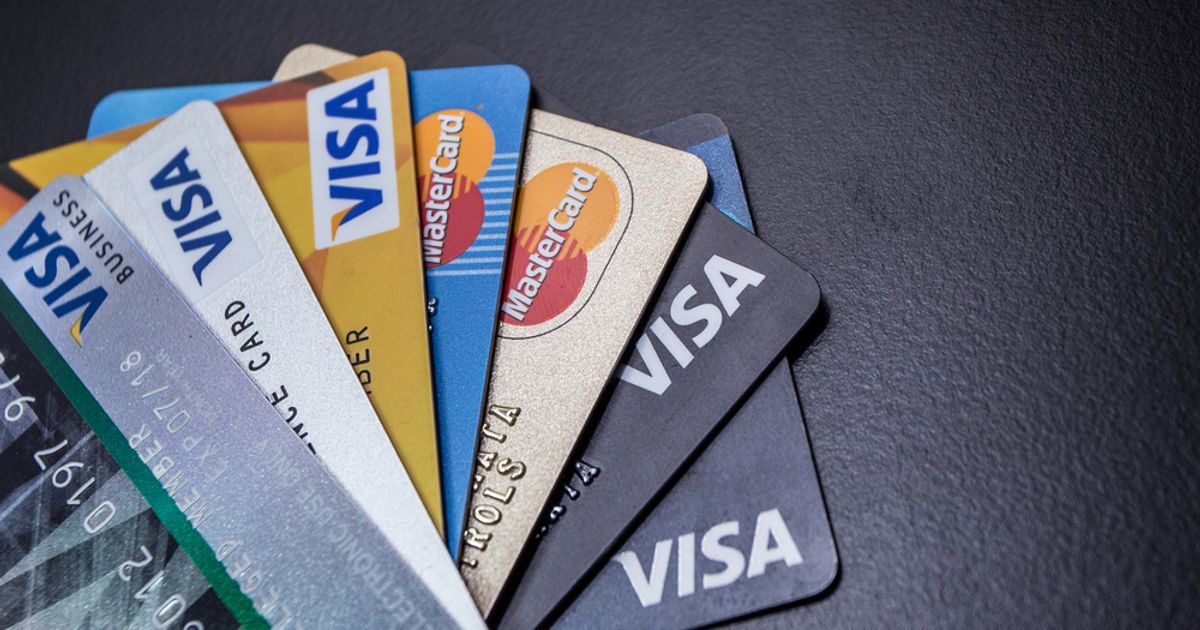
Visa and Mastercard reach proposed settlement with US merchants, ending decades-long fee dispute
Visa Inc (NYSE:V, ETR:3V64) and Mastercard Inc (NYSE:MA) have reached a proposed settlement with US merchants aimed at resolving more than two decades of litigation over credit card interchange fees and merchant rules, a deal that could reshape how retailers manage payment costs and how consumers are charged at checkout. The agreement would reduce the average effective interchange fee merchants pay on US credit card transactions by roughly 10 basis points, or 0.1 percentage point, for five years.

Visa, Mastercard reach swipe-fee settlement — Here's how it will affect your wallet
Both companies were sued by merchants over how they set and enforce credit-card swipe fees and rules that limit how merchants can steer customers toward cheaper payment methods.

Visa and Mastercard Reach New ‘Swipe Fees' Settlement
Visa and Mastercard have announced an updated settlement in a 20-year legal battle with merchants. The agreement, which still requires approval from the Eastern District Court of New York, was announced by the two payments companies Monday (Nov. 10).



