



Hermes International SCA Unsponsored ADR (HESAY)
 OTC PINK OTC PINK Primary
Hermes overtakes LVMH in market cap to become most valuable luxury company
LVMH, led by Bernard Arnault, lost its title as the world's most valuable luxury company to Hermes after its market capitalization slipped due to a sales miss.

Hermes: Excellence Comes At A Price - And Lower Returns (Rating Downgrade)
Hermes' resilience and growth, driven by its scarcity strategy and ultra-wealthy clientele, outpace peers like Kering and LVMH. The stock has surged nearly 40%, but its high valuation, with a P/E of 65x, suggests limited forward returns and potential negative ROR. Q4 2024 earnings exceeded expectations with a 17.6% revenue rise, showcasing Hermès' strength amid a turbulent luxury market.
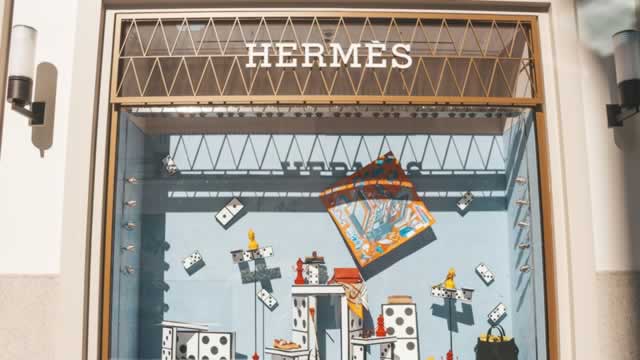
Hermès will give staffers a $4,700 bonus as sales and revenue jump
Hermès employees will receive a 4,500 euro bonus in response to the company's 2024 financial performance. Bonuses have steadily increased at Hermès despite a luxury market slump.
Hermès: New Geographies And Non-Leather Categories Support A Strong 'Hold'
Hermes displayed exceptional resilience in 2024, achieving 15% organic growth and maintaining stable margins, even as other luxury peers struggled. Hermes' strategy of maintaining scarcity and artisanal quality supports its premium valuation but limits its growth pace. Despite remarkable performance, Hermes' valuation at 59 times forward earnings is concerning, suggesting limited upside potential and vulnerability.

Hermes shines amid luxury slowdown
CNBC's Robert Frank joins 'Squawk on the Street' to break down Hermes' most recent quarter.
Birkin bag maker Hermes posts better-than-expected jump in fourth-quarter sales
Haute couture fashion house Hermes on Friday reported a better-than-expected jump in fourth quarter sales.

Hermes: Mastering Luxury Through Scarcity, Craftsmanship
Hermes excels in brand preservation and craftsmanship, maintaining exclusivity through cautious supply management and high-quality standards, unlike competitors who dilute brand power by expanding accessibility. The company demonstrates resilience and growth even in challenging economic environments, with an 11.3% revenue increase despite a slowdown in the Chinese economy. Hermes' strategy of scarcity, focusing on ultra-wealthy clients, and strategic geographic diversification drives demand and maintains high prices, resulting in strong financial performance.

Prada: A Step Closer To Become The New Hermes
Since 2021, Prada's Miu Miu brand has driven significant growth, tripling net sales and increasing its revenue share from 12% to 25%company since 2021. Targeting millennials and Gen Z, Miu Miu's bold designs resonate more with younger consumers compared to traditional luxury brands like Louis Vuitton and Burberry. Prada's financial health is robust, with a forward PE ratio of 21.7, making it undervalued compared to Hermes, which has a PE ratio of 38.
Hermès: Why I'm Bullish Despite The China Slowdown
Despite China's economic slowdown, Hermès shows resilience with healthy revenue growth, outperforming peers like LVMH and Kering, which faced double-digit declines. Stimulus measures in China could boost luxury market demand, which can benefit the company further. Also, accelerated growth in Europe and Japan is encouraging. A stable forward P/E ratio also supports a positive outlook for Hermès.

Trump's trade policies will boost inbound investments & improve exports, says Hermes' Steve Auth
Steve Auth, Federated Hermes equities CIO, joins CNBC's 'The Exchange' to discuss expectations for how Trump's trade policy will impact U.S. markets.
Hermes Defies The Odds, But Peers May Offer More Attractive Returns
Hermes' exclusivity, heritage, and prestige make it a quintessential luxury brand, resilient against market slowdowns and appealing to ultra-wealthy clientele. Hermes' strategy of scarcity and exclusivity drives demand, with plans to expand production capacity to meet high demand without compromising exclusivity. Trading at a premium valuation, Hermes promises stable, long-term growth, with a potential 10% annual ROR, making it a resilient investment in the luxury space.
Hermès: A Performance That Runs Counter To Its Industry
Hermès defies the economic slowdown in China, achieving 11.40% revenue growth in Q3 2024, while competitors like Kering and LVMH suffer. Exceptional growth in Europe and triple-digit growth in the Middle East highlight Hermès' resilience in adverse macroeconomic environments. Despite strong performance, Hermès' high valuation multiples (50x earnings) make it a hold; a more reasonable entry point would be around 35x earnings.



