








Here's Why 2026 Could Be a Breakout Year for India ETFs
With economic optimism rising and long-term drivers strengthening, these ETFs offer a smart way to tap the country's 2026 breakout potential.

Exclusive: Mexico tariff hike to hit $1 billion India car exports despite automaker lobbying
Mexico's decision to raise tariffs as high as 50% will affect $1 billion worth of shipments from major Indian car exporters, including Volkswagen and Hyundai, despite industry lobbying to persuade New Delhi to prevent such a move, according to two sources and a letter from an industry group reviewed by Reuters.

INDA: Lagging Other EMs, Why 2026 Could Be Its Year
The iShares MSCI India ETF has underperformed other ex-Russia BRICS ETFs in 2025, delivering only low single figure gains, whereas other EMs have presented substantially higher returns. INDA ETF appears cheap relative to its historical average, with a cross-sectional z-score of -0.51, suggesting potential value. Despite near-term headwinds, I see India's economy and stock market as poised for outlying returns over the next decade. Cyclical outperformance also seems likely.

India is set to host Russia's Putin, deepening trade ties, unfazed by punitive U.S. tariffs
Russian President Vladimir Putin will be in India on Dec 4-5 for the 23rd India-Russia annual summit. The countries are likely to extend cooperation in defense and civil nuclear sector.
India economy grows at faster-than-expected 8.2% in September quarter even as tariffs bite
The Indian economy grew faster than expected, at an annual rate of 8.2%, in the quarter ending September. The IMF projected sturdy medium-term growth for India despite prolonged uncertainty over a U.S.–India trade deal.
Should You Add India ETFs to Your Portfolio Now?
With forecasts rising and growth outlook strengthening across the economy, India ETFs like INDA and EPI could be gearing up for a major run.

India deepens energy trade with U.S. to mend trade relations amid tariff strain
India announced a deal that will see the United States supply nearly 10% of New Delhi's liquefied petroleum gas imports. India's imports of U.S. crude "saw a sharp rise in October, reaching 568 thousand barrels per day — the highest level since February 2021.

Trump vows to keep 'massive' tariffs on India until Russian oil imports cease
U.S. President Donald Trump reiterated on Sunday that Indian Prime Minister Narendra Modi told him India will stop buying Russian oil, while warning that New Delhi would continue paying "massive" tariffs if it did not do so.
India Central Bank Stands Pat Amid Tariff Pressures
India's central bank kept its policy rate unchanged as U.S. tariff policy continued to weigh on the South Asian economy's outlook.

India's Waaree Energies under US probe for evading solar tariff duties, Bloomberg News reports
The U.S. Customs and Border Protection is probing whether Indian solar panel maker Waaree Energies and its American arm evaded anti-dumping and countervailing duties on solar cells from China and other Southeast Asian nations, Bloomberg News reported on Thursday.
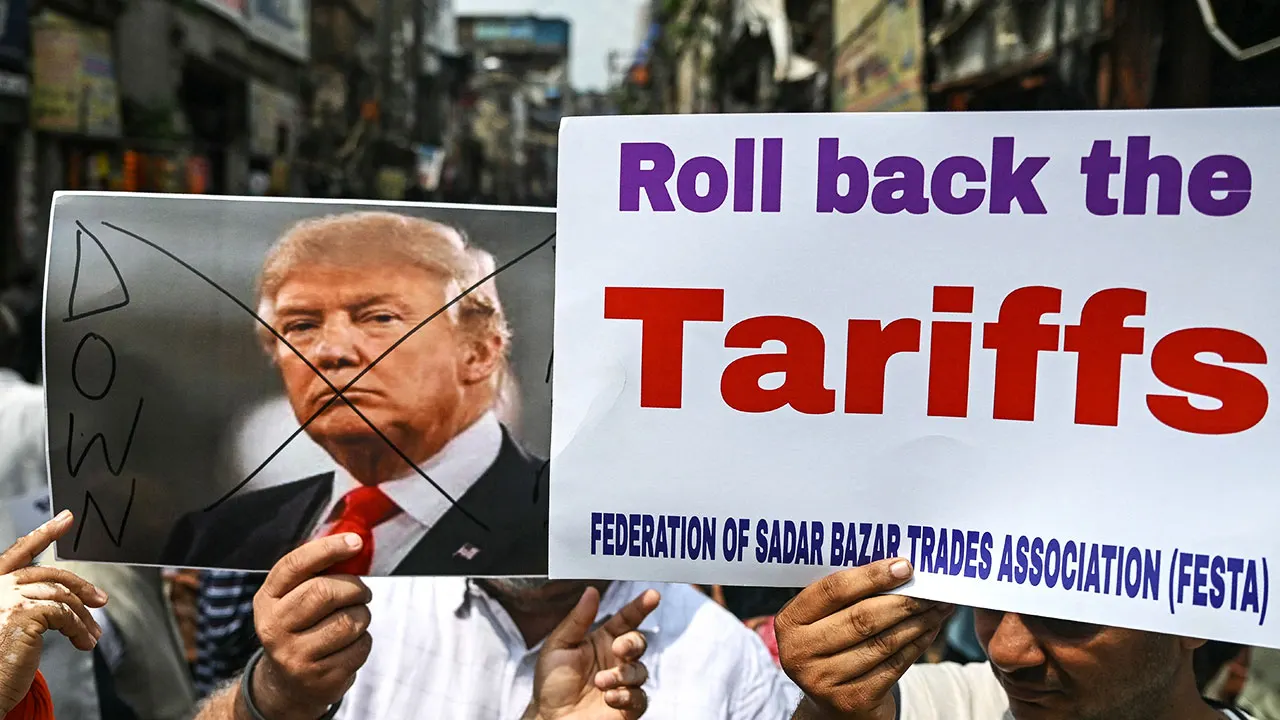
India calls trade talks with US 'positive' as it looks to close deal amid steep tariffs
U.S. and Indian officials meet in New Delhi for trade negotiations as India resists opening diary markets and Washington demands a stop to Russian oil purchases.

India Is Rewriting Its Playbook, at Home and Abroad, as U.S. Tariffs Rise
The government has stepped up efforts to overhaul its economy, while trying to improve its relationship with China.



