








GenAI Revenue Forecast Highlights Allure of These ETFs
Impressive showings last Friday notwithstanding, large- and mega-cap artificial intelligence (AI) equities are struggling in the early stages of 2025. This creates apprehension among investors accustomed to seeing these stocks rise on a seemingly daily basis.
1 High-Powered ETF That Can Turn $340 a Month Into $1 Million
If you want to get your portfolio to $1 million by the time you retire but you don't have a big lump sum of money to invest in today, you can start by investing every month. And if you can maintain that habit over the long term, your gains can be significant, potentially putting you on track to end up with a portfolio worth at least $1 million.

I’m 27 and have I have $33,000 in a Roth and $48,000 in my 401K. Here are some of my biggest wins.
Retirement doesn’t have to be someone’s number-one priority as they get started on their professional journeys in their early-20s. That said, after one has settled into a new career, starting the retirement saving journey can put your head and shoulders above the crowd, as you aim to retire more comfortably. Furthermore, if you’re miles ahead in the game, perhaps the door to an early retirement (think the FIRE movements) could open, giving you more options as you shoot to achieve financial freedom. Of course, there are numerous early retirement success stories on Reddit, with a number of Millennials and Gen X’ers boasting nest eggs sizeable enough to retire well before the traditional (think Social Security-eligible age) finish line. Of course, an earlier retirement will be “leaner” (think less extravagant spending) than if you’d retired later. Either way, the key is staying ahead and taking advantage of any 401(k) matches an employer may offer. In this piece, we’ll explore the case of a 27-year-old who’s faring quite well, with $33,000 saved up in a Roth and close to $50,000 in the 401(k), comprising an impressive net worth of just north of the $100,000 mark. This relatively young over-achiever shared their biggest wins on Reddit. For the young readers striving to get ahead at a young age, here are the most important takeaways, at least in my view. Key Points This 27-year-old over-achiever is off to a hot start. Here’s what’s in their well-balanced $100k portfolio. Are you ahead, or behind on retirement? SmartAsset’s free tool can match you with a financial advisor in minutes to help you answer that today. Each advisor has been carefully vetted, and must act in your best interests. Don’t waste another minute; get started by clicking here here.(Sponsor) Keeping contributions consistent and investing in the steady blue-chips Having a look at their portfolio, it’s clear they’re not investing like many people in their age group. Indeed, someone in their late-20s would probably be likelier to speculate on the hot tech stock of the day in search of the next timely double. Instead, the Reddit user seems to have opted for “boring” stocks that, I believe, are more common in the portfolio of a much older investor (think a retiree). Indeed, investing with such a balanced approach at a young age can be a wise long-term move, given stocks don’t always go up — something many market newcomers discovered in the Trump 2.0 term. So, what’s at the core of their portfolio? First, there’s quite a bit of index funds in there, with low-cost S&P 500 ETFs topping the list. Pretty solid blue chips make up the core of this portfolio With a bit of Invesco QQQ Trust (NASDAQ:QQQ) sprinkled on top, the Reddit user has a nice balance of growth and stability. Looking further under the hood, we see some rock-solid blue-chip names like Berkshire Hathaway (NYSE:BRK-B), AT&T (NYSE:T), Caterpillar (NYSE:CAT), 3M Company (NYSE:MMM) and Walmart (NYSE:WMT) — staples for many retirees. However, it’s not all boring retiree-friendly stocks. The Reddit user has a mix of “growthier” Magnificent Seven names — like Apple (NASDAQ:AAPL) — to balance things out. Overall, it’s a very well-rounded and balanced portfolio that looks like it can hold up in this market hailstorm. As the market turns lower, here’s hoping the Reddit user adds to fallen positions on weakness. Indeed, the first $100,000 is just the start, as they embark on a multi-decade journey towards (early) retirement. Personally, I’d suggest adding more to index funds (S&P 500 or the QQQ) on further weakness to simplify things. A correction has struck, making it a great time to top-up on low-cost index funds, especially since the market is moving faster than one can keep up with a rather long list of individual names. As for the other names, I’d encourage the investor to do their own homework and pare positions that have become overbought. For instance, 3M and CAT stand out as names that may make sense to take profits in. The bottom line This self-guided Reddit user acts as a great example for how new investors should go about beginning their retirement journeys. They’ve got a balanced portfolio and seem well-equipped to win at the long-term game! Though they’re a tad light on tech compared to most other young people, I do think they’re well-insulated from a bursting of an AI bubble — that is, if one even exists.The post I’m 27 and have I have $33,000 in a Roth and $48,000 in my 401K. Here are some of my biggest wins. appeared first on 24/7 Wall St..
Magnificent Stocks Are Getting Less Expensive
Growth stocks, including the previously famed Magnificent Seven, started 2025 in inauspicious fashion. They've shed a staggering $1.5 trillion in combined market value since the start of the year.
ARTY: A High-Fee, Low-Return AI Disaster
ARTY is a Strong Sell due to high expense ratios and poor performance compared to passive tech indices like QQQ. ARTY's subjective stock selection and complex index construction increase speculation and risk, making it less reliable. Passive indices like QQQ automatically follow market winners, offering better performance and lower fees.
Should Invesco QQQ (QQQ) Be on Your Investing Radar?
If you're interested in broad exposure to the Large Cap Growth segment of the US equity market, look no further than the Invesco QQQ (QQQ), a passively managed exchange traded fund launched on 03/10/1999.
QQQ ETF stock forecast as Nasdaq 100 index crashes below 200 EMA
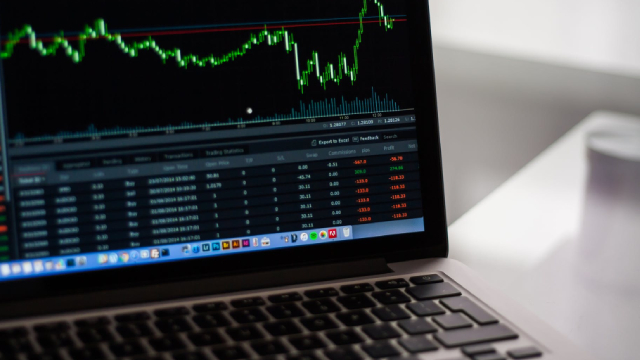
The Invesco QQQ ETF has plunged and moved below the 200-day moving average as concerns about the equities market rose. The fund, which tracks the popular Nasdaq 100 index, dropped to a low of $480, down by almost 10% from its highest level this year.

As AI Expands, These ETFs Matter
Tariff talk and declining risk appetite has recently pressured previously high-flying growth stocks. That includes those with AI exposure.

The Smartest Technology ETF to Buy With $100 Right Now
The S&P 500 (^GSPC 1.59%) is the most closely watched barometer of how the overall stock market is performing. There's good reason for this, as the benchmark contains the 500 largest U.S. businesses.
QQQ vs. QQQM: Which Invesco Nasdaq ETF Is the Smarter Buy?
For growth investors who just aren't satisfied with the technology exposure provided by the S&P 500, there's the Invesco QQQ Trust (NASDAQ:QQQ).
Some Fund Managers Faves Found in These ETFs
Many retail investors love to examine the favorite holdings of active fund managers and buy some of those stocks for themselves. That's not a terrible strategy, but obviously the outcomes hinge on how good the active manager is.
Avoid the QQQ ETF, buy this Nasdaq 100 ETF alternative instead
The Invesco QQQ ETF has become one of the best-performing funds in the United States in the past few decades by tracking the Nasdaq 100 index. It has soared from about $40 during its inception and moved to the current $513.




