



First Solar Inc. (FSLR)






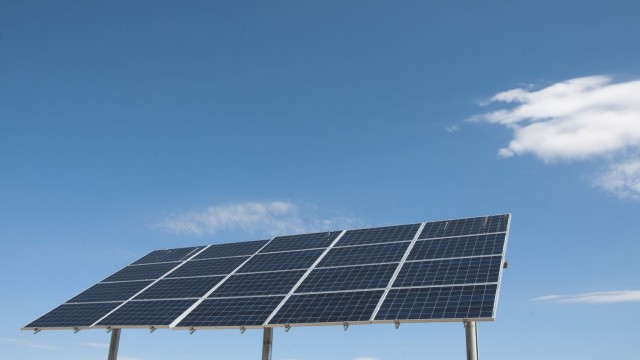
S&P 500 Gains and Losses Today: Bright Growth Outlook Lifts First Solar Stock
Major U.S. equities indexes ticked higher on Tuesday ahead of the eagerly awaited quarterly report from semiconductor behemoth Nvidia (NVDA), due to be released after the markets close on Wednesday afternoon.
First Solar: Targets Confirmed, Updated U.S. Regulation Creates An Additional Momentum
Cadmium Telluride module prices remain consistent despite worsening industry conditions. Despite another shipment delay, First Solar affirms its FY24 guidance. We've seen more positive marketing cost optimization and increased FY25-26 EBITDA forecasts. Updated US Policies against Chinese products flood are favorable for First Solar.
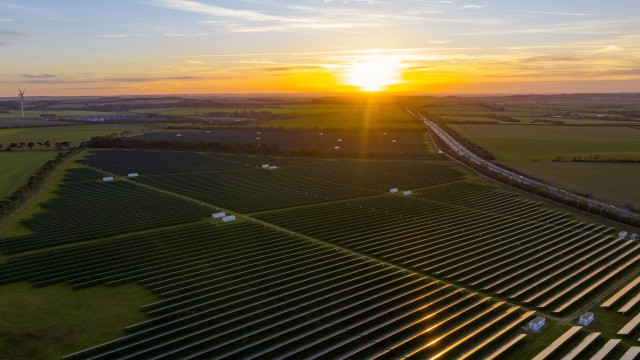
First Solar: Strong Future Ahead For US Based Solar Manufacturing
First Solar is a high growth company without a premium valuation. Demand for their panels is rising, they are opening new factories, and government incentives are boosting margins. First Solar continues to execute their expansion plans in the US and abroad while demand remains robust. IRA tax benefits will result in roughly a 30% improvement in margins.
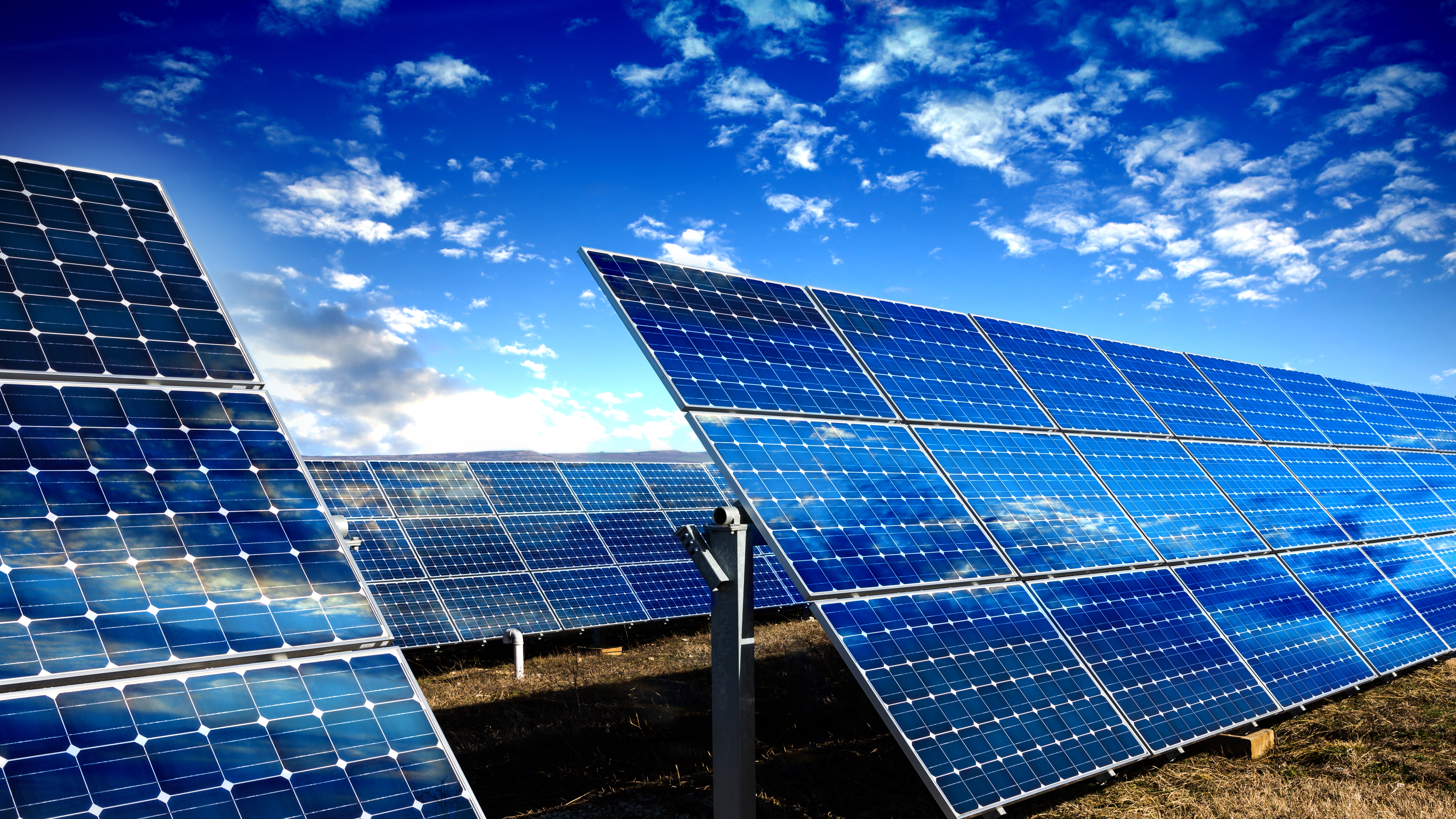
First Solar: Growing Opportunities And Regulatory Tailwinds Ensure A Shining Future
VioNettaStock First Solar (NASDAQ:FSLR) is a leading solar technology company and the largest PV solar module manufacturer in the US. The company has operations both in the US and internationally and is poised for continued growth. This article delves into my bullish view of the firm. Quarter Analysis First Solar just recently released its Q1 2024 results, and it was fantastic for the company. Looking at the company’s income statement, Net Sales were up 44.8% year over year at $794.1 million compared to $548.2 million. There is some seasonality in the business as last quarter's (Q4 2023) results were as high as $1.158 billion. In Q1 2024, First Solar had a Net Income of $237 million compared to $43 million at the same time last year. This translated to a reported diluted EPS of $2.20 which was much higher than the $0.40 reported in Q1 2023, a gain of 180%. The company has a strong balance sheet as well, with cash and cash equivalents of $1.682 billion and marketable securities of $308 million. Removing total debt (current and long-term) of $619.6 million gives us a Net cash position of $1.37 billion. The Net cash position decreased from the prior quarter’s approximately $1.6 billion figure due to capital expenditures to increase manufacturing capacity in the US (more on this below). This shows that management is a good steward of capital and is a signal that there are still growth opportunities for the company. First Solar faces Regulatory Tailwinds Digging deeper into the company’s financials, there are two main sources of the company’s growth. The first is First Solar has seen its Gross Margins expand greatly. In Q1 2024 Gross Profit margins more than doubled from 23.2% in 2023 to 43.6%. This increase in Gross Profit margins was primarily driven by the advanced manufacturing production credit (“AMPC”) as a result of the Biden administration's “Inflation Reduction Act”. According to information from legal firm Baker Donelson, “The AMPC established a dollar-for-dollar tax credit for the production (within the United States) and sale of certain eligible components including solar and wind energy components, inverters, qualifying battery components, and applicable critical minerals” First Solar 10-Q As a solar manufacturer due to the AMPC, First Solar saw a massive decrease of $124.3 million in its Cost of sales. This reduction of COGS flowed straight to the bottom line and represents 36% of total Gross Profit. This means that First Solar has seen a windfall profit due to government intervention. This particular credit is set to be phased out gradually beginning in 2030 until finally ending in 2032. Another government-related “tailwind” for the company is the Biden administration's increasing “anti-China” stance. The Biden administration recently removed the tariff exemption, that they themselves put in, for Bifacial solar panels. Originally,, the Trump administration imposed a tariff of 14.25% on all imported solar panels in order to protect US domestic manufacturers. Yet, the Biden administration in 2022 had carved out an exception for “Bifacial solar panels”. Predictably, this has resulted in a flood of Bifacial solar panels into the US market. These panel types are roughly 98% of all imported solar panels. This undermined the objective of the original safeguard measure, as all it did was shift consumer demand from monofacial to bifacial. According to analysts at RothMKM, First Solar could be a key beneficiary of this initiative and other Biden administration initiatives to support US manufacturing. However, I would like to point out that Trump already wanted to put these tariff protections in place. The reason why I wanted to discuss Trump is that based on the most recent polls, he has a very good chance of winning re-election. A Trump administration has the impression of being more friendly to traditional fuels like oil and natural gas. But in my opinion, First Solar is still positioned to do well in a Trump administration due to having a large US domestic manufacturing base, roughly 36.6% of total production. First Solar Investor Presentation First Solar Investor Presentation However, most of the new production capacity for the company’s Series 7 module will be coming from the US. First Solar is in the process of expanding its manufacturing capacity by 7.6 GW. These capacity increases are from the expansion of its Ohio facility and two new facilities in Alabama and Louisiana. These two new facilities are expected to commence operations in the second half of 2024 and late 2025 and cost roughly a billion dollars each. First Solar Top-line Continues to Impress The other driver of First Solar’s growth is its increasing Net Sales. It is my view that the company offers a superior differentiated product from the solar panels coming from China. According to the company’s 10-Q, its solar panels use an “advanced thin film semiconductor technology that provides a high-performance, lower-carbon alternative to conventional crystalline silicon PV solar modules”. This advantage was pointed out in the most recent earnings call as well. According to First Solar management, the average large Chinese solar manufacturing facility is operating at a 23% utilization rate, which is a record-low. Contrast this to First Solar, which has seen its pipeline of potential bookings expand. The company reported 72.8 gigawatts of potential bookings, of which 29.4 gigawatts are “mid to late stage” opportunities. This signals to me that the company's technology is differentiated from commodity solar panels coming from China. First Solar Investor Presentation The company expects robust demand to continue as the need to power data centers and emergent AI technologies continues to expand. According to management; We're seeing meaningful increases in demand expectations driven in part by data center load growth. According to McKinsey, U.S. data center power consumption is expected to reach 35 gigawatts annually by 2030, and much of this growth is supplied by renewable energy given that hyperscalers like Apple, Google, Meta and Microsoft are committed to 24/7 use of carbon-free energy. We believe that First Solar is strongly positioned to supply this emerging sector given our advantaged technology and more sustainable product. It is then no surprise that management has kept its strong guidance for 2024 despite the difficult macroeconomic environment in the US. The company expects Net Sales of $4.4 billion to $4.6 billion in 2024. This is a sharp increase compared to the $3.32 billion Net Sales reported in 2023. It expects to nearly double its 2023 diluted EPS of $7.74. First Solar is guiding for EPS of $13 to $14 per share. First Solar Press Release Valuation and Conclusion In terms of valuation, First Solar’s stock is trading at a good valuation given its growth prospects. The company is trading at a P/E ratio of 19.78x TTM and 14.3x forward. This is lower than the sector median of 22.78x TTM and 24.17x forward. Over the last five years, the company has averaged 9.97% top-line revenue growth. I believe growth will only accelerate from here given the factors mentioned above. Wall Street analysts believe that First Solar’s EPS could reach as high as $30.36 per share by 2026. Using a multiple of 15x, which is much lower than the sector's median, gives me a price target for FSLR stock at $455.4 which is more than double the current stock price. These estimates don’t come without risks though and as discussed above the key risk is both economical and geopolitical. There is a real concern about China “dumping” solar panels in the US markets. However, as discussed, First Solar is well positioned regardless of who wins the upcoming election. Particularly as a “green company” for the left and an “America first company” for the right. I like FSLR stock and have initiated a buy rating.
Comparing First Solar (NASDAQ:FSLR) & Photronics (NASDAQ:PLAB)
First Solar (NASDAQ:FSLR – Get Free Report) and Photronics (NASDAQ:PLAB – Get Free Report) are both oils/energy companies, but which is the better business? We will compare the two businesses based on the strength of their earnings, institutional ownership, dividends, risk, profitability, analyst recommendations and valuation. Analyst Ratings This is a summary of recent ratings for First Solar and Photronics, as reported by MarketBeat.com. Sell Ratings Hold Ratings Buy Ratings Strong Buy Ratings Rating Score First Solar 0 1 23 0 2.96 Photronics 0 1 0 0 2.00 First Solar presently has a consensus price target of $238.20, indicating a potential upside of 20.55%. Photronics has a consensus price target of $21.00, indicating a potential downside of 26.68%. Given First Solar’s stronger consensus rating and higher possible upside, equities analysts clearly believe First Solar is more favorable than Photronics. Insider and Institutional Ownership 92.1% of First Solar shares are owned by institutional investors. Comparatively, 88.4% of Photronics shares are owned by institutional investors. 0.6% of First Solar shares are owned by insiders. Comparatively, 3.9% of Photronics shares are owned by insiders. Strong institutional ownership is an indication that large money managers, endowments and hedge funds believe a stock is poised for long-term growth. Earnings and Valuation This table compares First Solar and Photronics’ revenue, earnings per share and valuation. Gross Revenue Price/Sales Ratio Net Income Earnings Per Share Price/Earnings Ratio First Solar $3.32 billion 6.37 $830.78 million $9.54 20.71 Photronics $892.08 million 2.03 $125.49 million $2.23 12.84 First Solar has higher revenue and earnings than Photronics. Photronics is trading at a lower price-to-earnings ratio than First Solar, indicating that it is currently the more affordable of the two stocks. Volatility and Risk First Solar has a beta of 1.37, meaning that its stock price is 37% more volatile than the S&P 500. Comparatively, Photronics has a beta of 1.41, meaning that its stock price is 41% more volatile than the S&P 500. Profitability This table compares First Solar and Photronics’ net margins, return on equity and return on assets. Net Margins Return on Equity Return on Assets First Solar 28.75% 16.24% 10.61% Photronics 15.34% 10.37% 8.69% Summary First Solar beats Photronics on 12 of the 14 factors compared between the two stocks. About First Solar (Get Free Report) First Solar, Inc., a solar technology company, provides photovoltaic (PV) solar energy solutions in the United States, France, Japan, Chile, and internationally. The company manufactures and sells PV solar modules with a thin film semiconductor technology that provides a lower-carbon alternative to conventional crystalline silicon PV solar modules. It designs, manufactures, and sells cadmium telluride solar modules that converts sunlight into electricity. The company's residual business operations include project development activities, operations and maintenance services, and the sale of PV solar power systems to third-party customers. It serves developers and operators of systems, utilities, independent power producers, commercial and industrial companies, and other system owners. The company was formerly known as First Solar Holdings, Inc. and changed its name to First Solar, Inc. in 2006. First Solar, Inc. was founded in 1999 and is headquartered in Tempe, Arizona. About Photronics (Get Free Report) Photronics, Inc., together with its subsidiaries, engages in the manufacture and sale of photomask products and services in the United States, Taiwan, China, Korea, Europe, and internationally. It offers photomasks that are used in the manufacture of integrated circuits and flat panel displays (FPDs); and to transfer circuit patterns onto semiconductor wafers, and FDP substrates. The company offers electrical and optical components. It sells its products to semiconductor and FPD manufacturers, designers, and foundries, as well as to other high-performance electronics manufacturers through its sales personnel and customer service representatives. The company was formerly known as Photronic Labs, Inc. and changed its name to Photronics, Inc. in 1990. Photronics, Inc. was incorporated in 1969 and is based in Brookfield, Connecticut.
First Solar Stock Today: How To Capture Profits With A Double Butterfly Trade In Options
The ideal result gives us three choices to exit the trade.



