








EnLink Midstream: Getting Pulled Along By Data Centers And LNG Exports
EnLink is cheaply valued due to its assets in Tier-2 basins. These assets have spare capacity that will be consumed by natural gas consumption fueled by LNG exports and data centers. Being able to increase profitability with minimal CAPEX spending will result in large FCF increases through the remainder of this decade.
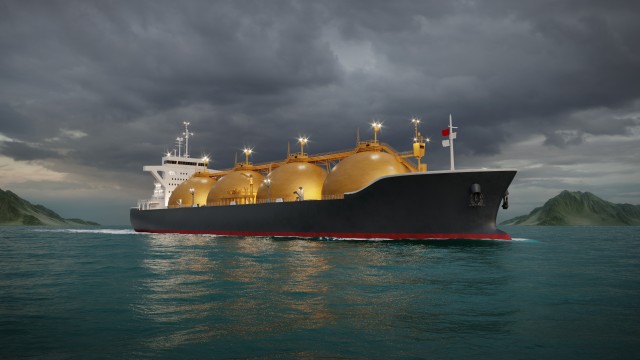
Cheniere Energy: Buybacks And Attractive Valuation To Propel The Share Price
Cheniere Energy is a leading energy company and one of the largest players in the liquefied natural gas market. The company has solid financials and shareholder-friendly capital allocation policy. Increased energy prices can positively impact the company's revenue.

Saudi Aramco in LNG talks with US Tellurian, NextDecade, sources say
Oil giant Aramco is in talks with U.S. firms Tellurian and NextDecade on two separate LNG projects as the Saudi firm seeks to boost its gas trading and production, three sources close to the talks told Reuters.
TotalEnergies signs LNG agreements with Indian Oil Corp, Korea South-East Power
French energy major TotalEnergies announced on Tuesday agreements with Indian Oil Corporation and Korea South-East Power [RIC:RIC:KOSEP.UL] for the supply of liquefied natural gas (LNG) over a medium to long term period.
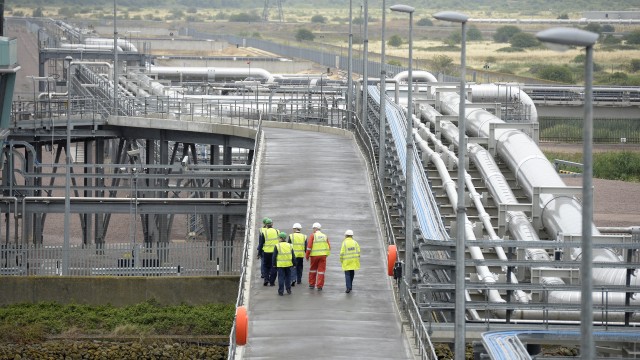
UK's National Grid seeks buyer for Europe's biggest LNG terminal
British energy infrastructure operator National Grid said on Thursday it is looking to sell its Grain liquefied natural gas (LNG) terminal in Britain, Europe's largest such facility, in a bid to streamline operations.
Africa-Paris Declaration on Energy Transition, Climate Justice and Energy Poverty
The declaration aligns Africa's position on the global energy transition and climate justice debate, following the conclusion of the Invest in African Energy forum in ParisJOHANNESBURG, SOUTH AFRICA / ACCESSWIRE / May 20, 2024 / African civil society, human rights groups, environmental groups, governments and the private sector stand firm in their commitment to align Africa's efforts in combating energy poverty and fostering industrialization, all while advocating for a just energy transition and ensuring climate justice. This steadfast commitment was underscored by the conclusion of the Invest in African Energy forum held in Paris on May 15.Throughout the forum, key stakeholders from across the continent and beyond convened to address the pressing energy challenges facing Africa. Taking place in Paris - the city where the Paris Climate Agreement was signed in 2016 - discussions centered on strategies to attract investment, promote sustainable energy development and drive economic growth while prioritizing environmental responsibility, African civil society, human rights groups, environmental groups, governments and the private sector recognize the critical importance of addressing energy poverty, which continues to impede socio-economic progress in many African nations. By fostering an environment conducive to investment and innovation, we Africans aim to unlock the continent's vast energy potential and empower communities with access to reliable, affordable energy sources.The Paris Declaration calls for fruitful discussions and collaborations, highlighting the shared commitment of African nations, global investors and industry leaders to drive sustainable energy development across the continent.Moving forward, we remain dedicated to championing Africa's energy agenda, advocating for policies that balance economic growth with environmental stewardship, and empowering African nations to realize their energy potential while advancing climate goals.We recognize Africa's sovereign right to develop its energy resources - which include north of 125 billion barrels of oil and 620 trillion cubic feet of natural gas - in a balanced and sustainable manner. Ramping up energy investment, deploying continuous finance and advancing energy projects represent Africa's core priorities, as 600 million Africans lack access to reliable power and 900 million Africans lack access to clean cooking fuels. Projects like the TotalEnergies-led Mozambique LNG development and the East African Crude Oil Pipeline seek to maximize Africa's resources for the benefit of local communities. In West Africa, developments such as Perenco's Cap Lopez LNG Terminal and associated LPG facility, the Nigeria-Morocco Gas Pipeline and the Eni-led Congo LNG project will catalyze long-term economic growth and energy resilience, with natural gas, LNG and LPG set to play a critical role in the continent's energy poverty reduction strategy. The Southern African region is only just starting to realize the full potential of its oil and gas resources, with recent discoveries made in Zimbabwe's Cabora Bassa Basin by Invictus Energy and Namibia's prolific Orange Basin by Shell, TotalEnergies and Galp. Namibia is also home to the development of sub-Saharan Africa's largest green hydrogen project led by Hyphen Hydrogen Energy, while Mauritania is pioneering green hydrogen through Chariot's Project Nour and CWP Global's AMAN Project, coupled with expanded gas development from the bp-operated Greater Tortue Ahmeyim LNG project.Despite Africa's unmet energy requirements, global energy lending has only tightened, as major European and other Western banks exit the fossil fuels industry in Africa, while financing fossil fuels in Western countries. These institutions have not been equitable when it comes to facilitating adequate energy and climate finance for African countries, where local populations are disproportionately affected by both climate risks and restrictions on fossil fuel development. Europe has made repeated calls for natural gas and green finance, yet there is a considerable blockage on energy finance for African countries. This chokehold continues to inhibit Africa's industrial growth and the establishment of critical gas-driven industries like power, petrochemicals, fertilizers and mining, keeping the continent at a developmental lag.We Africans deplore the continuous polarization of the energy dialogue in Western countries and call on the demonization of African oil and gas to stop. We urge free market solutions to Africa, and not a continuous push for aid so that Africans pledge to leave their resources in the ground. More aid is not the answer. Investment is key. From Cape to Cairo, from Nairobi to Dakar, we stand united toward meeting our shared obligations to fight climate change, noting that wealthy nations need to decarbonize and Africa needs to industrialize.It is the position of African civil society, human rights groups, environmental groups, governments and the private sector that African countries must diversify available pools of capital and create financial instruments outside of traditional institutions - tapping into private equity and non-conventional bonds - to fund new exploration and energy initiatives. Moreover, African countries must put in place attractive regulatory and fiscal terms, thereby creating an enabling environment and removing all barriers to investment, such as incohesive regulation, excessive red tape or nationalistic policies. With competitive terms and incentives in place - followed by the integration of ESG principles and capacity building requirements - African energy projects will be able to compete effectively for global capital and work toward making energy poverty history across the continent.Distributed by APO Group on behalf of African Energy Chamber.Download image: Click Here African Energy Chamber
Gaztransport & Technigaz SA (GZPZY) To Go Ex-Dividend on June 17th
Gaztransport & Technigaz SA (OTCMKTS:GZPZY – Get Free Report) announced a dividend on Saturday, May 18th, NASDAQ reports. Investors of record on Monday, June 17th will be paid a dividend of 0.3568 per share on Friday, July 5th. The ex-dividend date is Monday, June 17th. This is an increase from Gaztransport & Technigaz’s previous dividend of $0.27. Gaztransport & Technigaz Trading Up 1.8 % OTCMKTS:GZPZY opened at $29.64 on Monday. Gaztransport & Technigaz has a one year low of $18.14 and a one year high of $32.56. The business’s 50-day simple moving average is $29.74 and its 200 day simple moving average is $27.93. Gaztransport & Technigaz Company Profile (Get Free Report) Gaztransport & Technigaz SA, a technology and engineering company, provides cryogenic membrane containment systems for the maritime transportation and storage of liquefied gas and liquefied natural gas (LNG) in South Korea, China, Russia, and internationally. The company offers solutions, such as commercial vessel tanks, small and medium-capacity LNG carriers, bunker barges and vessels, and floating storage structures and bunkering stations for supplying LNG to merchant vessels other than LNG carriers; and LNG fuel storage solutions and related systems for the merchant vessels that use LNG as a marine fuel to replace the conventional fuel oils. Read More Five stocks we like better than Gaztransport & Technigaz Earnings Per Share Calculator: How to Calculate EPS JD’s Earnings Could Mean Chinese Stocks Making a Comeback Profitably Trade Stocks at 52-Week Highs Canada Goose Flies Higher Driven By DTC Growth Manufacturing Stocks Investing CVS Health Stock Has a Silver Lining Called Value

Why Did U.S. Natural Gas Prices Move Up 16.6% Last Week?
The U.S. Energy Department's weekly inventory release showed that natural gas supplies increased less than expected. The positive inventory numbers, together with signs of production pullback and upcoming summer demand, buoyed natural gas futures, which settled with a healthy gain week over week.Despite this spike, which saw natural gas hit its highest since January, the space remains highly susceptible to unpredictable weather patterns, impacting prices and market stability.At this time, we advise investors to focus on stocks like Coterra Energy (CTRA Quick QuoteCTRA - Free Report) and Cheniere Energy (LNG Quick QuoteLNG - Free Report) .EIA Reports a Build Smaller Than Market ExpectationsStockpiles held in underground storage in the lower 48 states rose 70 billion cubic feet (Bcf) for the week ended May 10, below the guidance of a 76 Bcf addition, per a survey conducted by S&P Global Commodity Insights. The increase compared with the five-year (2019-2023) average net injection of 90 Bcf and last year’s growth of 93 Bcf for the reported week. The latest increase puts total natural gas stocks at 2,633 Bcf, which is 421 Bcf (19%) above the 2023 level and 620 Bcf (30.8%) higher than the five-year average.The total supply of natural gas averaged 104.5 Bcf per day, up 0.2 Bcf per day on a weekly basis due to higher dry production, partly offset by lower shipments from Canada. Meanwhile, daily consumption fell to 94.5 Bcf from 95.5 Bcf in the previous week, mainly reflecting a drop in natural gas consumed for power generation.Natural Gas Prices Finish Sharply HigherNatural gas prices trended northward last week following the lower-than-expected inventory build. Futures for June delivery ended Friday at $2.49 on the New York Mercantile Exchange, up some 16.6% from the previous week’s closing. As a matter of fact, the commodity’s resurgence over the past few weeks wiped out all of its losses since the start of this year. Investors should know that natural gas realization has been under pressure from strong production, elevated stockpiles and tepid weather-related demand. It's worth mentioning that the current inventory levels are well above the year-ago figure and the five-year average. The bearish sentiment surrounding the commodity even prompted shale producers Chesapeake Energy (CHK Quick QuoteCHK - Free Report) and EQT Corporation (EQT Quick QuoteEQT - Free Report) to hit the brakes on new drilling.Chesapeake announced a reduction in its drilling rigs so as to lower volume, with the Appalachian Basin-focused EQT following on. CHK has decided to curb the second quarter’s gas production expectations by 400 million cubic feet per day (MMcf/d), doubling the previous curtailment announced in March. Separately, EQT — the largest domestic producer of natural gas — said that it will lower its daily output by 1 Bcf through May to combat the supply glut in the U.S. market. According to EQT, the revised plan will likely reduce full-year sales volume to 2,100-2,200 billion cubic feet equivalent (Bcfe) from 2,200-2,300 Bcfe earlier. It appears that these production cut announcements have been partly responsible in driving natural gas prices higher and galvanizing the market. As is the norm with natural gas, changes in temperature and weather can lead to price swings. With low heating demand this winter, usage of the commodity to generate electricity took a hit. However, predictions of warmer-than-normal weather over most of the United States should boost demand. Moreover, there are signs of curtailment in U.S. production. According to energy services provider Baker Hughes, the U.S. natural gas rig count — a pointer to where production is headed — is down around 27% from last year. Industry observers believe this could set the stage for a pullback in near-term drilling and supplies. Meanwhile, a stable demand catalyst in the form of continued strong LNG feedgas deliveries, is supporting natural gas. As a matter of fact, LNG shipments for export from the United States have been elevated of late, due to environmental reasons and Europe’s endeavor to move away from its dependence on Russian natural gas supplies due to the war in Ukraine. At the same time, the increase in gas flows due to the full restart of the Freeport LNG export plant in Texas has translated into more of the commodity being loaded onto ships. A heatwave blanketing Southeast Asia has also led to a jump in power demand for air conditioning, increasing exports of the super-chilled fuel.Final ThoughtsThe upshot of all these factors — the natural gas market — despite improving, remains an oversupplied one. As mentioned above, it endured a torrid year in 2023, briefly breaking below the $2 threshold for the first time since 2020. The situation was not much different in the early parts of 2024, with the fuel reaching a multi-year low near $1.48 in late March and struggling to sustain a rally over the psychological mark of $2. However, natural gas has staged quite the turnaround in a matter of weeks, and looks to improve even further given the favorable temperature outlook.Nevertheless, based on several factors, the space is currently quite unpredictable and spooked by sudden changes in weather and production patterns. As such, investors are advised to still exercise caution and preferably hold on to fundamentally strong stocks like Coterra Energy and Cheniere Energy.Coterra Energy: It is an independent upstream operator primarily engaged in the exploration, development and production of natural gas. Headquartered in Houston, TX, the firm owns some 183,000 net acres in the gas-producing Marcellus Shale of the Appalachian Basin. This Zacks Rank #3 (Hold) company churned out an average of 2,262.7 million cubic feet on a daily basis from these assets in 2023.Coterra beat the Zacks Consensus Estimate for earnings in three of the trailing four quarters and missed in the other, the average being 9.8%. Valued at around $21 billion, CTRA has risen 8.9% in a year.Cheniere Energy: Being the first company to receive regulatory approval to export LNG from its 2.6 billion cubic feet per day Sabine Pass terminal, Cheniere Energy enjoys a distinct competitive advantage.Cheniere Energy beat the Zacks Consensus Estimate for earnings in two of the last four quarters and missed in the other two. This #3 Ranked natural gas exporter has a trailing four-quarter earnings surprise of roughly 58.9%, on average. LNG shares have moved up 11.3% in a year. Zacks Names "Single Best Pick to Double" From thousands of stocks, 5 Zacks experts each have chosen their favorite to skyrocket +100% or more in months to come. From those 5, Director of Research Sheraz Mian hand-picks one to have the most explosive upside of all. It’s a little-known chemical company that’s up 65% over last year, yet still dirt cheap. With unrelenting demand, soaring 2022 earnings estimates, and $1.5 billion for repurchasing shares, retail investors could jump in at any time. This company could rival or surpass other recent Zacks’ Stocks Set to Double like Boston Beer Company which shot up +143.0% in little more than 9 months and NVIDIA which boomed +175.9% in one year.Free: See Our Top Stock and 4 Runners Up >>
Canada's Pembina Pipeline expects investment decision on Cedar LNG project in June
Pembina Pipeline Corp said on Thursday progress on its proposed $4 billion Cedar project remains on track and a final investment decision (FID) is expected in June on what would be one of Canada's first liquefied natural gas export terminals.




