









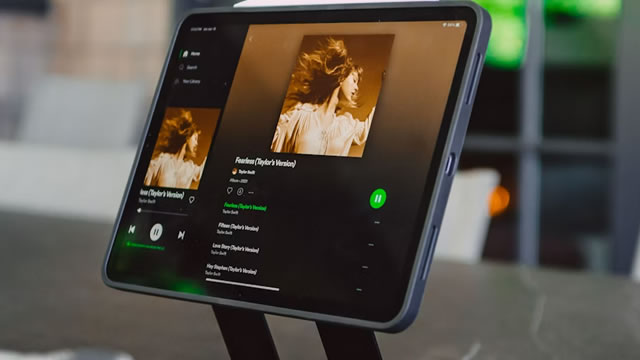
Spotify (SPOT) Ascends While Market Falls: Some Facts to Note
Spotify (SPOT) closed the most recent trading day at $454.16, moving +1.23% from the previous trading session.

Wall Street Bulls Look Optimistic About Spotify (SPOT): Should You Buy?
Investors often turn to recommendations made by Wall Street analysts before making a Buy, Sell, or Hold decision about a stock. While media reports about rating changes by these brokerage-firm employed (or sell-side) analysts often affect a stock's price, do they really matter?

Spotify: My Top Investment Pick For 2025
I recommend a "Strong Buy" for Spotify as I highlight robust growth, pricing power, and profitability improvements. Spotify's Q3 results were stellar, with gross margins at 31.1%, revenue up 19% YoY, and free cash flow soaring 230% to $711 million. The platform's scalable, low-cost model, AI-driven personalization, and new subscription tiers ensure sustained growth and high margins without significant overhead.

Meet the Monster Stock that Continues to Crush the Market
Spotify Technology (SPOT 0.67%) has been one of the best-performing technology stocks in the world since going public in 2018. The journey has been bumpy, though.

Spotify (SPOT) Ascends While Market Falls: Some Facts to Note
In the latest trading session, Spotify (SPOT) closed at $480.11, marking a +0.67% move from the previous day.

Why Spotify (SPOT) Outpaced the Stock Market Today
In the latest trading session, Spotify (SPOT) closed at $476.91, marking a +1.13% move from the previous day.

Spotify Discontinues Car Thing Smart Player
Spotify has pulled the plug on Car Thing, its hardware product that allowed users to control the company's streaming service through car speakers when connected to a phone by using both voice recognition and preset buttons. “Car Thing is discontinued and no longer operational,” the company said in a notice on the Car Thing website.

Spotify Technology (SPOT) is Attracting Investor Attention: Here is What You Should Know
Recently, Zacks.com users have been paying close attention to Spotify (SPOT). This makes it worthwhile to examine what the stock has in store.

Spotify Stock Skyrockets 153% YTD: Here's How You Should Play It
With SPOT shares on a consistent rise, we analyze its current standing to decide whether to invest now or await a potential correction.
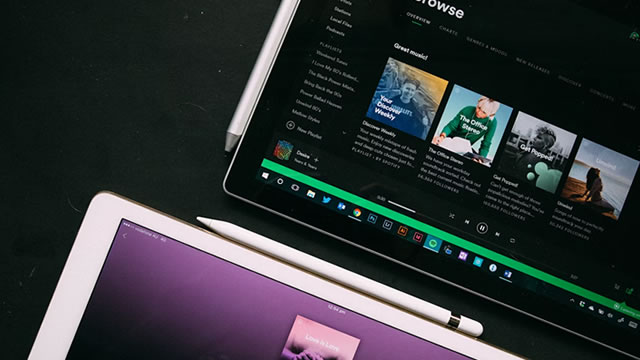
Stock-Split Watch: 1 Under-the-Radar Growth Stock Up 510% Since the Beginning of 2023
Stock splits have been in vogue recently. Large technology companies like Amazon, Alphabet, Nvidia, and Tesla have split their stocks after seeing their share prices get close to $1,000 or more.

Spotify cuts developer access to several of its recommendation features
Spotify will no longer allow developers building third-party apps with its Web API to access several features within the music streaming platform, such as song and artist recommendations, the company announced in a developer blog post on Wednesday. The company appears to be limiting third-party developers from building AI apps using data from Spotify listeners.
The Big 3: SPOT, AAPL, WMT
Giants in digital entertainment, technology and retail take focus in today's Big 3. Jessica Inskip explains her bullishness on all three names while Rick Ducat breaks down the technical trends.




