





Market Dislocation Creates Buying Opportunity in Nuclear ETFs
Recent weakness across nuclear energy ETFs represents a market dislocation in the industry. While public equities have pulled back year to date, strong regulatory tailwinds and massive private sector funding suggest that short-term price pressure has created a compelling entry point for long-term investors.
Nuclear Energy Fuel Chain Expansions Signal Macro Support for NUKZ
Recent developments across the nuclear energy fuel chain are creating a favorable backdrop for reactor deployment programs. This serves as a constructive update for Range Nuclear Renaissance Index ETF (NUKZ) investors.
X-Energy & Centrus Partner on Uranium Enrichment: How NUKZ Plays the Nuclear Value Chain
As nuclear reactor developers race toward commercial deployment, securing a reliable fuel supply chain has become a top priority. Advanced reactor developer X-Energy (XE) recently signed a definitive supply agreement with Centrus Energy (LEU).
ETF Prime: Nuclear ETFs & America's First Domestic Gold ETF
The nuclear energy renaissance and a new approach to precious metals ETFs headlined this week's ETF Prime. Host Nate Geraci welcomed Steffan Szumowski, nuclear research analyst at VettaFi, followed by Tarek Saab, CEO and co-founder of Texas Precious Metals.
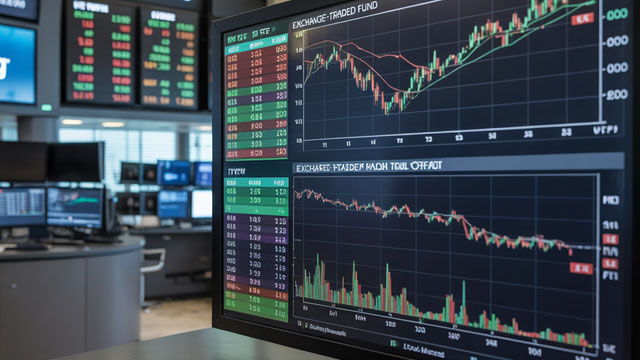
Reactor Life Extensions Boost Nuclear Energy ETF NUKZ
Governments and utility providers are extending the operational shelf life of existing nuclear power facilities to combat rising power demand. Global energy security needs continue to accelerate, prompting operators to choose long-term structural extensions over costly new builds.

NUKZ: This Nuclear Power ETF Isn't A Buy Yet
Range Nuclear Renaissance Index ETF offers diversified exposure to industrials benefiting from nuclear power growth but has less pure-play nuclear upside. Some of NUKZ's top holdings, like GE Vernova and Samsung C&T, are broad industrials with only partial nuclear exposure. The ETF trades at a 20x P/E, slightly below the S&P 500, but its valuation is not compelling enough to warrant a buy given its composition and expense ratio.
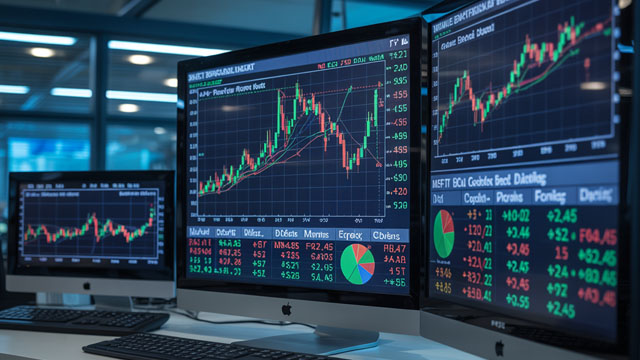
The Nuclear Trade Is Entering Phase 2 and These 3 ETFs Own Everything From Uranium Miners to Reactor Restarts
Uranium spot prices drove the nuclear trade higher over the past three years. That first leg is winding down, replaced by new catalysts: reactor restarts at Palisades and Three Mile Island's Crane Clean Energy Center, power purchase agreements from Microsoft, Amazon, and Google, and small modular reactor programs moving from press release to permit.
NUKZ Well-Positioned as DOE Targets Supply Chain Bottlenecks
The nuclear sector is capturing significant investor attention, as federal policy continues to align with grid modernization efforts. The U.S. Department of Energy (DOE) recently announced $94 million in Federal cost-shared funding to expedite the deployment of advanced small modular reactors (SMRs).
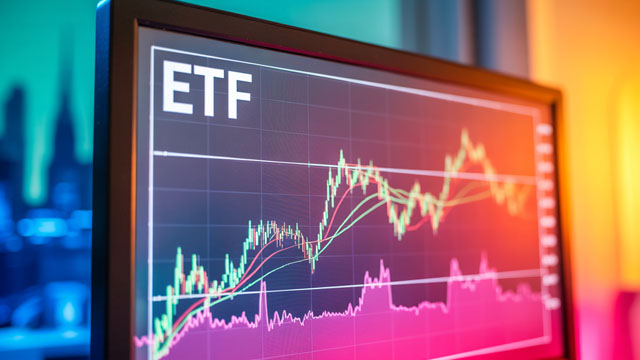
Nuclear Power Is the Only Real Answer to AI Electricity Demand and These 3 ETFs Own the Trade
The hyperscalers have a math problem. US power generation from data centers is projected to climb from about 5% of the total to roughly 15% over a five-year span, a step change on a grid that has barely grown since 2000.
NUKZ: Nuclear Stocks Consolidating As The AI Revolution Rolls On
I reiterate a buy rating on the Range Nuclear Renaissance ETF, citing compelling growth-adjusted valuation and favorable long-term demand drivers. NUKZ trades at a 20.6x P/E with a 16% long-term earnings growth rate, yielding a PEG ratio of 1.25x. Technical setup shows an ascending triangle with support in the mid-$60s and a measured move upside target of $90.

Load Up on Nuclear Before the Data Center Energy Race Accelerates
Hyperscalers building out AI infrastructure have run into a hard constraint: electricity.
State-Level Policy Shifts Spark Nuclear Energy Investment Opportunities
The state-led push to revitalize the U.S. nuclear sector underscores the significant shift in the domestic energy landscape. The nuclear energy narrative is rapidly changing.




