



Microsoft Corp. (MSFT)










Summary
MSFT Chart
Similar

Microsoft Stock Testing 2 Key Levels as Options Traders Pounce
Microsoft Corp (NASDAQ:MSFT) may seem like an impenetrable giant -- especially around earnings season -- but the ugly truth is tech stock has not logged monthly win since September.
Microsoft: High-Margin Growth Points To A Premium Valuation
Microsoft Corporation stock sold off amongst other software companies as investors worry that these firms don't have a durable business model in the AI age. The selloff was more brutal for low-margin stocks and less so for high-margin stocks YoY. Given that Microsoft has one of the highest margins, the underperformance was mild. Growth stock investors would buy SaaS names at insane multiples and disregard margins, but we are seeing this behavior changing as these low-margin stocks start to look more risky.
Microsoft: A Very Healthy Business And Fairly Negative Sentiments: The Ingredients For A Timely Investment!
Microsoft (MSFT) is a buy at current levels, with recent underperformance and sector rotation creating an attractive entry point. MSFT's growth is driven by Azure, Copilot adoption, and a robust AI infrastructure backlog, notably with significant commitments from OpenAI. Concerns about capex and OpenAI's ability to fulfill commitments are overstated; evidence suggests MSFT will benefit from rising AI demand and royalty streams.
Microsoft Corp. (MSFT) FAQ
What is the stock price today?
On which exchange is it traded?
What is its stock symbol?
Does it pay dividends? What is the current yield?
What is its market cap?
When is the next earnings date?
Has Microsoft Corp. ever had a stock split?
Microsoft Corp. Profile
| Transportation Infrastructure Industry | Industrials Sector | Satya Nadella CEO | NASDAQ (NGS) Exchange | 594918104 CUSIP |
| US Country | 228,000 Employees | 19 Feb 2026 Last Dividend | 18 Feb 2003 Last Split | 13 Mar 1986 IPO Date |
Overview
Microsoft Corporation, a pioneering technology firm, plays a pivotal role in the global software, services, devices, and solutions sectors, delivering comprehensive and integrated offerings to a worldwide customer base. Since its establishment in 1975, Microsoft has evolved into a tech giant with its headquarters in Redmond, Washington. The company operates through a diverse and dynamic portfolio, comprising the Productivity and Business Processes, Intelligent Cloud, and More Personal Computing segments. By continuously innovating and expanding its product range, Microsoft aims to empower every person and every organization on the planet to achieve more.
Products and Services
Microsoft's wide-ranging products and services are strategically grouped into several segments, each tailored to meet the specific needs of its global user base:
- Productivity and Business Processes: This segment emphasizes enhancing productivity across businesses and consumer bases. It includes:
- Office, Exchange, SharePoint, Microsoft Teams: Comprehensive office suite and collaborative platforms designed to enhance productivity and teamwork across organizations.
- Microsoft 365 Security and Compliance, Microsoft Viva, and Microsoft 365 Copilot: Advanced tools focusing on security, compliance, workplace analytics, and AI-powered assistance.
- Office Consumer Services: Includes Microsoft 365 consumer subscriptions and licensed on-premises versions of Office products.
- LinkedIn: A professional networking platform that supports business solutions integration.
- Dynamics Business Solutions: Offers Dynamics 365 and other on-premises ERP and CRM solutions, which are intelligent, cloud-based applications designed to automate and streamline business processes.
- Intelligent Cloud: Focused on delivering cloud-based and server product solutions to drive innovation and efficiency, it encompasses:
- Azure and Other Cloud Services: Microsoft's premier cloud platform, providing a wide range of cloud service offerings.
- SQL and Windows Server, Visual Studio, System Center: Essential tools and services for database management, software development, and systems management.
- Enterprise Services: Includes enterprise support services, industry solutions such as Nuance professional services, and GitHub for collaborative software development.
- More Personal Computing: This segment aims to deliver more personal computing experiences through various products and services, such as:
- Windows Ecosystem: Comprises Windows OEM licensing, volume licensing, cloud services, and other commercial offerings to enhance the Windows experience across devices.
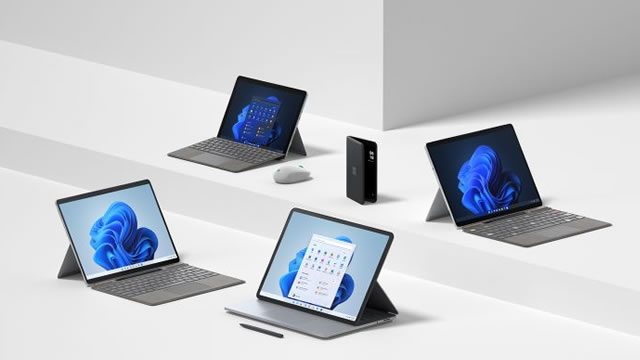
- Devices: Includes Surface devices, HoloLens, and PC accessories designed to enrich user interaction and productivity.
- Gaming: Features Xbox hardware and content, Xbox Game Pass subscriptions, cloud gaming, and other related services to provide an immersive gaming experience.
- Search and News Advertising: Encompasses Bing and Microsoft News and Edge, offering advertising solutions across Microsoft's digital platforms.
Through a network of OEMs, distributors, resellers, digital marketplaces, online stores, and retail outlets, Microsoft ensures its products and services are easily accessible worldwide, continually striving to meet the evolving needs of its diverse customer base.




