



Microsoft Corp. (MSFT)










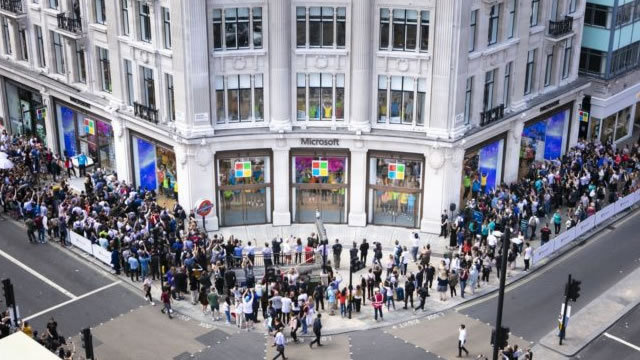
Microsoft stops relying on Chinese engineers for Pentagon cloud support
Microsoft has changed its practices to keep engineers in China from getting involved in support for U.S. defense clients using the company's Azure cloud services. The announcement came days after ProPublica published an extensive report describing the Defense Department's dependence on Microsoft software engineers in China.

Steady Transition to Windows 11 Aids MSFT: What's the Path Forward?
Microsoft gains from Windows 11 upgrade wave, aging PCs and new tie-ups as it eyes Q4 growth.
Microsoft (MSFT) Laps the Stock Market: Here's Why
In the closing of the recent trading day, Microsoft (MSFT) stood at $511.7, denoting a +1.2% move from the preceding trading day.

AI Stocks Soar, but Are You Overlooking the Market's Hidden Gems?
Key Points in This Article: AI tech giants like Nvidia (NVDA) and Microsoft (MSFT) have driven market gains, but a narrow focus on these stocks may miss broader opportunities.
Why Microsoft Still Has Room
Microsoft's AI-driven revenue surged 175% YoY, with Azure and Copilot leading enterprise adoption across key segments. The company is targeting a $25 billion topline boost from AI tools like Copilot by fiscal year 2026. Azure grew 33% YoY in Q3-FY25, with 16 percentage points of growth directly attributed to AI services.

Microsoft Corporation (MSFT) Is a Trending Stock: Facts to Know Before Betting on It
Microsoft (MSFT) has been one of the stocks most watched by Zacks.com users lately. So, it is worth exploring what lies ahead for the stock.
Why Microsoft Remains a Strong Buy Amid Economic Uncertainty
Microsoft (MSFT) stands out with strong financials, expanding AI and cloud investments, and bullish technical momentum, breaking above $470 and targeting $650 zone.
San Francisco rolls out Microsoft's Copilot to city staff
CNBC's Kate Rogers discusses public sector AI adoption with San Francisco Mayor Daniel Lurie as the city announces it is rolling out Microsoft's Copilot to its 30,000 employees.
Prediction: This Will Be The Next $4 Trillion-Dollar Stock
Nvidia (NVDA 0.53%)has been firing on all cylinders over the past two years, and the company just added one more accomplishment to its long list of medals: The chipmaker became the first stock to hit the $4 trillion mark. It now sits as the most valuable company in the world, but others are close behind.
Why Every AI Agent Will Likely Run On Microsoft
Microsoft's Azure is leading the shift to multi-agent AI systems, creating new demand for its integrated cloud and orchestration infrastructure. Despite decelerating cloud growth, Microsoft's strong financials, high margins, and operational excellence support a 19.3% undervaluation and moderate upside. Azure's deep integration, enterprise features, and open-source strategy provide durable competitive advantages over AWS and other cloud rivals.

Microsoft Prints Tens of Billions in Free Cash Flow. Time for a High-Yield Dividend?
Technology companies have been powering the markets to new highs over the past several years as massive investments in AI, data centers and the cloud have paid off.

Mar Vista U.S. Quality Q2 2025 Top Contributors And Detractors
Microsoft, Broadcom, and Oracle were among the portfolio's top contributors for the quarter. Alternatively, Apple, Johnson & Johnson, and Berkshire Hathaway detracted from performance. Microsoft shares rebounded in calendar Q2 following a strong fiscal Q3 2025 (March quarter), driven by accelerating demand for AI-related Azure services.



