



ASML Holding N.V. New York Registry Shares (ASML)











ASML faces US questions over whether advanced chipmaking tool reached China, Bloomberg reports
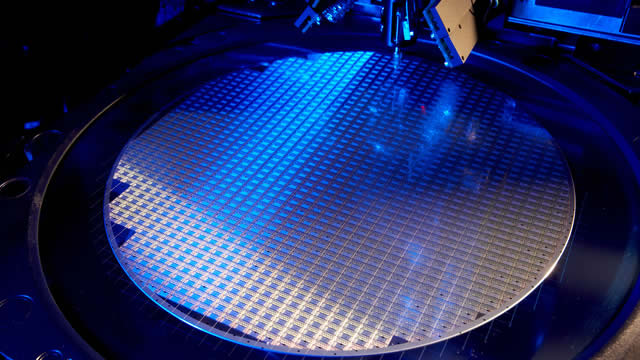
ASML Holding NV (NASDAQ:ASML, XETRA:ASME) is facing questions from the Trump administration after US Commerce Secretary Howard Lutnick raised concerns in recent meetings that one of the Dutch company's extreme ultraviolet lithography (EUV) machines may have reached China in violation of export restrictions, Bloomberg reported, citing people familiar with the discussions. According to Bloomberg, Lutnick discussed the issue during a series of meetings with senior ASML executives.
The US says ASML's top chip tool may be in China. ASML says it isn't
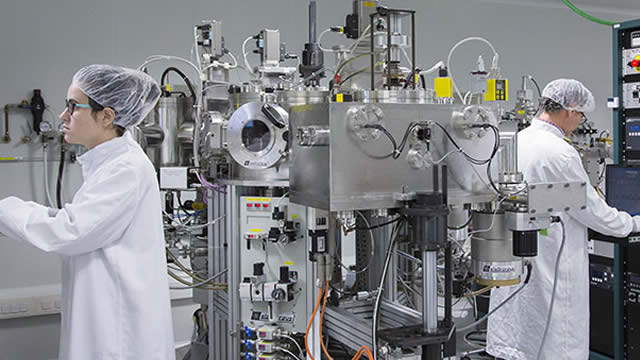
According to Bloomberg, U.S. Commerce Secretary Howard Lutnick has, in a series of recent meetings, told senior ASML executives he's concerned that one of the Dutch chipmaker's extreme ultraviolet lithography machines — the EUV systems that are the only tools on Earth capable of printing the most advanced semiconductor patterns — may have ended up in China. That would be a major breach of export controls that have barred ASML from selling EUV to China since the first Trump administration.
US Tells ASML It's Concerned China May Have Top Chip Tool
US Commerce Secretary Howard Lutnick outlined concerns to ASML's senior leaders that one of its top-of-the-line machines may have made its way into China, in violation of US-led export restrictions. ASML has pushed back on Lutnick's suggestion, explaining that none of its extreme ultraviolet lithography machines are in China, according to people familiar with the talks.

US tells ASML it is concerned China may have top chip tool, Bloomberg News reports
U.S. Commerce Secretary Howard Lutnick outlined concerns to Dutch chip-equipment firm ASML's senior leaders that one of its top-of-the-line machines may have made its way into China, in violation of U.S.-led export restrictions, Bloomberg News reported on Thursday.

ASML Holding N.V. (ASML) is Attracting Investor Attention: Here is What You Should Know
ASML (ASML) has been one of the stocks most watched by Zacks.com users lately. So, it is worth exploring what lies ahead for the stock.
ASML CEO on AI Demand, Data Centers in Space and Musk's Terafab
ASML Holding NV CEO Christophe Fouquet says the demand for AI infrastructure is still "enormous" and discusses the potential for data centers in space. Speaking during an interview on Bloomberg Television, Fouquet also says the company has to make sure it doesn't experience supply constraints when servicing new projects such as on Elon Musk's Terafab.
Here's Why ASML (ASML) Fell More Than Broader Market
ASML (ASML) closed at $1 in the latest trading session, marking a -4.69% move from the prior day.
ASML Surges 36% in 3 Months: Should Investors Buy the Stock?
ASML's 36% three-month surge highlights AI-driven chip demand and EUV leadership, but premium valuation and mixed estimates suggest caution.
ASML Could Soar Higher in 12 Months and Here's Why We'd Buy It
ASML (NASDAQ:ASML | ASML Price Prediction) has been one of 2026's defining AI infrastructure trades, with the Dutch lithography monopolist riding a record order book, a raised full-year guide, and renewed mega-cap enthusiasm to fresh highs.
ASML: Expensive, Rare, But Still Worth Buying
I am rating ASML a buy with a $2173 price target, implying a 16.6% upside from the current level of $1863 per share. I believe ASML's growth is driven by EUV lithography intensity, high NA EUV adoption, installed base management, and metrology and inspection demand. I believe these growth drivers can support EPS to move from a 2026 estimated EPS base of €30.9 to a 2027 estimated EPS of €36.49.
Forget ASML: As Post-June 5 Volatility Shakes High-Beta Tech, This Dividend-Paying Chip Index Is a No-Brainer Buy
ASML (NASDAQ:ASML | ASML Price Prediction) is the name dominating every chip-equipment headline this month after its shares rose 78.18% year to date on AI-driven lithography demand.
The Competitive Threat That Never Was: ASML's Widening Moat Boosts Stock 77% YTD
Roughly six months ago, we asked whether ASML (NASDAQ: ASML | ASML Price Prediction) finally had a real competitor: xLight, the stealth startup chaired by ousted Intel CEO Pat Gelsinger, was developing free-electron-laser light sources backed by up to $150 million in CHIPS Act funding with the U.S.




