



Ford Motor Company (F)









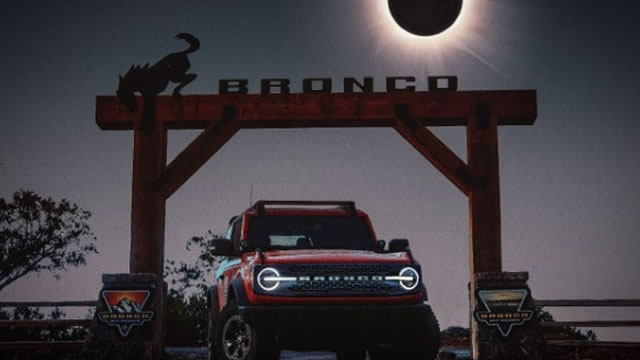
Can Ford's US Muscle Shield It From the Tariff Crossfire?
Ford prepares for a $1.5 billion tariff hit in 2025 but leans on U.S. production strength and strategic logistics workarounds.
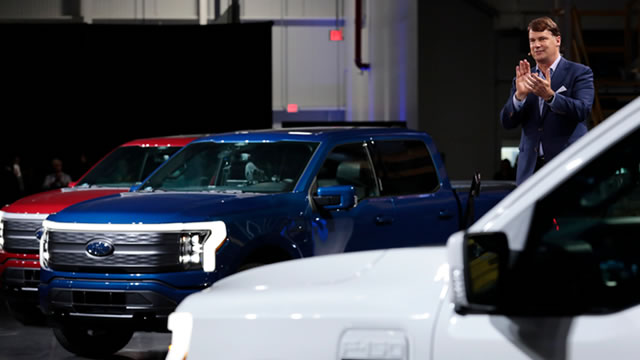
Ford to recall over 197,000 US vehicles over risk of back seat occupants being trapped, NHTSA says
Ford Motor is recalling 197,432 vehicles in the U.S. due to a risk of back seat occupants getting trapped due to inability of entering or exiting the vehicle in case of an emergency, the U.S. National Highway Traffic Safety Administration said on Thursday.
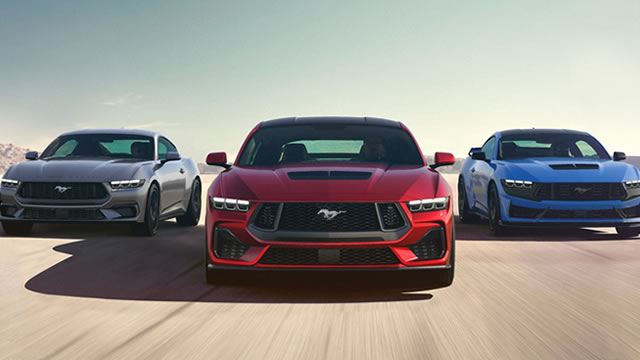
Ford (F) Price Prediction and Forecast 2025-2030 (June 2025)
Shares of Ford Motor Company ( NYSE: F ) fell by 1.35% over the past month, pausing a rally that saw the legacy automaker gain 24.28% from its year-to-date low on April 8 through its year-to-date high on May 16.

Is Ford Pro Unit Doing the Heavy Lifting for the Company's Growth?
Ford Pro drives F's growth with $1.3 billion EBIT, 40% market share in North America and rising software-driven revenue strength.

Ford struggles with supply of rare earth magnets, CEO tells Bloomberg News
Ford Motor Co is struggling with supplies of rare earth magnets, the automaker's CEO Jim Farley told Bloomberg News in an interview on Friday.
Ford (F) Recalls Basically a Whole Year's Worth of Vehicles
Key Points Ford (NYSE: F) has recalled nearly 1.5 million vehicles in just ten days, roughly 75% of its annual U.S.
Ford CEO Jim Farley Says China Is Existential Threat
“Existential threat” means something can disappear. Ford Motor Co. (NYSE: F) CEO Jim Farley told John Thornton, one of his board members, “John, this is an existential threat.

Head-to-Head: Here's How Ford and Toyota Stack Up in the Auto Space
TM's hybrid gains, global scale and a stronger operational execution give it a lead over F in the evolving auto showdown.

Baytex Energy: The Importance Of The Eagle Ford
Baytex Energy has transitioned from a heavy oil operator to a light oil producer with heavy oil exposure. The Eagle Ford acquisition brings lower operating costs and premium oil pricing. The market hasn't fully recognized these changes.
Is Ford's Model e Business Dragging Down its Overall Results?
F's EV arm Model e has posted $5.07 billion in 2024 losses as pricing pressure and investment needs continue to mount.

Ford Motor Company (F) Presents at UBS Auto and Auto Tech Conference Transcript
Ford Motor Company (NYSE:F ) UBS Auto and Auto Tech Conference June 4, 2025 9:40 AM ET Company Participants Sherry House - Chief Financial Officer Conference Call Participants Joseph Robert Spak - UBS Investment Bank, Research Division Joseph Robert Spak Welcome back, everyone. Next up at our conference.
Ford Quality Continues to Collapse
Ford Motor Co. (NYSE: F) sold about 2 million new cars in the United States last year, and it just recalled over 1.5 million vehicles.




