



Hudbay Minerals Inc. (HBM)






SK hynix: Cheap Despite A Historic Memory Boom
SK hynix delivered 257% revenue growth and 557% operating profit growth, while its operating margin reached a remarkable 76%. HBM4 entered mass production in Q2, while HBM4E follows in 2027, reinforcing SK hynix's technological lead. Approximately 10 customers have signed long-term agreements, often spanning five years with deposits and volume commitments supporting demand visibility.
SK Hynix: Custom HBM Could Drive The Next Rerating
SK hynix (SKHY) is poised to benefit from the AI-driven HBM memory boom, with custom HBM expanding its market into compute. Custom HBM integrates logic into memory, making SKHY's products harder to substitute and less cyclical than traditional memory. SKHY trades at 5x 2027 EPS; a partial rerating to 8x is justified if custom HBM gains traction, supporting a $210–$260 fair value range.
Micron: Don't Get Shaken Out
The DRAM memory market is expected to remain tighter for longer vs. the NAND market. This benefits Micron's 76% DRAM-focused portfolio. Faster-than-expected HBM market growth, tight market conditions, and Micron's high share in this segment are major growth catalysts. DRAM market tightness is expected through 2027 and beyond, with HBM TAM projected to surpass $100B in 2027, accelerating revenue growth.
SK hynix: Believe In The HBM Leader
SK hynix Inc. offers compelling valuation, trading at a forward P/E of 5.7 and a 13% free cash flow yield, despite recent volatility. SKHY maintains HBM leadership with 50% market share and robust gross margins but faces intensifying competition from Samsung and Micron. The current ADR premium is excessive at 38%, driven by structural constraints and forced selling; I expect this premium to narrow over time.
Nvidia Is Cutting Rubin Ultra's Memory. Is Micron's HBM Boom in Danger?
The artificial-intelligence buildout is creating an unusual problem for semiconductor investors: demand is arriving faster than the supply chain can deliver the most advanced components.
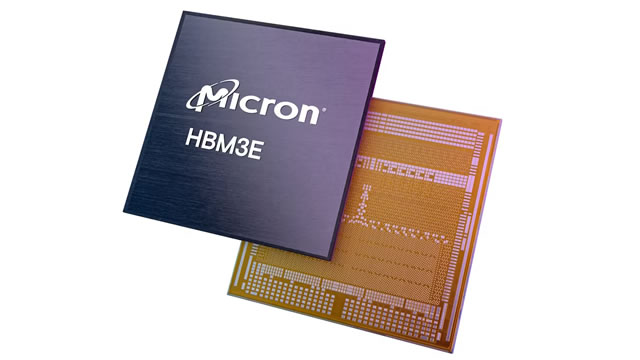
Can Micron's AI Memory Focus Help It Outpace SK Hynix and Sandisk?
MU's AI memory push drives surging revenues and faster HBM4 execution as it battles SK Hynix in HBM and Sandisk in data-center storage.
The AI Memory Shortage Just Entered Year 2. These 3 ETFs Own Every Layer From DRAM to HBM
The AI memory shortage that began squeezing hyperscaler supply chains in 2025 has now stretched into its second calendar year, with Micron Technology guiding fiscal Q4 2026 revenue to roughly $50 billion and HBM4 qualification samples still rationed across lead customers.
ONTO Pre-Q2 Earnings: Buy the Stock Amid AI-Led Demand & HBM Momentum?
Onto Innovation heads into Q2 earnings with AI demand, advanced packaging growth and margin expansion in focus as investors watch for guidance.
SK hynix: Key Strengths In The Agentic AI Era
SK hynix Inc. is positioned as the leading HBM provider and a top player in DRAM and NAND, benefiting from agentic AI's rising memory demand. SKHY's HBM expertise, yield advantage, and deep partnerships with Nvidia and TSMC underpin their competitive edge and long-term growth prospects. Long-term supply agreements and the shift to metered, service-driven memory demand should dampen cyclicality and improve free cash flow margins.
SK Hynix: AI Memory Is Becoming A Contracted Infrastructure Business
SK Hynix (SKHY) is rated Buy with a $183 price target, reflecting 23% upside from current levels. SKHY's leadership in HBM4, SOCAMM2, and enterprise SSDs positions it to benefit from AI memory demand and multi-year customer contracts. Q2 results showed record revenue and profit, but missed aggressive expectations due to HBM4 shipment timing; normalized earnings anchor valuation.
SK hynix: Buy This Meltdown Before It Disappears (Rating Upgrade)
SK hynix is upgraded to Buy after suffering a dramatic 60% drop, followed by a stunning 30% rebound, signaling a durable bottoming and renewed advancing phase. Phenomenal Q2 results with revenue up 250% and operating income up 550% underscore SK Hynix's HBM leadership amid ongoing AI infrastructure buildout. Long-term supply agreements and robust AI-driven DRAM/HBM demand support near-term growth, though moderation is expected post-2028 as CapEx and revenue growth normalize.

HudBay Minerals (HBM) Q2 Earnings: Taking a Look at Key Metrics Versus Estimates
The headline numbers for HudBay Minerals (HBM) give insight into how the company performed in the quarter ended June 2026, but it may be worthwhile to compare some of its key metrics to Wall Street estimates and the year-ago actuals.




