



Southwest Airlines Co. (LUV)











Elliott may get Southwest board seats under potential settlement, reports say
Activist investor Elliott Investment Management and Southwest Airlines are in talks to settle their months-long battle, according to reports Sunday, with a potential deal that would give Elliott representation on the budget airline's board.
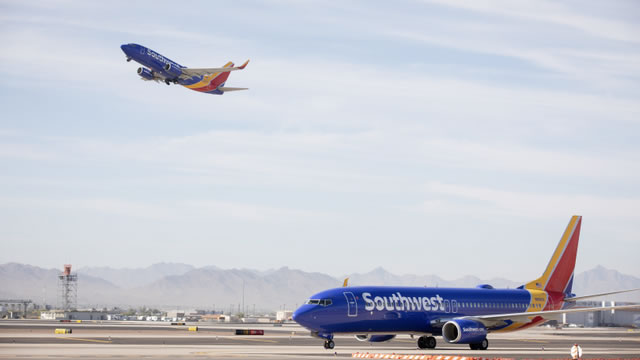
Elliott, Southwest in early settlement talks for significant board representation, sources say
Elliott Investment Management and Southwest Airlines have been discussing a settlement that would give the activist significant representation on the airline's board. The discussions come just days after the activist called for a special meeting at the company.

Elliott, Southwest Airlines to begin settlement discussions, Bloomberg reports
Elliott Investment Management and Southwest Airlines have begun discussing a potential settlement that would avoid a proxy fight for control of the airline's board, Bloomberg News reported on Saturday, citing people familiar with the matter.
What's in the Cards for Southwest Airlines in Q3 Earnings?
LUV's third-quarter 2024 revenues are expected to have benefited from growth in air-travel demand. Higher interest expense is likely to have weighed on the bottom line.

Analysts Estimate Southwest Airlines (LUV) to Report a Decline in Earnings: What to Look Out for
Southwest (LUV) doesn't possess the right combination of the two key ingredients for a likely earnings beat in its upcoming report. Get prepared with the key expectations.

Elliott Formalizes Southwest Proxy Fight, Seeks Board Vote
Elliott Investment Management has called for a special shareholder meeting at Southwest Airlines and nominated eight directors to the Southwest board as it seeks to replace the same number of incumbents. Crystal Tse reports on Bloomberg Television.
Elliott Calls for December Vote to Shake Up Southwest Airlines' Board
Elliott Investment Management on Monday called for Southwest Airlines (LUV) shareholders to elect its slate of candidates to the company's board.
Activist investor Elliott takes Southwest fight to shareholders, nominates eight directors
The hedge fund said it was officially calling for a special meeting to be held in December and submitted proposals to replace eight directors and take control of the board.
Southwest's stock falls after activist calls special meeting to elect new board
Southwest Airlines' stock took a turn lower Monday, after activist investor Elliott Investment Management called for a special meeting to give shareholders a chance to elect “a completely independent” board of directors.
Southwest's Battle With Activist Investor Elliott Heats Up
Southwest Airlines received a request from activist Elliott Investment Management to host a special shareholder meeting, according to a report.
Elliott asks for December special meeting at Southwest Airlines, cuts board slate to 8
Elliott has formally called for a special meeting at Southwest Airlines, the activist's first U.S. proxy fight since 2017. The activist investor has an 11% stake in the carrier and is seeking the ouster of CEO Bob Jordan.
Can Southwest (LUV) Run Higher on Rising Earnings Estimates?
Southwest (LUV) shares have started gaining and might continue moving higher in the near term, as indicated by solid earnings estimate revisions.




