



NVIDIA Corporation (NVDA)















Why Nvidia Stock Didn't Get a Meta Boost
Nvidia stock missed out on the chip rally that boosted AMD.
Thinking of buying Nvidia stock: one $108 billion number should be on your radar
Nvidia investors have spent years watching GPU demand, hyperscaler spending and competition from custom AI chips. But one number in the company's latest filing deserves equal attention: $108.5 billion.
Nvidia's Jensen Huang says AI CEOs have 'ulterior reasons' for warning about doomsday
Nvidia CEO Jensen Huang says AI leaders are being disingenuous when calling for a slowdown. Huang said current regulations are enough to ensure the tech remains safe and profitable.

NVIDIA Just Named AI's Next Bottleneck—And These 3 Stocks Sit Right In It
AI's loudest voices spent the week telling everyone to slow down, and the market took them at their word. AI infrastructure names sold off into a month that traditionally is already unkind to stocks.
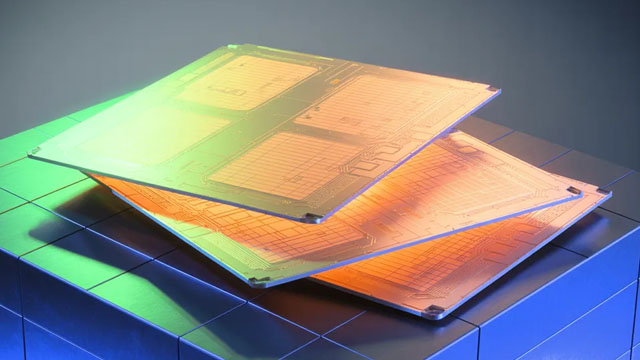
SpaceX and NVIDIA Want to Put AI Data Centers in Orbit
Some corporate ambitions are so audacious they sound like science fiction, and Elon Musk's latest may be one of them. It was reported earlier this week that he's “highly confident” his rocket company, SpaceX NASDAQ: SPCX, will begin launching NVIDIA Corporation's NASDAQ: NVDA most advanced AI computers into orbit as early as next year.

These 3 Stocks Sit at the Center of NVIDIA's Cybersecurity Push
NVIDIA NASDAQ: NVDA CEO Jensen Huang gave cybersecurity his seal of approval, calling it the next major growth market, aligning with a growing number of indicators suggesting an inflection ahead. In his view, like many others, AI automation drives an exponential increase in code to be scanned, and that's not counting the need to secure AI modeling facilities, the data AI runs on, or the impact of agents, which can hallucinate and run amok.
Nvidia to pay dividends in less than 2 weeks; Here's how much 1,000 NVDA shares will earn
Nvidia (NASDAQ: NVDA) is set to pay its next quarterly dividend in less than two weeks, providing shareholders with another cash payout.
AI sets Nvidia stock price for October 1, 2026
Nvidia (NASDAQ: NVDA) could trade near $240 on October 1, 2026, according to an outlook generated by OpenAI's ChatGPT.
Nvidia-Backed Cloud Startup Nscale Files for IPO
The U.K.-based company didn't say how many shares it would offer, or at what price, but intends to list shares on the New York Stock Exchange under the symbol NSCL.

Credo vs. NVIDIA After Earnings: Which AI Stock Should You Buy Now?
NVIDIA's scale, diversified AI exposure, stronger profitability and lower valuation give it an edge over Credo after earnings.
Prediction: This Is Where Nvidia Stock Could Be by the End of Next Year
Nvidia shares have already delivered 900% over five years, but a specific multiple applied to a rising earnings estimate points to a price target that Wall Street has not yet penciled in.
Why Nvidia stock is up over 2% on Thursday
Nvidia (NVDA) stock rose more than 2% on Thursday to around $218, putting the shares on track for a second consecutive session of gains as tech stocks helped drive a broader market rebound. The Dow Jones Industrial Average gained 0.7%, while the S&P 500 rose 1.1% and the Nasdaq Composite advanced 1.6%.




