



Rocket Lab Corporation (RKLB)








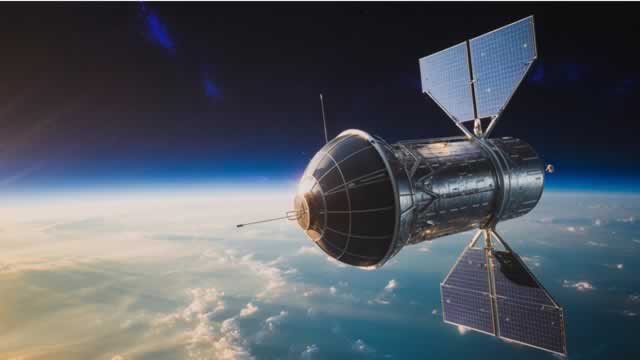
Why I'm Buying Rocket Lab Over SpaceX
Rocket Lab delivered $234 million in Q2 revenue and a $2.36 billion backlog, while Space Systems increasingly broadens the growth engine. Neutron commands $50 million-plus pricing before Flight 1, suggesting customers already view future launch capacity as strategically scarce. Rocket Lab is pre-building subsequent Neutron vehicles, potentially accelerating commercialization but creating substantial stranded-capital risk if designs change.

RKLX: A Tactical Buy On Rocket Lab's 2x ETF With Q4 Neutron Launch On The Horizon
Defiance Daily Target 2X Long RKLB ETF (RKLX) earns a Buy rating, offering 200% daily exposure to Rocket Lab (RKLB) shares. RKLB's growth is driven by its Neutron medium-lift rocket, expanding launch cadence, and the upcoming Iridium acquisition, positioning it as a key space economy player. RKLX is best suited for short-term trading due to high volatility, compounding risk, and a 2.80x beta (RKLB), rather than long-term holding.

Rocket Lab: The Hidden Risks No One Talks About
Rocket Lab (RKLB) faces heightened supply chain risk due to reliance on germanium, a critical mineral dominated by China and in high demand from the semiconductor sector. RKLB's acquisition of Iridium (IRDM) may increase exposure to trade policy shifts and material shortages, especially as both companies have significant government contract revenue. Fixed-price government contracts limit RKLB's ability to pass on rising input costs, potentially compressing margins if rare material prices surge.

Rocket Lab's Sell-Off Is Fading—Is It Finally Safe to Buy?
This summer, Rocket Lab NASDAQ: RKLB has been a difficult stock to own. After peaking at $151 in May, the shares were swept up in the brutal rotation that followed the SpaceX NASDAQ: SPCX IPO, giving back more than half their value as investors fled the space sector.

Rocket Lab: Mars Ambition & Growing Backlog Outweighs Delayed Neutron Timing (Rating Upgrade)
Rocket Lab Corporation's strategic acquisitions—Mynaric, Motiv Space Systems, and Iridium—imply their vertically integrated space design/manufacturing, launch, and application ambitions. This is on top of the nascent Mars exploration opportunities, through the NASA study contract, the Mars Telecommunications Orbiter proposal for 2028, and Mars Sample Return for the 2030s. Backlog has surged to $2.36B (+137% YoY), supported by the industry launch bottlenecks and robust demand, underpinning RKLB's multi-year top-line growth/pricing power prospects.
SpaceX Drops 6%, Dips Below Its IPO Price as 319M Shares Unlock; Rocket Lab Falls 4%
SpaceX (NASDAQ:SPCX | SPCX Price Prediction) stock is down 6% to $131.86 midday Thursday, slipping below the company's $135 IPO price for the first time since the June debut.

Rocket Lab: Only The Bad Is Priced In
Rocket Lab has completely retraced its Q2 gains, down about 49% from its highs, presenting an attractive entry point in our opinion. The company's Q2 revenue growth got overshadowed by widening losses as Neutron development costs ramp up and near-term mix weighs on margins. These are negatives but ones that we think have already been priced into the stock.
Rocket Lab's Next Phase Changes The Entire Thesis
Q2 revenue reached $234 million, while backlog hit $2.36 billion and recent contract awards exceeded $1 billion. Space Systems generated $189.5 million as Rocket Lab increasingly combines spacecraft, components, launch capabilities and defense programs. Neutron demand remains strong before launch, with targeted $50–$55 million pricing and management seeing potential upside to ASPs.

Rocket Lab stock is soaring, and a rare pattern points to gains; but there's a catch
Rocket Lab stock has rebounded in the past few weeks, moving from a low of $58.25 to $82, helped by its strong earnings and increasing backlog. It also jumped after the company inked a major deal with Viasat and other organizations.

Can GHOST Strengthen Rocket Lab's Responsive Launch Capabilities?
RKLB expands responsive launch capabilities with GHOST, a deployable system designed to support orbital and suborbital missions worldwide.
Rocket Lab: Strong Buy With An Investment Case That Goes Beyond Neutron
Rocket Lab delivered record Q2 revenue of $234 million, strong gross margin, and robust backlog growth, underscoring its successful vertical integration strategy. I maintain a strong buy rating, supported by defense contract wins, expanding Space Systems, and the transformative Iridium acquisition, despite ongoing Neutron development risks. Neutron's first flight may slip to 2027, but demand is secured and early capacity discipline supports long-term margin maturation and pricing power.

Wall Street Breakfast Podcast: Rocket Lab Gains Altitude
Rocket Lab (RKLB) achieved a key milestone with the successful deployment of eight satellites for MDA Space under a $143M contract. Automakers face a motor oil shortage due to disrupted Group III base oil supplies, driving prices to $4,000/ton and forcing lubricant substitutions.




