



United Parcel Service, Inc. (UPS)









Bank of America Just Told Investors to Sell UPS, and the Reason Has Nothing to Do With Package Volume
Bank of America just cut UPS to sell, and the catalyst has nothing to do with shipping demand or Amazon competition.

UPS vs FedEx: Which Dividend Is Actually Stronger for Income Investors
UPS and FedEx both pay dividends, but the case for owning each one points in completely opposite directions depending on what a retiree actually needs from a portfolio.

UPS: Costs May Weigh In 2026, But Free Cash Flow Remains Strong; 6.4% Dividend Yield
United Parcel Service remains a "Buy," with shares fundamentally undervalued and supported by robust free cash flow and a 6.4% dividend yield. Q2 results exceeded expectations, with revenue up 7.5% and all segments contributing to a double beat and raised FY 2026 guidance. Valuation remains attractive, with a forward P/E of 15.7x and an intrinsic value target near $121, despite technicals showing mixed momentum.

UPS: A Leaner Network, Better Revenue Mix, And International Recovery Support The Buy Case
United Parcel Service is rated Buy, supported by a leaner domestic network and a pivot to higher-margin SMB and healthcare segments. After shedding low-quality Amazon volume, UPS has restructured its U.S. operations, improving efficiency, automation, and profitability. International segment recovery, especially from Asia and easing network disruptions, is expected to drive further EPS growth.

United Parcel Service (UPS) Ascends While Market Falls: Some Facts to Note
The latest trading day saw United Parcel Service (UPS) settling at $102.46, representing a +2.17% change from its previous close.

The UPS Dividend Yield Is Unusually High and That Is Not the Compliment It Sounds Like
UPS carries a yield above 6%, but the math behind that number tells a very different story than a healthy payout raise. Before adding it to an income portfolio, understand what actually pushed the yield this high.
United Parcel Service, Inc. (UPS) Is a Trending Stock: Facts to Know Before Betting on It
UPS (UPS) has received quite a bit of attention from Zacks.com users lately. Therefore, it is wise to be aware of the facts that can impact the stock's prospects.

United Parcel Service (UPS) Dips More Than Broader Market: What You Should Know
In the closing of the recent trading day, United Parcel Service (UPS) stood at $102.29, denoting a -1.17% move from the preceding trading day.

UPS (UPS) Up 1% Since Last Earnings Report: Can It Continue?
UPS (UPS) reported earnings 30 days ago. What's next for the stock?
UPS and 6 More Stocks Beating 10-Year Treasuries
Verizon, Altria and United Parcel Service are among the companies with dividend yields that match or beat bonds and also boast solid earnings prospects.

UPS Strengthens Global Network With $2B+ Strategic Investments
UPS' $2B-plus global logistics investment targets faster, more reliable networks as trade uncertainty and supply chain disruptions persist.
UPS Invests $2 Billion to Future-Proof Global Supply Chains
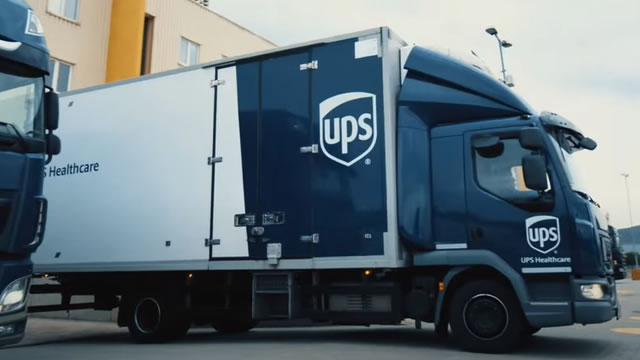
UPS plans to invest a total of more than $2 billion into its international, healthcare and supply chain businesses between 2024 and 2028, an executive told CNBC in a report published Monday (Aug. 24).




