



Advanced Micro Devices, Inc. (AMD)

















Advanced Micro Devices, Inc. (AMD) is Attracting Investor Attention: Here is What You Should Know
Recently, Zacks.com users have been paying close attention to Advanced Micro (AMD). This makes it worthwhile to examine what the stock has in store.

Nearly 89% of Companies are Seeing Insider Selling, But these 3 are Seeing Substantial Buying
Corporate insiders have taken a sharply pessimistic turn – selling their companies' shares at the fastest rate in at least a decade.
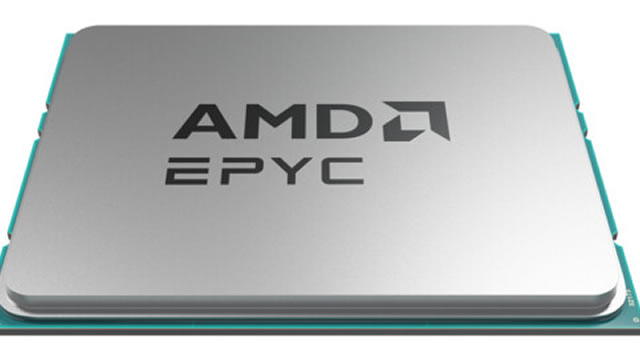
AMD: The Rook In The AI Ecosystem
I rate AMD a Buy. AMD is the 'Rook' of the AI ecosystem, dominating AI and data centers, PCs and Laptops, Embedded systems, and networking. China is an important market for AMD. And the US just gave AMD permission to continue exporting its chips into China.
Advanced Micro Devices (NASDAQ: AMD) Price Prediction and Forecast 2025-2030 (July 2025)
Shares of Advanced Micro Devices ( NASDAQ:AMD ) exploded over the past month, gaining 24.45%.
Advanced Micro Devices (AMD) Surpasses Market Returns: Some Facts Worth Knowing
In the latest trading session, Advanced Micro Devices (AMD) closed at $160.08, marking a +2.87% move from the previous day.

AMD: The Rally Has Just Begun
Advanced Micro Devices, Inc. delivered outstanding Q1 2025 results, with 36% revenue growth and significant profitability improvements, driven by Data Center and AI momentum. The MI series, especially MI325X and MI350, are gaining traction with major cloud and enterprise customers, fueling AMD's competitive position against Nvidia. Regulatory relief allows AMD to resume MI308 chip shipments to China, unlocking additional growth and validating the company's global expansion strategy.
Nvidia, AMD set to benefit from China sales, Fed Chair Powell's future at stake
Market Catalysts anchor Julie Hyman breaks down the latest market movers for July 16, 2025. Semiconductor chip manufacturers Nvidia and AMD are ready to sell their chips in China.
AMD's AI Chips Gain Ground in Data Centers: A Sign for More Upside?
Advanced Micro Devices' MI300 series gains traction in AI data centers, boosting revenues and drawing interest from tech giants like Meta.
AMD Just Triggered a Signal Traders Can't Ignore
Advanced Micro Devices' NASDAQ: AMD price action provided a clear signal that it would move higher in 2025 when it broke fresh highs in July. The move to new highs took the market above a critical resistance point that had been in place for more than a year, setting it up to continue rallying as the year progresses.
Why Nvidia Still Outshines AMD
Advanced Micro Devices, Inc. and Nvidia Corporation are well positioned to ride an upgraded growth outlook in the AI inferencing market. Nvidia because it is the market leader, and AMD due to its focus. AMD's MI350 GPUs have on-par performance and are more cost-effective vs Nvidia's Blackwell. So AMD a golden opportunity to take share but the onus is on it to prove itself. US approval for Chinese shipments can boost both AMD and NVDA's data center revenues.
AMD's $1.5 Billion Tailwind Is Back
US approval of GPU sales to China reverses AMD's revenue hit, restoring growth and margin prospects. The company is likely back on track to achieving $8.3B in AI revenues this year. The company's AI revenue outlook improves, with China sales resuming and hyperscaler clients like Oracle and Meta boosting capex. Current pessimism in Advanced Micro Devices' valuation offers upside as analyst estimates lag behind positive developments and earnings upgrades loom.

This CEO Just Bought Millions More of His Company's Stock
It's hard to believe, but today there are credit cards offering up to 5% cash back (you read that right) on some items, $200 statement credits, $0 annual fees, travel rewards, and more.




