



Microsoft Corp. (MSFT)














SoundHound vs. Microsoft: Can the Small Voice AI Player Beat the Tech Giant?
SOUN's rapid voice-AI growth faces off against MSFT's scale and profits in a battle of speed versus dominance.
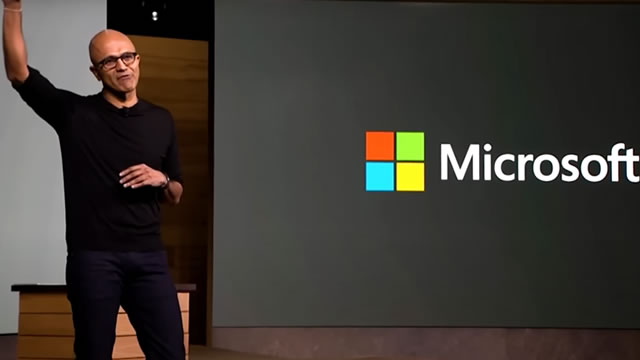
Microsoft CEO warns AI needs to spread beyond Big Tech to avoid bubble
As tech companies spend billions on artificial intelligence data centers and computer chips, fears of an AI bubble held privately by Wall Street traders and some Big Tech titans are beginning to pop into public view.

Microsoft clicks on Formula One grid with new Mercedes deal
Microsoft, the $3.4trn computing behemoth, will this week unveil a partnership with the Mercedes Formula One team that will underline the sport's resurgent appeal among the world's biggest technology companies.
Microsoft Stock at $600 or $400? Here's What You Should Bet On
Microsoft (NASDAQ:MSFT ) has been sliding since October despite the company posting strong results.

Microsoft vs Palantir: Which Tech Stock Is A Better Buy Today
Artificial intelligence (AI) has changed the way we look at every industry. Businesses are setting aside millions to invest in AI and remain ahead of the competition.
Wall Street analyst updates Microsoft stock price target
A Wall Street analyst at TD Cowen has reaffirmed a positive long-term view on Microsoft (NASDAQ: MSFT) while trimming the stock's price target ahead of the company's upcoming quarterly earnings report.
Energy costs will decide which countries win the AI race, Microsoft's Nadella says
Energy costs will be a key factor in determining how successful countries are in the AI race, Microsoft's Satya Nadella said on Tuesday. Hyperscalers, including Microsoft, have seen capital expenditure rise to hundreds of billions in 2025 as they've rushed to build out AI infrastructure.
Microsoft's AI deal promises Canada digital sovereignty, but is that a pledge it can keep?
Over the past year, few words have been abused as much as "sovereignty," particularly in relation to Canadian digital policy and artificial intelligence. In early December, Microsoft promised to invest more than $7.5 billion over the next two years to build "new digital and AI infrastructure" in Canada.
Microsoft: Something Doesn't Add Up
Microsoft Corporation delivered a strong Q1 FY26, beating revenue and EPS expectations, yet shares have dropped ~15% on AI spending concerns. MSFT's Intelligent Cloud segment and Azure drove robust growth, with a 40% YoY increase in Azure and a 51% surge in commercial backlog. Despite heavy AI infrastructure investment, MSFT maintains accelerating cash flow and a healthy balance sheet, supporting a Strong Buy rating.
Microsoft: AI Demand Is Real, And The Numbers Back It Up
Microsoft is rated a strong 'Buy' for 2026, driven by robust demand in Azure, AI, and enterprise software. Microsoft's revenue grew 15% YoY, with Q4 2025 growth at 18% and commercial RPOs up 51% to $392B, signaling strong future revenue. Capacity constraints, not demand, are the primary growth bottleneck; record CapEx is being deployed to expand AI and cloud infrastructure.
203 Billion Reasons Why Microsoft Is a Buy in 2026
Microsoft is benefiting in multiple ways from its OpenAI investment. Azure has emerged as one of the best clouds to build AI applications on.

Nebius: How Microsoft And Meta Deals Are Powering AI Expansion
Nebius is one of the most ambitious projects on the market, with its full growth potential still ahead. Massive contracts with Meta and Microsoft provide the foundation for scaled growth in AI. The company's financial profile and risks are currently outweighed by its competitive role and strong position in the global cloud computing landscape.




