



Micron Technology, Inc. (MU)















Everyone Is Watching Nvidia. But This Memory Stock Could Be the Next AI Winner
While investors pile into Nvidia, a quieter memory supplier has already outpaced it with gains topping 700% in a year, and analysts think the run is nowhere near finished.
Micron Has Skyrocketed 256% in 2026. What Would It Take to Get MU Stock Up to $1,250?
Micron shares have already rewritten what investors thought possible for a memory stock, but the next leg higher hinges on a single question about contract pricing that the upcoming earnings report will either answer or obliterate.
Why Micron (MU) is a Top Stock for the Long-Term
Wondering how to pick strong, market-beating stocks for your investment portfolio? Look no further than the Zacks Focus List.

Micron Technology, Inc. (MU) Is a Trending Stock: Facts to Know Before Betting on It
Micron (MU) has been one of the stocks most watched by Zacks.com users lately. So, it is worth exploring what lies ahead for the stock.
Machine learning algorithm sets Micron stock price for September 30, 2026
A machine learning model has forecast that Micron Technology (NASDAQ: MU) could trade at an average price of $1,061 by September 30, 2026.

Micron: Nothing Is Over Yet
Micron Technology, Inc. remains a Buy as consolidation offers a compelling entry point with improved valuation and robust medium-term earnings visibility. Bearish concerns around AI memory demand compression and Chinese competition appear overstated; MU's technological lead and regulatory barriers support market share. Executive realignment and U.S. manufacturing expansion position MU to dominate domestic DRAM supply, especially amid supply chain risks and secure supply mandates.
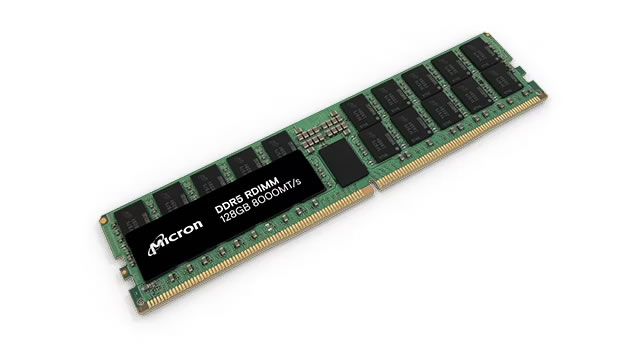
Micron is doubling down on AI memory chips. That could pay off big time for investors.
Micron is reportedly increasing production capacity of a more profitable memory offering that's in high demand due to AI.
Micron stock rises 2%, SanDisk gains 3%: why memory stocks are moving again
Micron Technology (NASDAQ: MU) and SanDisk (NASDAQ: SNDK) shares were back in favour again ahead of Friday's opening bell, with the memory stocks rising 2% and 3%. Micron gained 1.9% in premarket trading and SanDisk advanced 3% as Treasury yields eased ahead of the August jobs report.
How Micron Stock Is Trading Today
Micron stock was rising as lower bond yields alleviated pressure on technology stocks.

Micron: This Isn't Peak Memory Yet
Micron Technology (MU) stays as a Buy as bullish memory upcycle and AI agentic workflows driven demand sustain robust growth prospects despite recent sector volatility. Highly strategic customer agreements, backed by $22B in take-or-pay commitments, provide earnings stability even if pricing normalizes. The market shouldn't ignore the nuances. AI agentic workflows and hyperscaler & AI neoclouds CapEx expansion create underappreciated long-term growth levers for MU, especially beyond FY2028.
Why China's Memory Chip Breakthrough Won't Crash the Market
Investors watching the semiconductor sector are seeing headlines about China's latest breakthroughs in memory chips. ChangXin Memory Technologies (CXMT) recently initiated small-batch production of high-bandwidth memory and plans to mass-produce LPDDR6 silicon later this year.
Micron's 20 PE Is Criminal, Unless Nvidia Knows Something
Micron Technology, Inc. remains a Buy as valuation is compelling—trading at ~7.5x annualized earnings despite strong AI-driven memory demand. Nvidia's $279 billion memory commitments and robust AI narrative confirm MU's pricing power, even as architectural risks emerge. The primary risk is architectural: Nvidia's shift toward on-chip SRAM and GDDR7 could pressure HBM margins but not erase overall memory demand.




