



Micron Technology, Inc. (MU)















Analyst sets Street-high Micron stock price target
DA Davidson raised its Micron (NASDAQ: MU) stock price target from $2,100 to a Street-high $3,000, maintaining a “Buy” rating on October 7.
Micron Stock Falls as Strike Threat Adds to Chip-Sector Gloom
Micron stock was dropping along with other semiconductor companies as workers threaten a strike at one of its sites.

Micron: NAND Is Not One Market Anymore
Micron Technology is experiencing a major shift as data center SSDs now comprise over 70% of its NAND revenue, driving rapid growth. Enterprise SSD demand is forecast to grow over 80% this year, offsetting potential weakness in consumer NAND and supporting robust pricing. MU's strategic pivot to data center SSDs is enhancing business resilience, with revenue and margin improvements evident in recent quarters.

Micron Technology: Not At Its Peak, At Least Not Yet
Micron Technology is initiated with a BUY rating and a $1,360 base-case price target, implying 27% upside. FY2026 marked a structural step-change: revenues surged 256% y/y, DRAM crossed $100B, and free cash flow reached $62.3B. Over 75% of CY2027 output is already contracted via 26 Strategic Customer Agreements, supporting visibility and durability of earnings.

Micron: Tighter Market Conditions Through 2028 Mean This Is A Great Buy
Micron remains a compelling buy, supported by strong Q4 results and robust data center-driven memory demand. Despite modest post-earnings weakness, MU's outlook for 2027–2028 is notably stronger than for 2026, reinforcing the long-term bull case. Supply/demand imbalances in memory markets are expected to favor MU through 2028, underpinning earnings momentum.

SK Hynix Falls 4% on Earnings Caution Before a Rebalancing Goldman Says Favors It; SanDisk Slips 2%, Micron Holds Firm
Memory chip stocks are trading on reporting risk, and the biggest selling is landing on the one major supplier that still has a quarter to report.
Micron: The Market Still Doesn't Get It
Micron Technology delivered another record quarter, raising guidance and reinforcing its AI-driven growth trajectory. MU's robust fundamentals - record revenues, strong margins, and a fortress balance sheet - support a clear path toward a $1,500 price target within a year. Strategic customer agreements now cover more than 35% of revenue through 2030, providing exceptional visibility and pricing power, especially in HBM and DRAM markets.

Micron Q4 Blowout: Why The Memory Supercycle Still Has Runway
Micron Technology reported strong earnings, with long-term AI-driven demand and tight memory supply supporting a bullish outlook. Analyst earnings projections are rising, but I see upside beyond 2027 as capacity expansions yield more valuable bits rather than simply higher supply. MU has secured over 35% of expected revenue through 2030 via long-term supply contracts, reducing cyclicality risk and supporting price stability.

Is Micron Stock Worth Holding After Its Solid Q4 Earnings Results?
MU's record Q4 results, AI-driven memory demand and 6.29X forward P/E support a hold stance, while its 272.8% YTD rally raises profit-taking risks.
Micron: Memory Revenue Looks More Durable Than The Cycle Suggests
Micron is delivering record revenue, driven by surging DRAM pricing and robust AI/data center demand. MU's revenue surge is primarily pricing-driven, not volume-driven, and is largely supported by strategic customer agreements. AI infrastructure growth and HBM adoption are expected to dampen memory cyclicality, supporting a sustainably higher revenue base versus pre-AI cycles.
Micron: Wishful Thinking At Its Finest
Micron reported its 4Q results last week. The print confirmed our expectation of moderating ASP growth and peaking gross margins. DRAM and NAND revenue growth decelerated sharply, with DRAM ASP growth dropping from 62% to 19% sequentially. Gross margins are guided to decline, with management signaling a shift to more moderate price increases and higher CapEx in FY27.
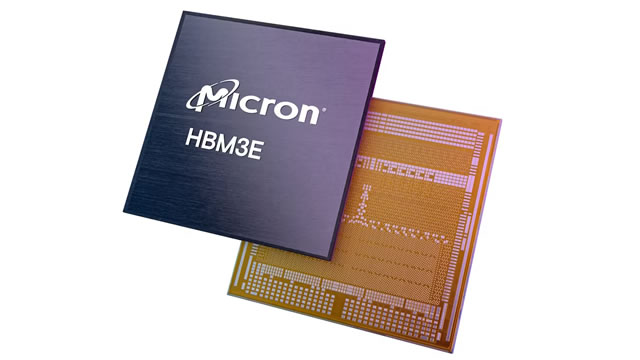
Micron Says a Chinese Rival Poached Its Engineers, Then Sued It With Its Own Technology
Micron is accusing a Chinese chip rival of a brazen scheme: poach its engineers, extract their confidential knowledge, then file patents on that knowledge to turn around and sue Micron with its own technology.




