



NVIDIA Corporation (NVDA)















Nvidia's Secret $21 Billion SpaceX Windfall — How One Chip Deal Turned Into a Rocket Fortune
Chipmakers used to sell hardware and cash the check.
The 4 Words From Jensen Huang That Could Redefine NVIDIA's Total Addressable Market
At NVIDIA's GTC 2026 conference in Q1, CEO Jensen Huang made a statement that reframes the company's long-term addressable market: “Every industrial company will become a robotics company.
Nvidia just updated its stock portfolio
Nvidia (NASDAQ: NVDA) has updated its stock portfolio, revealing a public equity portfolio worth approximately $63.4 billion as of June 30, 2026, according to a Form 13F filing.
Nvidia scales back $250 billion OpenAI data center guarantee, WSJ reports
Nvidia has downsized plans for a $250 billion guarantee for an OpenAI data center, the Wall Street Journal reported on Friday, citing people familiar with the matter.
The $5.2 Trillion Company Just Asked Wall Street for $500 Billion More
The stock market's most consequential company just made its financing intentions unmistakable.
GPU Demand Isn't Letting Up. Time to Buy Nvidia Before Next-Gen Chips Ship?
Nvidia (NASDAQ:NVDA | NVDA Price Prediction) shares are starting to make a run for those all-time highs again, thanks in part to a reheating of the semiconductor trade and increased enthusiasm for the Vera Rubin era.
Did Michael Burry just predict the collapse of Nvidia?
As part of his latest stage of increasing short positions against stocks involved in the artificial intelligence (AI) ‘boom,' Michael Burry drew a stark comparison when he claimed there were ‘echoes of Enron' in Nvidia's (NASDAQ: NVDA) recent moves.

NVIDIA Invested $2 Billion in Marvell. Which Stock Is the Better Buy in August?
In March, Marvell Technology (NASDAQ:MRVL | MRVL Price Prediction) received a shot in the arm from NVIDIA (NASDAQ:NVDA) after the Jensen Huang-led firm invested $2 billion into the company.
GSI Technology Eyes 2027 AI Production as Gemini-II Cuts Power 98% vs. NVIDIA
GSI Technology NASDAQ: GSIT is positioning its Gemini-II artificial intelligence processor as a production-ready hardware platform while it works to expand software tools and complete proof-of-concept programs that could lead to early production by the end of 2027, according to Vice President of Sales Didier Lasserre.
Top AI Reporter: NVIDIA's $500 Billion AI Compute Deal “Isn't Even Enough” According to Some Investors
Axios Senior AI Reporter Madison Mills laid out an investor debate on CNBC on Thursday, August 13, framing NVIDIA's newly announced $500 billion financing agreement with top Wall Street firms as either the largest asset-class creation event of the AI era or the most sophisticated circular-financing structure yet.
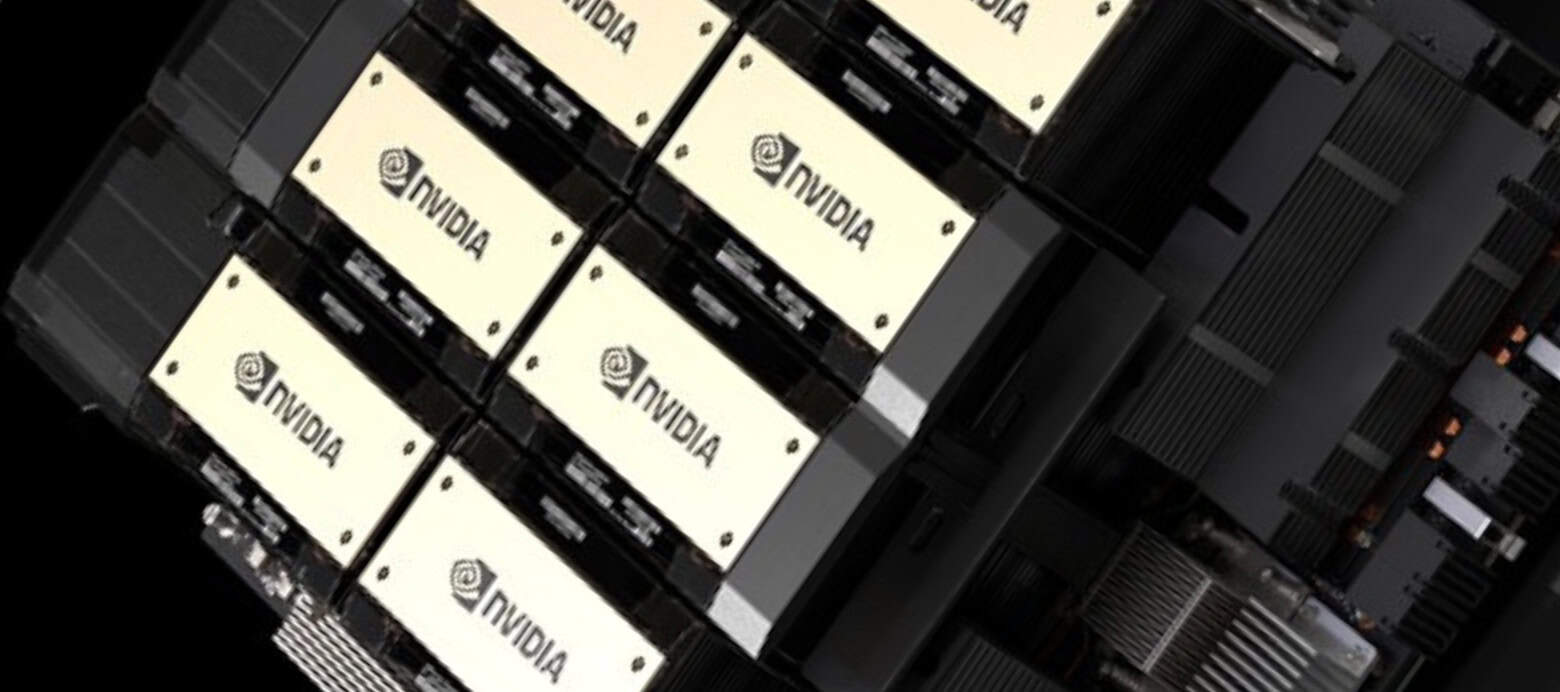
Wall Street Is Treating Nvidia GPUs Like Forever Cash-Flow Machines. Here's What Shatters That Illusion
The AI boom is changing an old rule of technology investing: hardware is supposed to get cheaper, less useful, and eventually worthless.
Jim Cramer Says Nvidia GPUs Are ‘More Like Fine Jewelry' Than Cars. Here Is Why That Matters for NVDA Investors.
Jim Cramer devoted a segment of Mad Money on August 12 to a valuation analogy that cuts to the heart of the debate over AI infrastructure financing.




