



Stock Market & Financial News
Robinhood bets $25M on Crusoe's shift from Bitcoin to AI
Robinhood Ventures Fund I (RVI) invested about $25 million in Crusoe, a firm that once mined Bitcoin but now focuses on AI data centers. The deal, which closed on August 31, was part of Crusoe's $3.9 billion Series F fundraising round.


XRP Price Tumbles Below $1.30 Amid Fed Rate Decision and Senate Setback
The cryptocurrency XRP has fallen beneath the $1.30 mark following Tuesday's 7.3% decline, representing approximately a 23% retreat from its recent peak near $1.68. The token recorded $4.12 billion in trading activity over the last 24-hour period, while maintaining a market capitalization around $81.68 billion.

Ethereum Glamsterdam Nears Sepolia Test With Security Concern
Ethereum Glamsterdam heads to Sepolia on Oct. 6 as developers warn fake builders could disrupt the major upgrade test.


Iran's Strait of Hormuz toll booth ran through a bitcoin exchange, U.S. says
The U.S. Treasury sanctioned BitBank, a Tehran exchange it says moved hundreds of millions of dollars in bitcoin to the Revolutionary Guards and handled payments collected from ships buying passage through the world's most important oil chokepoint.


Taboola is buying a rival adtech company to gain a bigger foothold with lucrative finance clients
Taboola is eyeing a bigger slice of the adtech market. It has made an offer to acquire fellow adtech firm Dianomi.
 TBLA -0.88%
Ethereum (ETH) Maintains $2,400 Support Amid Fed Policy Shift and Heavy ETF Redemptions
Ethereum maintained a price level of $2,445 during Thursday's trading session. The asset temporarily slipped beneath the critical $2,400 threshold earlier in the day.

Solana moves closer to 200ms slots after latest speed upgrade
Solana has cut its target slot time from 300 milliseconds to 250 milliseconds, increasing the rate at which the network produces slots by nearly 17% without raising its overall processing ceiling by the same amount.


MasterBrand Deserves A Step Back (Downgrade)
MasterBrand is downgraded from 'Strong Buy' to 'Buy' due to recent profitability weakness and housing market headwinds. MBC's EBITDA margin fell to 7.2% from 12.2%, with trailing 12-month EBITDA at $294.5 million, reflecting softer revenue and consumer trade-downs. Synergy targets from the American Woodmark merger have increased to $100 million, with $50 million expected in the first year post-combination.
 MBC -8.56%
Bitcoin (BTC) Tumbles Below $76K Following Federal Reserve's First Rate Hike in Over a Year
Bitcoin experienced a decline below the $76,000 mark this week as the US Federal Reserve implemented a 25 basis point interest rate increase. This adjustment elevated benchmark rates into the 3.75-4% range.

Bitcoin price tops $77K after BOJ lifts rates to 1.25%
Bitcoin traded above $77,400 after the BOJ raised rates to 1.25%, while spot ETFs added $159.5 million and momentum cooled.

Gold (XAU/USD) & Silver Price Forecast: Softer Dollar Lifts Metals After Fed
Gold and silver recover as the dollar and Treasury yields ease after the Fed hike, with XAU/USD targeting $4,403 and silver eyeing $67.24.

Ultragenyx Pharmaceutical Inc. (RARE) Discusses FDA Approval of FAYUVI as First Treatment for Sanfilippo Syndrome Type A Transcript
Ultragenyx Pharmaceutical Inc. (RARE) Discusses FDA Approval of FAYUVI as First Treatment for Sanfilippo Syndrome Type A Transcript
 RARE +2.75%
Solana speeds up blocks by 17%, but transaction capacity stays the same
The network is cutting its target slot time to 250 milliseconds, giving apps fresher blockchain data and validators shorter control windows while reducing the amount of work allowed in each slot.

Euro: Downtrend extends toward 1.1400 against US Dollar – UOB
Euro: Downtrend extends toward 1.1400 against US Dollar – UOB

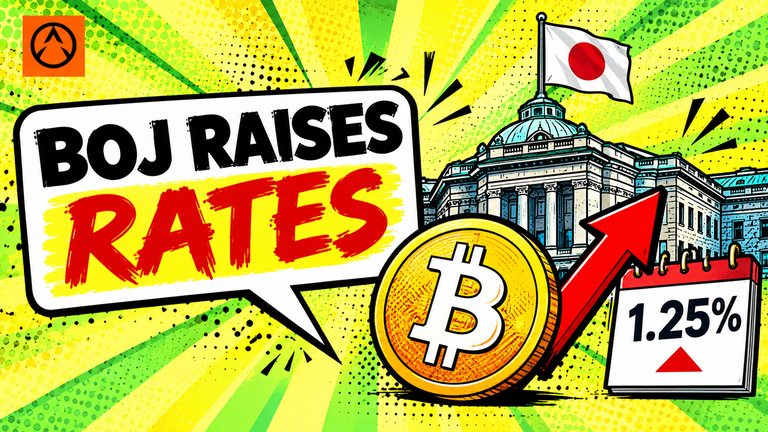
Bitcoin Tops $77K After Bank of Japan Raises Rates to 1.25%
Bitcoin rises above $77,000 after the Bank of Japan raises rates to 1.25%, while the yen weakens and markets assess the impact on global risk assets.
Bitcoin ETF Inflows Surge to $159.5M as BTC Reclaims $77,000
Bitcoin ETF flows returned to positive territory with $159.5 million in inflows as BTC recovered toward $77,600 after two days of heavy selling.

Lloyds Banking Group Maps Accelerate 2030 Plan With AI, Growth and Buyback Focus
William Chalmers, chief financial officer of Lloyds Banking Group NYSE: LYG, said the lender's Accelerate 2030 strategy is designed to build on progress under its prior plan through customer-experience improvements, greater business-line connectivity, productivity gains and broader technology deployment.
 LYG +1.69%
Pound to New Zealand Dollar Price Forecast: Kiwi Supported by Stronger GDP
Pound-New Zealand Dollar could stay under pressure if UK retail sales disappoint, while firmer risk appetite may keep the Kiwi supported. The Pound New Zealand Dollar (GBP/NZD) exchange rate stumbled on Thursday as the Bank of England (BoE) left interest rates unchanged.



AUD/USD Price Forecast: Recovers further as RBA reiterates commitment to bring inflation down
AUD/USD Price Forecast: Recovers further as RBA reiterates commitment to bring inflation down

Bitcoin Could Get More Support Than Gold as ETF Hedging Eases: JPMorgan
JPMorgan analysts say Bitcoin could see stronger price support than gold if ETF hedging eases, as short interest in BlackRock's IBIT reaches its highest level of 2026.

USD/JPY Jumps as Back-to-Back BoJ Hike Risk Fades—Can Momentum Carry It Back to 160?
TL;DR: USD/JPY is testing 157.11 as one widening policy differential, not two separate stories—the Fed is accelerating into a new tightening phase while the BoJ's divided vote reduced the odds of a back-to-back hike, both reinforcing the same Dollar-favorable repricing.


Ethereum warns Glamsterdam testnet faces builder abuse
Ethereum set Oct. 6 for Glamsterdam on Sepolia as developers warned free test ether could let disposable builders disrupt payload delivery.

Sandoz Gets Canada Approval for Generic Version of Ozempic
The approval for its generic version of diabetes drug Ozempic advances its efforts to build a portfolio of GLP-1 medicines.
 SDZNY +1.98%
Corporate treasuries bought just 5,900 bitcoin in 3 months. Other demand signals look weak, too.
Corporate treasuries bought just 5,900 bitcoin in three months, while broader demand signals remain weak.
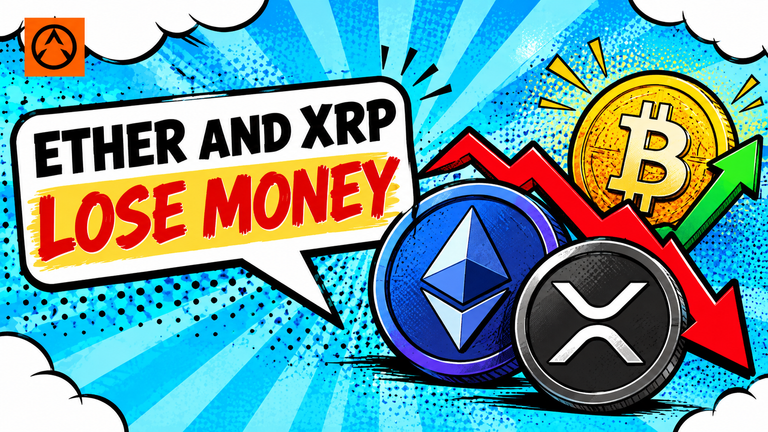
Ether and XRP ETFs See Outflows as Bitcoin Reclaims $77K
Ether and XRP ETFs record fresh outflows while Bitcoin funds attract $159M as BTC rises above $77,000 and Zcash ETF demand surges.

Cardano's IOG warns users after YouTube channel hijack
Input Output warned users to avoid its YouTube channel after a suspected hijack aired a fake Charles Hoskinson crypto giveaway livestream.

KOSPI jumps 2% as Nikkei rises: why investors are looking past the BoJ hike
The Nikkei 225 and KOSPI advanced on Friday as falling oil prices and easing US Treasury yields revived demand for Asian technology shares, while investors absorbed another step towards tighter monetary policy after the Bank of Japan raised rates to a 31-year high. South Korea's KOSPI climbed about 2%, outperforming the region as Samsung Electronics and SK Hynix rallied and foreign investors returned to the market.
 EWY +0.97%
Zcash ETF Inflows Surge as Ether Funds See Third Day of Outflows
U.S. spot ether exchange-traded funds extended their withdrawal streak on Thursday, recording roughly $39 million in net outflows even as the broader cryptocurrency market rallied. According to SoSoValue data, Ethereum ETFs have now posted three consecutive days of withdrawals.

Ethereum confirms Glamsterdam dates, but warns 'fake' builders could stall the chain
Free test ether lets fake builders outbid rivals and withhold transaction payloads, while client teams get half the usual review time before Sepolia.

China's CXMT eyes flash-memory push amid global shortage; firm to take on Samsung, YMTC
Chinese chipmaker CXMT is preparing to enter the booming flash memory chip market dominated by Samsung Electronics and other foreign rivals, three people with knowledge of the matter said, a move that would broaden its customer base amid a global memory shortage.
 SSNLF 0%



