



Redwire Corporation (2BD)
 XFRA
XFRA 
Summary
2BD Chart
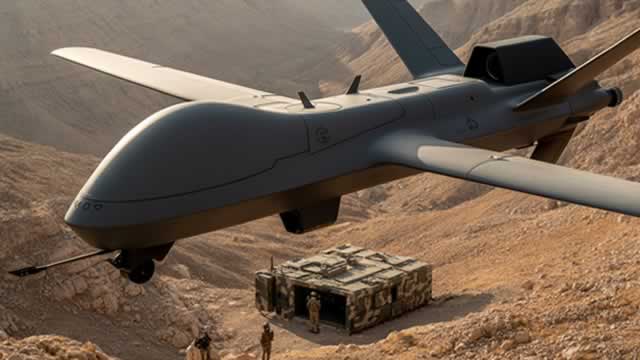
Can Redwire's VLEO Spacecraft Expand Mission Opportunities?
RDW expands its VLEO spacecraft portfolio with SabreSat and Phantom, targeting specialized missions that benefit from proximity to Earth.
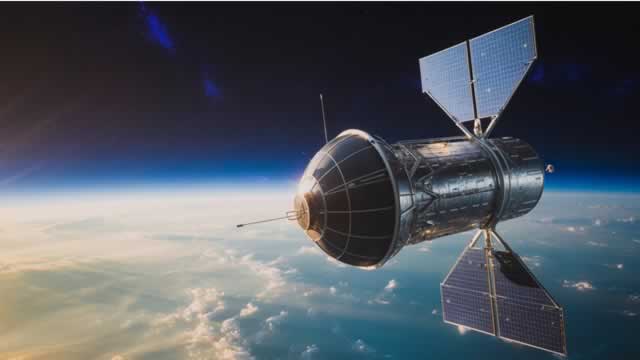
Can Redwire's Microgravity Pharma Work Create New Revenue Streams?
RDW expands microgravity applications into pharmaceutical research, creating potential revenue streams through research and licensing.
Redwire Falls 5% as Space Stocks Sell Off Together; Rocket Lab Drops 4%, Intuitive Machines Slides 6%
Space stocks are moving lower as a group, and Redwire (NYSE:RDW) shares are posting one of the sharper declines even though the company hasn't released any news that would account for the slide.
Redwire Corporation (2BD) FAQ
What is the stock price today?
On which exchange is it traded?
What is its stock symbol?
Does it pay dividends? What is the current yield?
What is its market cap?
Has Redwire Corporation ever had a stock split?
Redwire Corporation Profile
| Aerospace & Defense Industry | Industrials Sector | Peter Cannito CEO | XFRA Exchange | US75776W1036 ISIN |
| US Country | 1,410 Employees | - Last Dividend | - Last Split | 2 Sep 2021 IPO Date |
Overview
Redwire Corporation emerges as a pivotal player in the domain of space solutions and infrastructure, catering to both government and commercial clienteles across the United States, Europe, and various international vicinities. With its headquarters situated in Jacksonville, Florida, the corporation is instrumental in propelling critical space missions forward by providing sophisticated technology and services essential for navigation, control, and operational excellence in spacecraft. Their innovative approach combines traditional engineering with cutting-edge digital practices, ensuring their offerings are at the forefront of space exploration and utility.
Products and Services
- Avionics and Sensors:
Includes a suite of technological solutions like star trackers, sun sensors, which are quintessential for the precise navigation and control of spacecraft. These tools enable spacecraft to ascertain their orientation in space accurately.
- Camera Systems:
Redwire offers sophisticated camera systems that are crucial for various mission objectives, from navigation aids to surveillance and monitoring applications in space.
- Solar Array Solutions:
Catering to a wide range of spacecraft sizes, power requirements, and orbital positioning needs, these solutions ensure that spacecraft have access to reliable power sources, leveraging solar energy efficiently.
- Deployable Structures:
This category encompasses strain composite booms, coilable booms, truss structures, telescope baffles, and deployable booms. These structures play a vital role in positioning essential components like sensors or solar arrays at a distance from the spacecraft, optimizing their functionality and efficiency.
- Digital Engineering Software Suite:
Redwire revolutionizes spacecraft design and simulation through a robust software suite that facilitates digital engineering. This platform enables the creation of high-fidelity, interactive models and simulations of components, spacecraft, and entire constellations, all within a cloud-based environment.
- Microgravity Payloads:
With provisions for microgravity payloads, Redwire supports scientific research and experiments that require the unique conditions of space to obtain novel insights and breakthroughs.
- Radio Frequency Systems and Antennas:
Key for communication, navigation, and data transmission, these systems ensure robust connectivity and reliable data exchange between spacecraft and ground stations or other spacecraft.
- Star Trackers and Platforms:
These platforms and tracking systems are essential for maintaining communication, observation, and operational trajectories of spacecraft, aligning them with mission goals effectively.
- In-Space Manufacturing and Biotech Facilities:
Redwire is pioneering in-space manufacturing and biotechnology facilities, offering novel capabilities for production and research in the microgravity environment of space, opening new avenues in space exploration and utilization.
Contact Information




