


Bitcoin

One year after 10/10, Bitcoin and Ether liquidity is back while altcoins lag
The crypto market's bifurcation highlights Bitcoin and Ether's institutional appeal, while altcoins face volatility and limited growth potential. One year after 10/10, Bitcoin and Ether liquidity is back while altcoins lag.
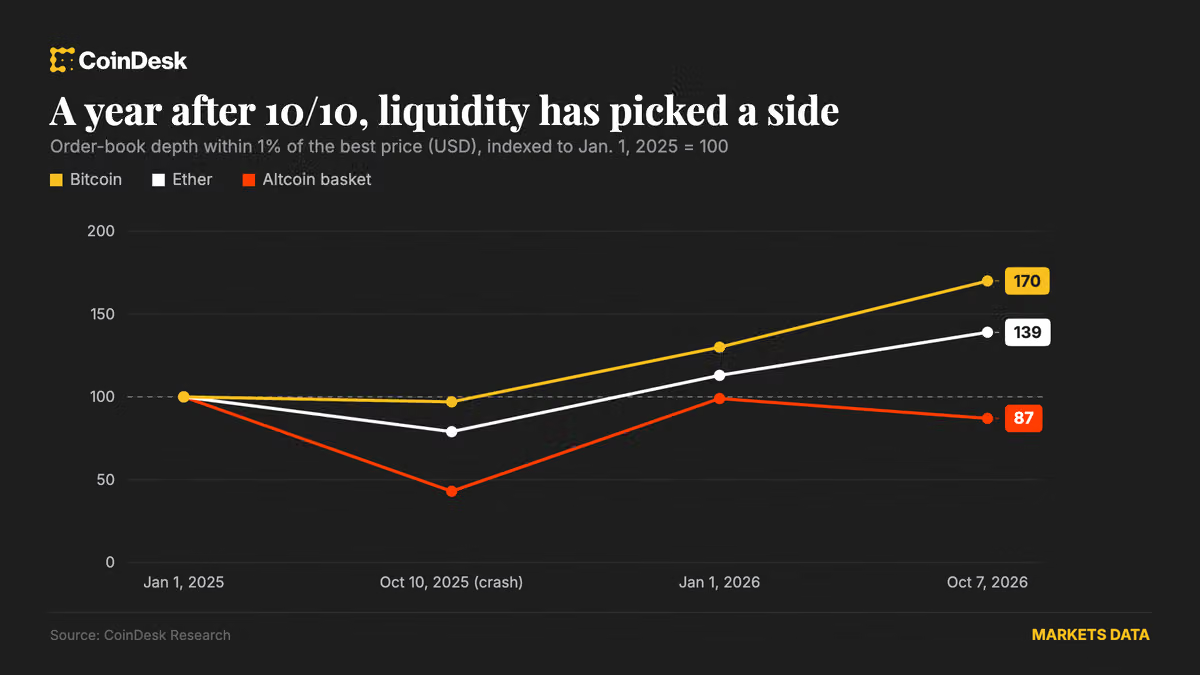
One year after 10/10, bitcoin and ether liquidity have rebuilt, but other altcoins still face risks
Bitcoin and ether order books are deeper than before the crash, while altcoin liquidity keeps eroding and spot trading remains well below its October 2025 peak.

Bitcoin's $19 billion crash still shapes crypto risk a year later
The 10/10 crash highlighted crypto's vulnerability to external shocks, prompting calls for better risk management and transparency in trading. Bitcoin's $19 billion crash still shapes crypto risk a year later.

Bitcoin's $19 billion wake-up call: One-year later, has crypto learned anything?
One year after a flash crash wiped out billions in leveraged crypto bets, traders have better tools to spot risks. But the forces behind the selloff remain.

Strive Reports 29,462 Bitcoin Holdings After 2,000-Bitcoin Purchase
An estimate puts SATA proceeds at about $55 million, enough for an estimated 638 Bitcoin, though no such purchase was confirmed as of Oct. 10.
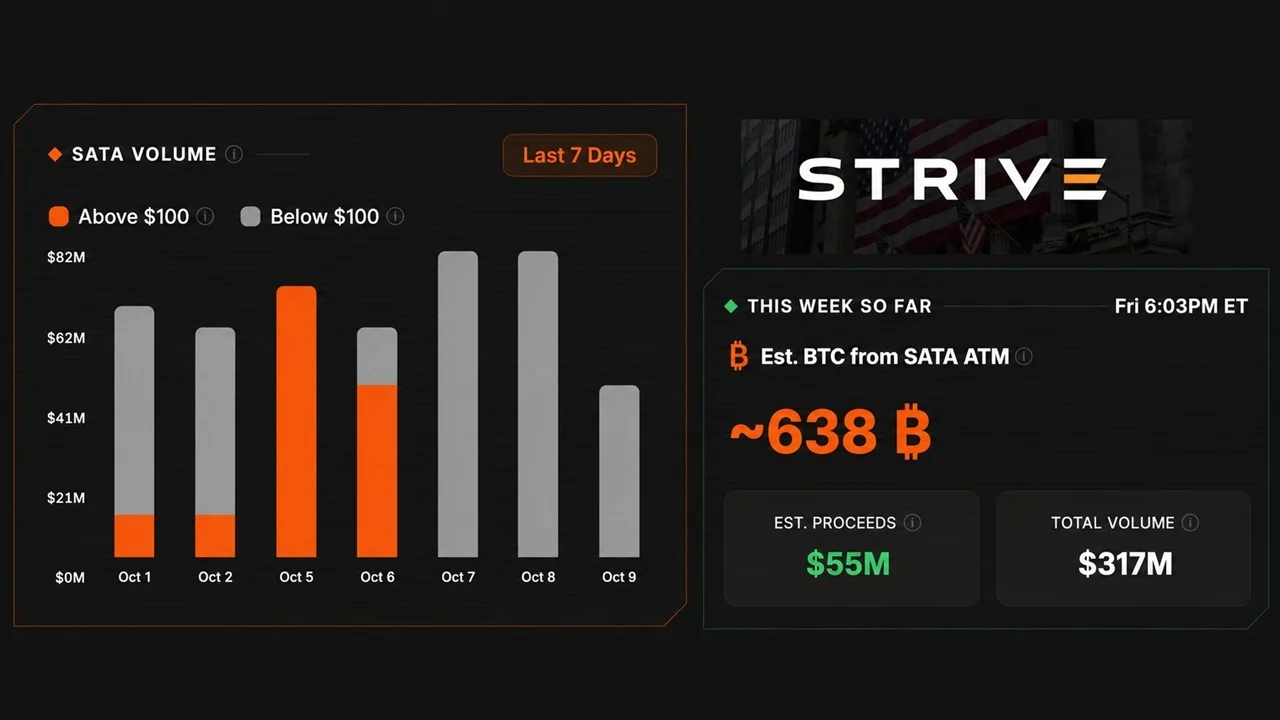
Strive Is Running Saylor's Playbook and Has Raised Enough for 638 Bitcoin
Strive's SATA preferred stock generated an estimated $55 million this week, enough to buy about 638 BTC, even though the shares spent three of five trading days below the price at which new issuance stops.

NEAR Rockets by 10% Daily, BTC Price Eyes $83K: Weekend Watch
WLD and ADA have also rebounded swiftly after the recent crash.

Why Traders Still Use Wyckoff Distribution to Decode Bitcoin Price Action
Richard Wyckoff developed his market framework in the early 20th century, but Wyckoff Distribution continues to influence modern Bitcoin analysis. Its central idea is that markets reveal changes in supply and demand through price behavior and trading volume.

Aerodrome rallies 48% in four weeks, outpacing Bitcoin and Ether
Aerodrome's surge and upcoming merger with Velodrome could significantly expand its market influence and reshape decentralized exchange dynamics. Aerodrome rallies 48% in four weeks, outpacing Bitcoin and Ether.

Bitcoin price: $87K rebound or another plunge below $81K?
Bitcoin price has rebounded toward $82,800 after a sharp liquidation-driven sell-off, but resistance near $84,400 stands between its weekend recovery and another attempt at $87,000. CoinGecko recorded Bitcoin at $82,726 on Oct. 10, up 0.

Long-Term Treasury Yields Stay Above 5% as Bitcoin Faces Pressure
The 10-year and 30-year Treasury yields exceeded 5% on Oct. 5 and Oct. 6, while bond-market volatility remained elevated.

Bitcoin Slides 4% as Short-Term Holder Transfers Raise Capitulation Fears
Bitcoin climbed from roughly $75,000 to $87,000 before the pullback, while realized-profit data showed holders still exiting positions at an aggregate profit.


