


Bitcoin

Bitcoin Breaks Above $81,000 as Spot Price Reaches $81,433
Bitcoin rose 1.00% over the past hour, reaching the level at 2:23 p.m. ET on Oct. 8.

Bitcoin Loses $83K Support As Oil Prices Surge
Bitcoin fell around 81200 dollars on October 8, after a low near 80940 dollars, its lowest level in nearly three weeks. The rise in oil and US rates increases the pressure, while tensions around Iran revive inflation fears.

Bitcoin Price Holds Near $81K as Miner Selling Pressure Eases
Miner metrics recover while Glassnode identifies large Bitcoin bids around $81,000.

Tornado Cash Trial: Prosecutors Cite Bitcoin Fog Case
U.S. prosecutors cite the Bitcoin Fog case in arguments for Roman Storm's Tornado Cash trial. Here is what the legal comparison signals.

US Government Shifts $1 Billion in Bitcoin, $94 Million in Tether
The U.S. government's cryptocurrency shuffle isn't over. Following two days of bitcoin transfers totaling $770 million, federal wallets moved another 12,267.02 BTC worth approximately $1.01 billion on Thursday. The latest activity also included $94.

Bitcoin price risks $78,000 as bearish MACD crossover forms
Bitcoin price has fallen toward $80,800, bringing its 50-day moving average into focus as a bearish daily MACD crossover and an oversold 4-hour RSI put the $80,000 level under pressure.

Bitcoin Transfer Leads Six Crypto Moves Worth $512.6 Million
Six large transfers moved $512.6 million over nearly three hours ending Oct. 8, with exchange outflows slightly exceeding inflows.

Bitcoin Breaks Below $81,000 as Crypto Liquidations Reach $1.14B
Ether led forced closures with $333 million, while Bitcoin long positions accounted for about $270 million during the 24 hours ending at 1:44 p.m. ET Thursday.

Bitcoin ETFs Suffer Worst Loss Since June as Uptober Turns Red
Investors yanked $484.9 million out of spot Bitcoin ETFs in a single day. Oil is near $100, bond yields are at their highest since 2002, and the Fed isn't done hiking.

Bitcoin slides toward $80K as crypto long liquidations top $1 billion
Bitcoin fell below $80,000 as crypto liquidations exceeded $1.1 billion, with rising oil prices and Treasury yields adding pressure to markets. Bitcoin slides toward $80K as crypto long liquidations top $1 billion.
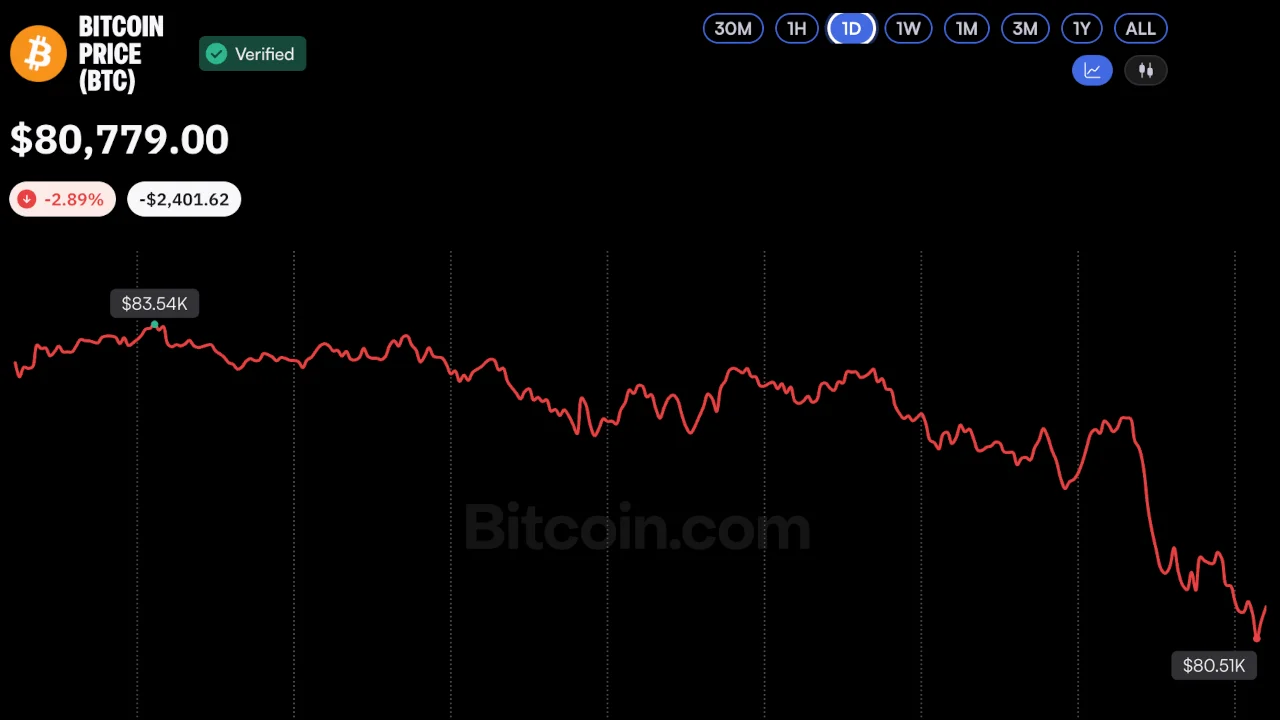
Bitcoin Price Drops Below $81K as Crypto Liquidations Top $1.1 Billion
Bitcoin broke below $81,000 to an intraday low near $80,500, wiping out billions from its market cap. Over $1.1 billion in total crypto positions were liquidated, led by ether with $333 million.

Bitcoin's slide below $81,000 exposes why a Fed pause may not save the crypto market
Bitcoin slid below $81,000 on Oct. 8, with an intraday low near $80,800, even as traders expect the Fed to hold in October. The September FOMC minutes, released Oct. 7, said most participants viewed another rate increase by year-end as probable and left decisions dependent on data.


