





Bitcoin

Bitcoin Whipsaws as Crypto Liquidations Near $1 Billion
Hot inflation data revived Fed rate-hike bets, and leveraged bulls paid the bill as nearly $1 billion in crypto positions were liquidated.

Bitcoin Can Crash 15% While Crypto Exchanges Collect Millions in Fees — Here's How the Business Works
Crypto exchanges can earn trading fees during Bitcoin crashes. Learn how liquidations, spreads and derivatives work, and why exchanges can still lose money.

Bitcoin Price Rebounds Toward $80,000 After Overnight Selloff — Can BTC Recover Above $83,000?
Bitcoin rebounds after testing $80,000 as Treasury yields retreat, but hot US inflation, ETF outflows and Fed uncertainty threaten BTC's recovery.

Bitcoin (BTC) Transfer Leads $308.4 Million in Three-Hour Crypto Moves
The three transfers through 8 a.m. ET Oct. 15 included $51.4 million sent off exchanges and $24.1 million sent onto them.

Bitcoin (BTC) Energy Use Estimates Diverge by Measurement Method
A 2024 survey-based estimate put annual electricity use at 138 TWh, while a live economic model showed 204.44 TWh annualized on Oct. 15, 2026.
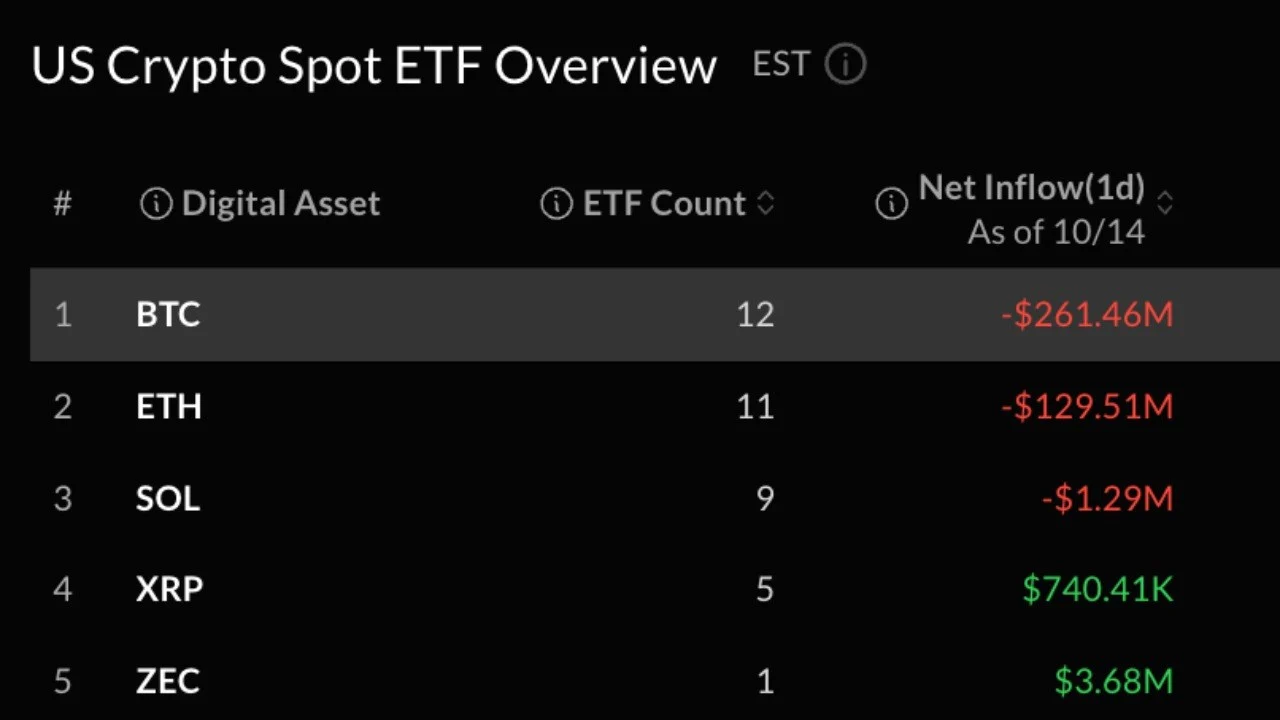
Bitcoin, Ether ETFs Lose $391M as Single-Day Rebound Vanishes
U.S. crypto ETF flows swung sharply back into negative territory on Wednesday, with bitcoin and ether funds shedding a combined $390.97 million. The reversal erased Tuesday's improvement and pushed the two largest ETF categories to roughly $341 million in combined outflows for the week so far.
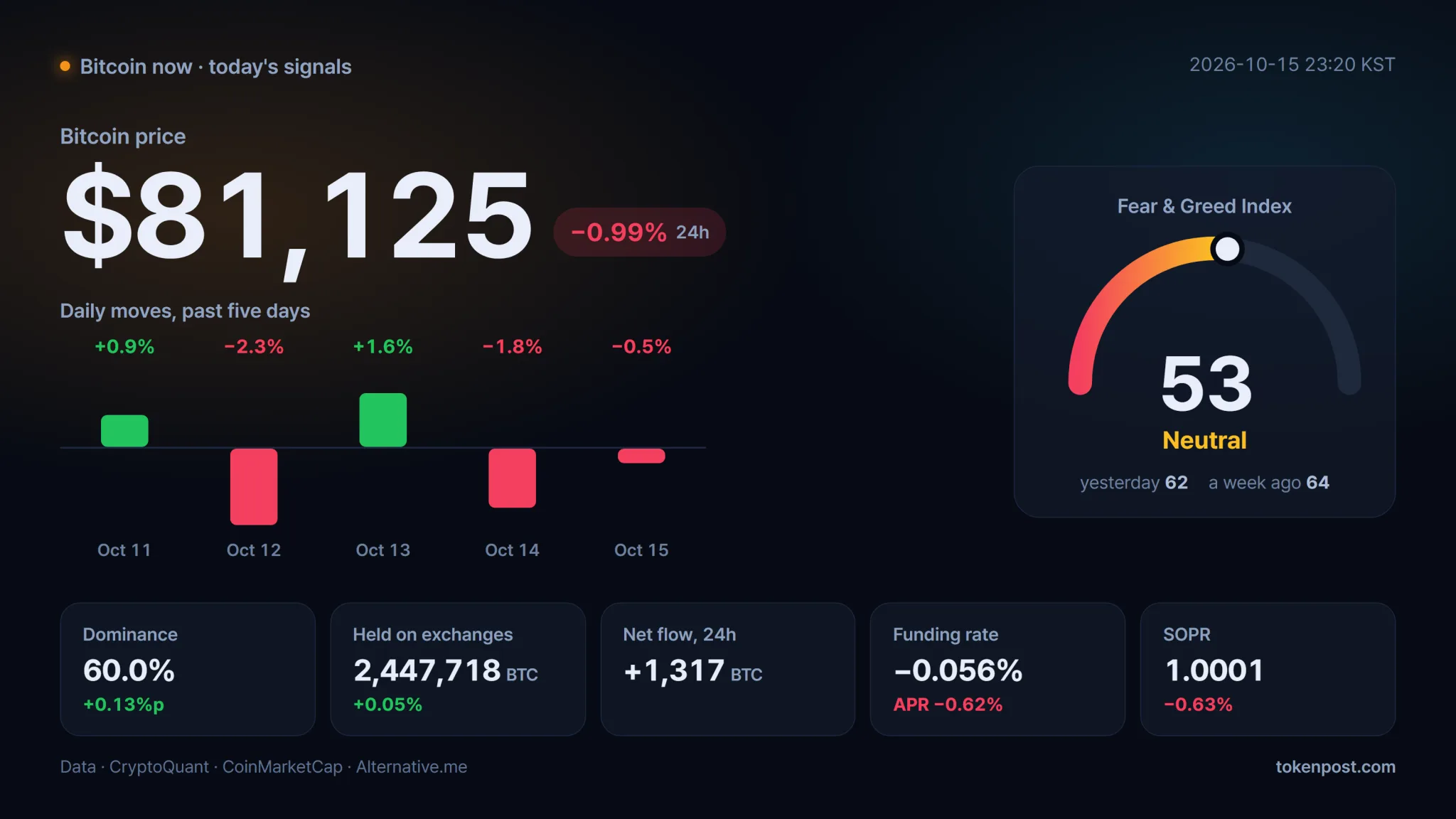
Bitcoin holds above $81,000 as volume jumps 44.69% and sentiment turns neutral
Bitcoin held above $81,000 despite a 0.99% decline, while trading volume surged 44.69%. Sentiment fell to neutral as exchange inflows and negative funding signaled near-term pressure.

U.S. Bitcoin Inflows Outpace Outflows for First Time Since 2022
Transfers above $10 million brought 53,200 Bitcoin (BTC) into the country, while transfers below $10,000 remained net outbound in every measured period.

Bitcoin and Ethereum ETFs Bleed $390 Million Amid Market Drop
ETF Outflows: Bitcoin and Ethereum ETFs recorded combined net outflows of roughly $390.9 million on Oct. 14, reversing the previous day's recovery and highlighting renewed selling pressure. Fund Leaders: BlackRock and Fidelity led withdrawals on the BTC side, while BlackRock's Ethereum fund accounted for most Ethereum-related outflows.

Bitcoin users paid nearly $21 million in transaction fees in Q3
As Bitcoin (BTC) closed the third quarter (Q3) 2026 up over 43%, ending its third consecutive quarter of overall losses, users paid nearly $21 million in total transaction fees during the period.

Bitcoin May Correct to $74,600 After Fifth Wave Ends at Expected Position
BTC is below its 21-period EMA and temporarily finding support near the 50-period EMA, while its RSI has returned to a neutral 50.

Bitcoin Falls Below $81K as Hot US CPI Data Sinks Asian Equities
BTC fell 3.6% to $80,764 as South Korea's Kospi sank 8% and Japan's Nikkei dropped 5.2% in a risk-off selloff following hot US inflation data.




