





Bitcoin

Bitcoin Falls Below $84,000, Trading at $83,966 After 1.86% Drop
Bitcoin was trading at $83,966.17 with a 1.86% daily decline after crossing below the key price level.

Bitcoin Drops 2.0% In One Hour To $83,744 As Long Liquidations Top $62 Million
Bitcoin was down 2.16% over 24 hours at 10:03 p.m. ET, based on spot-market data collected directly from Binance.

Binance Liquidates $2.97 Million Bitcoin Long Position at $84,941
The single liquidation occurred Oct. 6 at 9:57 p.m. ET (Oct. 7 at 01:57 UTC).

Bitcoin Liquidations Hit $15 Million in One Hour, Mostly Longs
Long positions accounted for $14.99 million of the total across Binance, Bybit and OKX. Bitcoin's price fell 0.83% during the same hour.

Bitcoin.de trading remains halted as German regulator rejects MiCA application
Trading on the platform has largely been suspended since June as its operator awaited MiCA authorization, with the company now looking to regulated partners to restart services.

US government moves $103M in crypto, including 833 BTC and 40,285 BNB
The US government's crypto movements highlight strategic asset management, with Bitcoin held long-term and BNB potentially liquidated, impacting market dynamics. US government moves $103M in crypto, including 833 BTC and 40,285 BNB.

Bitcoin rally delivers $4.1 billion tax windfall for Strategy
Strategy's October filing shows an accounting consequence. ETF cost estimates measure fund holdings, while redemptions determine how Bitcoin leaves.

Bitwise CIO Matt Hougan says Bitcoin is maturing into digital gold
Bitcoin's decreasing volatility suggests its evolution into a stable asset, potentially increasing institutional investment and market integration. Bitwise CIO Matt Hougan says Bitcoin is maturing into digital gold.

Bitcoin's $85,000 wall may decide its next structural move
Bitcoin's struggle at $85,000 could signal a pivotal market shift, impacting investor strategies and future price dynamics significantly. Bitcoin's $85,000 wall may decide its next structural move.
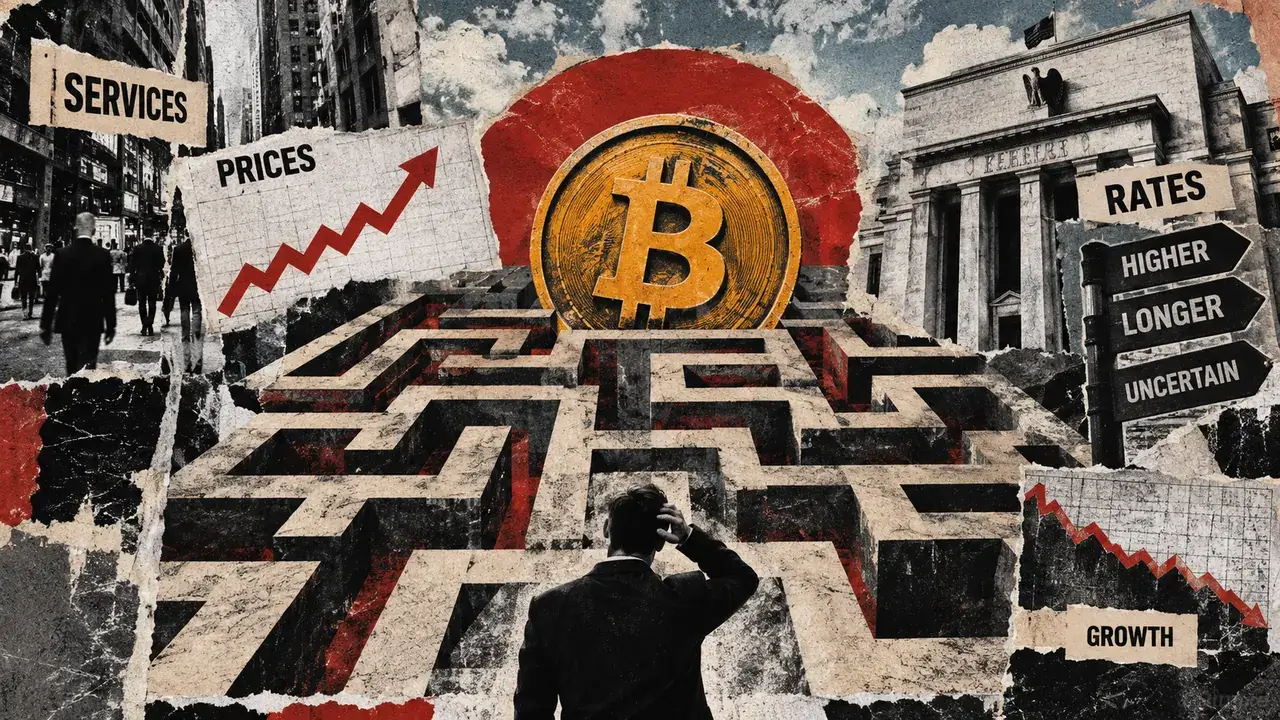
US services price gauge hits a four-year high, clouding Bitcoin's rate-relief outlook
September's prices index rose to 74.0 while growth slowed, leaving rate relief uncertain for leveraged Bitcoin exposure.

VanEck says nuclear power approval could boost AI and ease Bitcoin sell pressure
Nuclear power expansion could transform energy economics, reducing Bitcoin sell-offs and enhancing AI growth through cheaper electricity access. VanEck says nuclear power approval could boost AI and ease Bitcoin sell pressure.

Bitcoin Group Plans Partner Model to Restart Bitcoin.de Trading
Trading has been suspended since June 12, 2026. The company has not named partners or set a launch date.




