





Bitcoin

Bitcoin Stays Above $80,000 as Kospi's 8% Slide Halts Trading
Bitcoin traded near $81,200 in early U.S. hours, while 94 of 100 tracked crypto assets declined.

UK tax rules raise fears of linking Bitcoin users to their home addresses
The new UK tax rules could compromise user privacy, potentially exposing Bitcoin users to security risks and international data sharing. UK tax rules raise fears of linking Bitcoin users to their home addresses.

Bitcoin Tests $80K as Global Selloff Wipes $100B From Crypto
Bitcoin fell to just above $80,000 before recovering toward $81,000, while the crypto market briefly lost more than $100 billion in value. South Korea's Kospi plunged 8% and Japan's Nikkei fell 5%, extending a global risk-off move after hotter U.S. inflation renewed rate concerns.

Avanza Bank holds $298K in shares of Bitcoin treasury company Strategy
Avanza Bank's indirect Bitcoin exposure highlights the growing trend of cautious institutional investment in cryptocurrency through proxies. Avanza Bank holds $298K in shares of Bitcoin treasury company Strategy.

Bitcoin Price Dips Below $81,000 as Hotter Inflation, Asian Equity Plunge, and Liquidations Intensify Market Pressure
Bitcoin (BTC) and broader cryptocurrency markets faced renewed selling pressure in mid-October 2026 after US inflation data came in hotter than anticipated, reviving concerns that the Federal Reserve could raise interest rates again at its late-month meeting. September's Consumer Price Index rose 0.
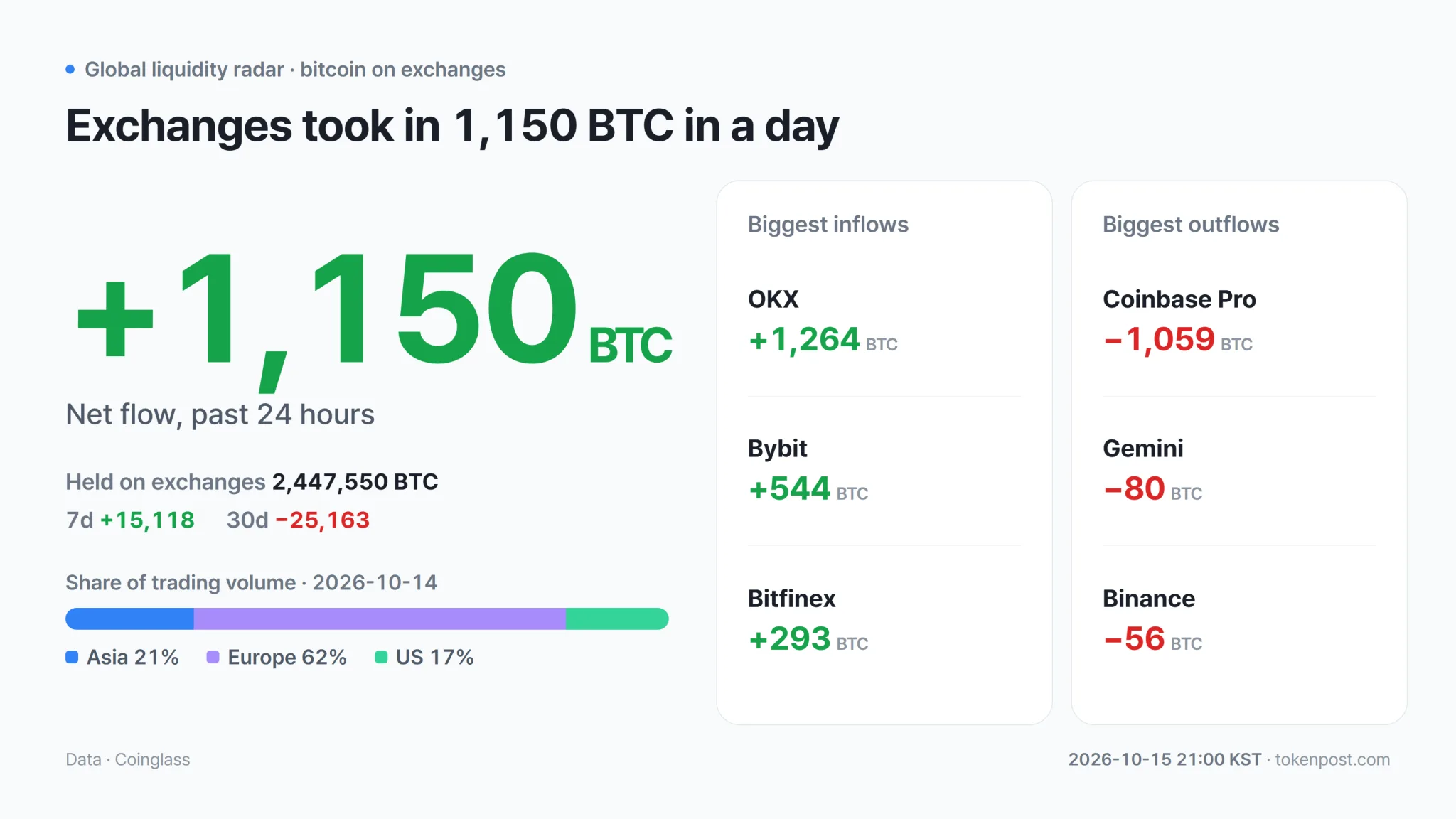
Global liquidity radar: Exchanges add 1,149.75 BTC as Asia volume falls 51% and US drops 50%
Major exchanges added 1,149.75 BTC over 24 hours and 15,118.13 BTC over seven days, while monthly outflows reached 25,163.02 BTC. European-session volume rose 92% as Asian and US activity fell.

Bitcoin Nears $80,400 as Core Inflation Tops Forecasts
BTC fell 2.6% in 24 hours as Nasdaq 100 futures dropped 1.2%. U.S. spot Bitcoin ETFs recorded about $261 million in net outflows Wednesday.

Crypto Liquidations Near $1 Billion as Ether's Tally Tops Bitcoin's
The 24-hour snapshot recorded $283.1 million in Ether liquidations and $196 million in Bitcoin, with 91.6% of positions being longs.
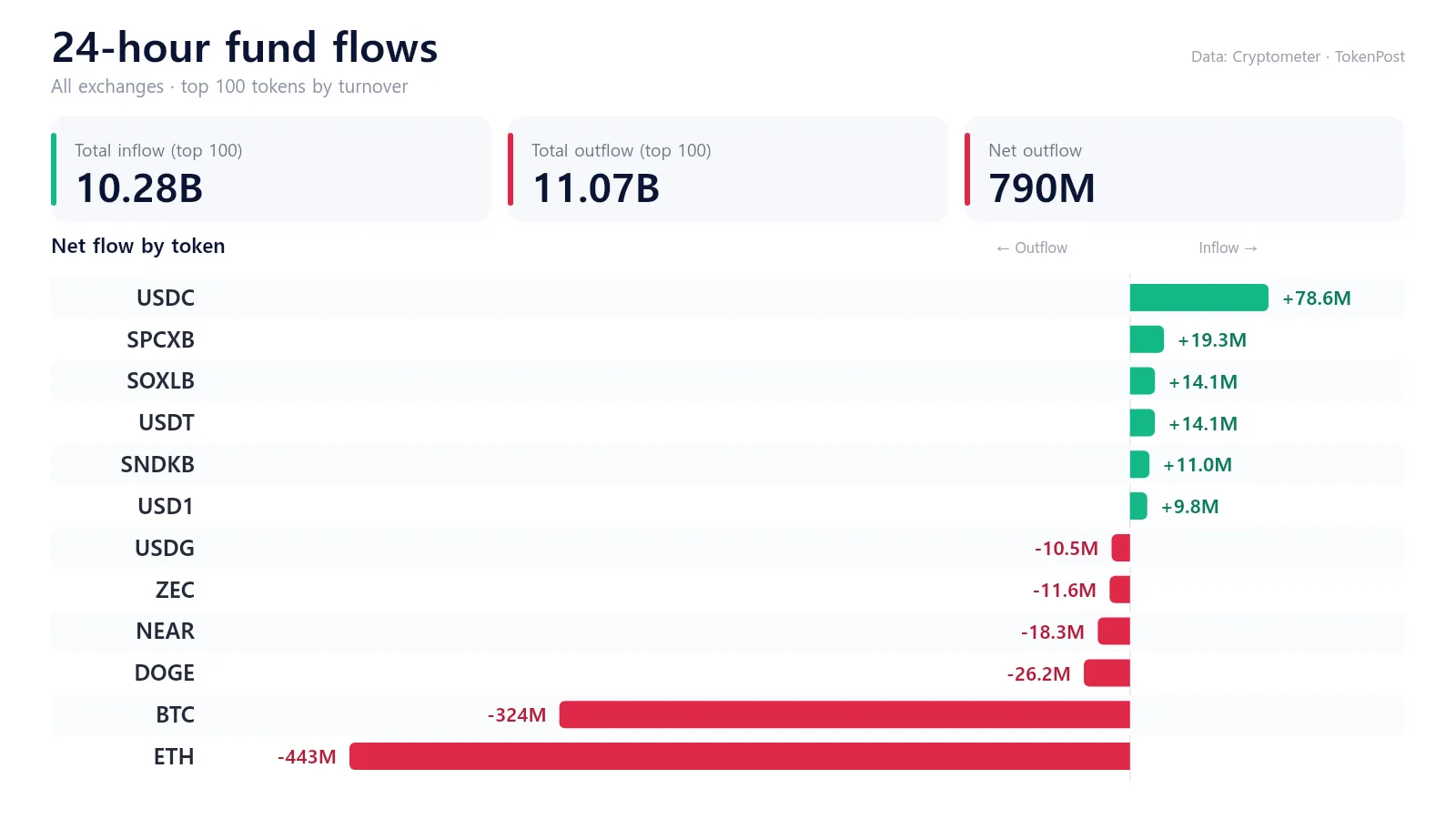
24-hour fund flows: BTC, ETH post outflows as USDC, XRP attract capital
BTC and ETH posted net outflows of $324.02 million and $443.21 million, respectively. USDC led inflows with $78.63 million, followed by SPCXB, SOXLB, USDT and SNDKB.

Bitcoin Falls Below $81,000 as Inflation and AI Selloff Deepen
Bitcoin touched about $80,400 early Thursday before rebounding to $81,007.66 at 7:36 a.m. ET, still down 2.88% over 24 hours.
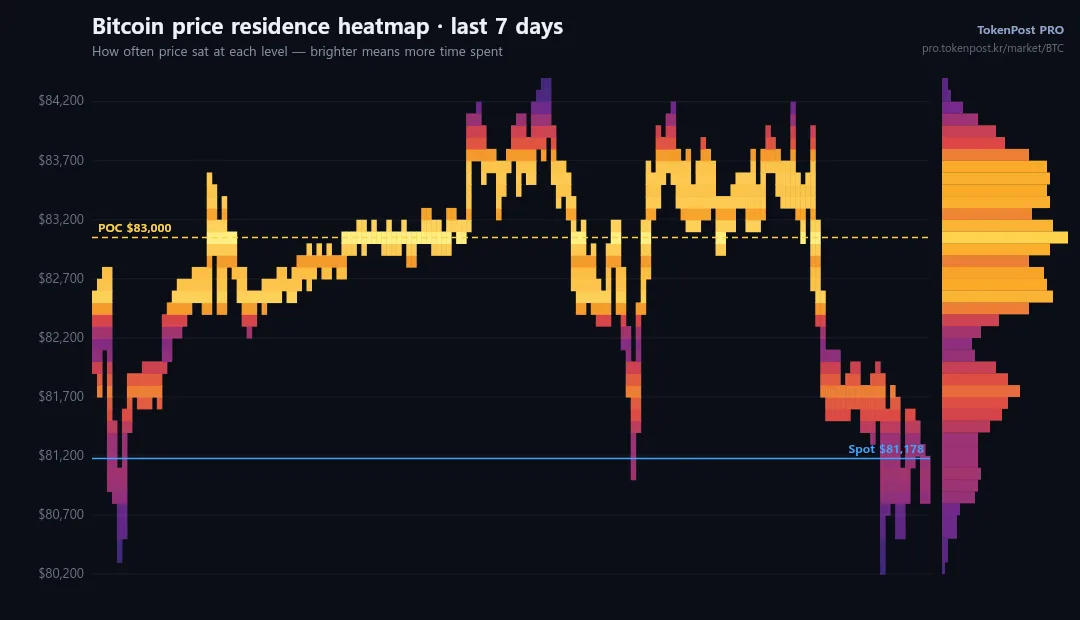
BTC cycle tracker: Bitcoin tests $81,000 support as $83,000 resistance looms
Bitcoin is testing support around $81,000 while the weekly volume profile places the main resistance at $83,000. The asset remains 35.59% below its all-time high.

US Becomes Bitcoin Net Importer Again, Says Chainalysis
The U.S., a global supplier of USD-pegged stablecoins, has once again “imported” more bitcoin than it “exported,” becoming a net importer for the first time since 2022, according to blockchain analysis firm Chainalysis. The firm reached this conclusion by analyzing data for the year ending in June 2026.




