


Bitcoin

Eclair merges fixes for Lightning flaws that could burn Bitcoin in fees
October funding and splicing repairs limit peer fees and verify backend transactions, while the latest listed release remains September's v0.14.3.

Strategy Spends $192 Million Buying Back Its Preferred Stock, Nearly Nine Times Its Bitcoin Buy
Saylor's company spent nearly nine times as much repurchasing its Stretch preferred stock as it did on bitcoin last week, leaving $354.8 million of its $2 billion buyback authorization.

Strategy Buys 250 Bitcoin for $21.5 Million in Latest Accumulation
The company also repurchased $192.4 million of its STRC preferred stock and now holds 848,250 BTC.

Strive Holds 29,462 BTC as SATA Preferred Stock Fundraising Reaches $55 Million Estimate
The company raised an estimated $55 million during the week of Oct. 5. An expected 8-K filing will clarify whether the funds were converted into Bitcoin.

What Happens When Bitcoin ETFs Buy More BTC Than Miners Produce?
Bitcoin miners produce roughly 450 BTC daily, but ETFs can absorb much more. Learn how ETF demand affects Bitcoin supply, liquidity and prices.
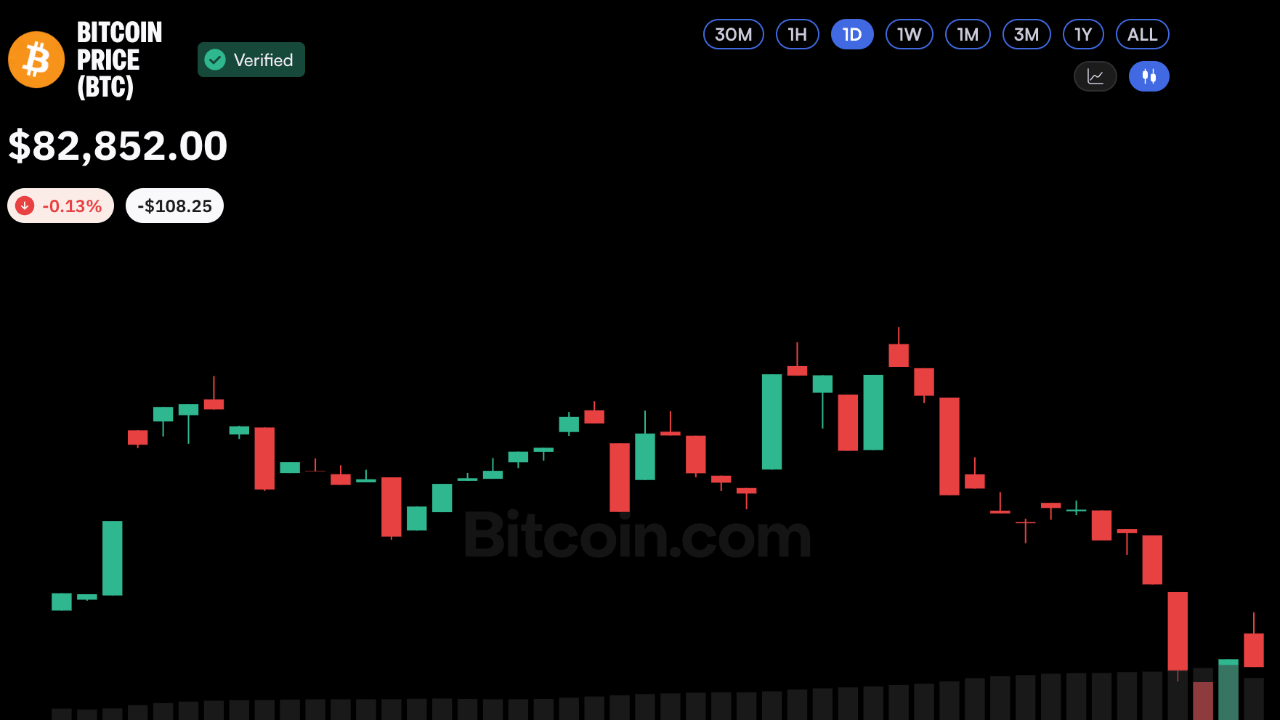
Bitcoin Price Defies $681M ETF Outflow as Oil Trades Above $100
Bitcoin is holding above $80,000 even as Brent crude trades above $100 amid renewed Middle East tensions. The resilience is notable, but roughly $681 million of weekly U.S. spot bitcoin ETF outflows leaves institutional demand as the key test for the next move.

Bitcoin Price Today: BTC Rebounds Above $83,300, Bottom Signals Remain Mixed
On-chain indicators show early signs of a market bottom, but US buyers remain cautious.

Willem Middelkoop: Bitcoin is the Fastest Horse – Why the Debasement Trade Takes it to $1M
Central banks buy record gold, so why not Bitcoin? Willem Middelkoop explains why authority favors controllable assets while institutions turn to ETFs.

Bitcoin Bull Market Signal Emerges Even as BTC Struggles to Break $84K
Bitcoin's 30-day gain remains positive, but its one-year performance is still deeply negative, leaving the longer-term recovery unfinished.

Bitcoin Bulls Need Buying Support Near $80,000 to Hold Range
Bitcoin is retesting the upper boundary of its trading range. If buying support fails, the price could retreat toward $76,000 to $78,000.
Strategy spends 9x more on preferred stock than Bitcoin with $192M STRC buyback
Michael Saylor's Strategy (NASDAQ: MSTR) spent roughly nine times the $21.5 million on buying 250 BTC during the period between October 5 and 11 on repurchasing its own STRC preferred shares, which it directed $192.4 million into.

Bitcoin Records First Bullish 13-Week/34-Week EMA Crossover in 3.5 Years
Bitcoin's 13-week exponential moving average moved above its 34-week average on Oct. 12, marking a bullish setup on a weekly chart.


