





Bitcoin

Crypto expert Plan B warns Bitcoin could fall below $54k
Bitcoin (BTC) price ended its five-month losing streak with a 2% gain in March 2026, despite fears of a further sell-off in the second quarter.

BTC Price Hits $69K Resistance in Last-Gasp Rally: Sustainable Momentum or Last Dice Throw? (April 1 Update)
Bitcoin followed world stock markets to the upside on Tuesday as US president Trump let it be known that the war could end in two to three weeks. However, with both the S&P 500 and Bitcoin ending the day at strong resistances, will the main corrective moves now resume?
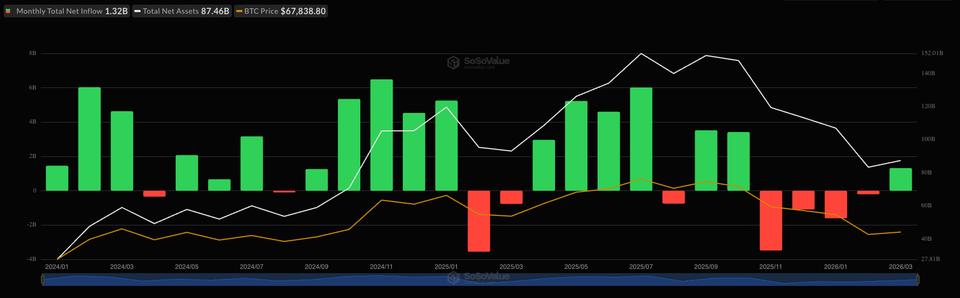
Bitcoin ETFs post first inflows since October as price stabilizes
ETF AUM fell just 7% from the October highs, highlighting resilience despite a 50% price decline.

Bitcoin Whales Stop Aggressive Selling. This Is What They Are Waiting For
Bitcoin is struggling below $70,000. The market is uncertain.

Market eyes quantum Bitcoin risk as researchers plan staged, cautious prep
Institutional investors are increasingly asking how the quantum Bitcoin narrative affects long-term security assumptions, even though the practical threat still appears distant. Public discussion often suggests that quantum computing could imminently break Bitcoin. However, machines powerful enough to do so using

Bitcoin's old peaks aren't untouchable anymore, and the days of parabolic rallies could be over
Bitcoin's price retraces to old highs, signaling slower growth and a maturing market.

Bitcoin Surges Past $45K as Diplomatic Signals Calm Markets
Bitcoin jumped to $45,000 Monday. Diplomatic signals between the US, Israel, and Iran sparked the rally as traders bet on easing tensions across the Middle East.

Bitcoin and Ethereum ETFs See Fresh Inflows Amid Geopolitical Easing
Cryptocurrency markets are gaining traction as geopolitical risk sentiment shifted sharply following a landmark statement from Iranian President Masoud Pezeshkian, signaling Tehran's readiness to end hostilities with the United States and Israel.

Google: Quantum Threat To Bitcoin May Arrive Sooner Than Expected
New research suggests quantum computers could break Bitcoin in minutes, raising urgent concerns about crypto security and the need for post-quantum solutions.
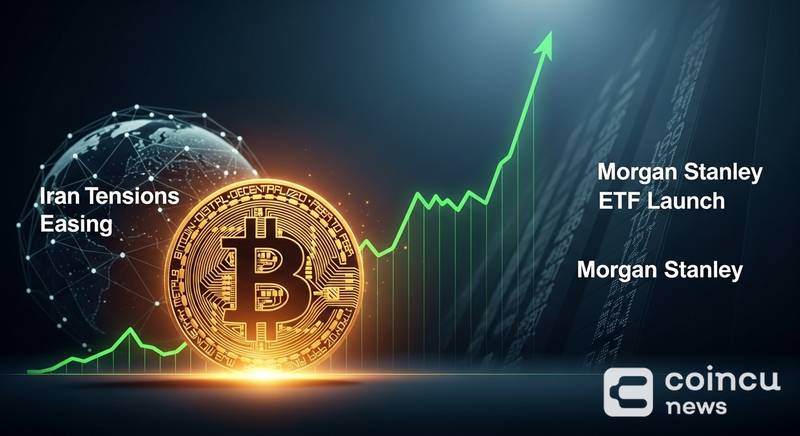
Bitcoin May Rise as Iran Tensions Ease, Morgan Stanley ETF Launch
Bitcoin rose nearly 3% on April 1 as two potential catalysts converged: signs that the U.S.-Iran military conflict could wind down within weeks, and growing expectations around a Morgan Stanley Bitcoin ETF that has moved closer to launch. The combination of easing geopolitical risk and fresh institutional access could create conditions for further upside, though neither catalyst is confirmed.

Why didn't Google's new quantum research focus on banking or nuclear codes instead of Bitcoin?
On Mar. 30, Google Quantum AI published a 57-page whitepaper coauthored with Justin Drake of the Ethereum Foundation and Dan Boneh of Stanford. The paper demonstrates that breaking the 256-bit elliptic-curve discrete logarithm problem, the cryptographic foundation underlying most blockchain transactions, requires roughly 500,000 physical qubits, a 20-fold reduction from prior estimates.

Bitcoin's Late-March ETF Rescue Masks a Deeper US Demand Problem
Bitcoin (BTC) price clung to $67,900 on April 1 after a late-March ETF inflow reversal rescued the asset from a third consecutive technical breakdown on the 8-hour chart.




