



BYD Company Limited (BYDDY)







BYD: Supplier Pledge And Energy Storage Investments Spark Comeback Jump
BYD remains a Buy despite recent stock declines, supported by strong long-term growth prospects and government energy storage initiatives. Short-term risks include China's sluggish consumer spending, ongoing price wars among automakers, and supplier payment concerns, but BYD is well-positioned to survive industry consolidation. BYD's diversification into energy storage and batteries offers a buffer against auto industry cyclicality, with government policies providing additional tailwinds.

3 Top EV Stocks to Buy in September
September usually isn't a great month to buy stocks. It's historically the worst-performing month of the year due to a wide range of factors -- including new bond issuances pulling investors away from equities, portfolio readjustments after the summer, and behavioral biases.

4 Reasons BYD Is No Longer Just About Volumes, And Why A Rerating Is Coming
BYD is shifting focus from pure volume to higher margins through technology, premium brands, and global local production to offset China price wars. Vertical integration, modular platforms, and in-house silicon carbide production give BYD a cost and speed advantage over competitors, supporting margin recovery. Despite Q2 margin pressure, international expansion and superior working capital management position BYD for improved profitability in 2025 and beyond.

Exclusive: China's BYD cuts 2025 sales target by 16%, sources say, a sign its white-hot growth is cooling
BYD has slashed its sales target for this year by as much as 16% to 4.6 million vehicles, two people with knowledge of the matter said, as the Chinese EV giant faces its slowest annual growth in five years and other signs that its era of record-setting expansion could be drawing to a close.
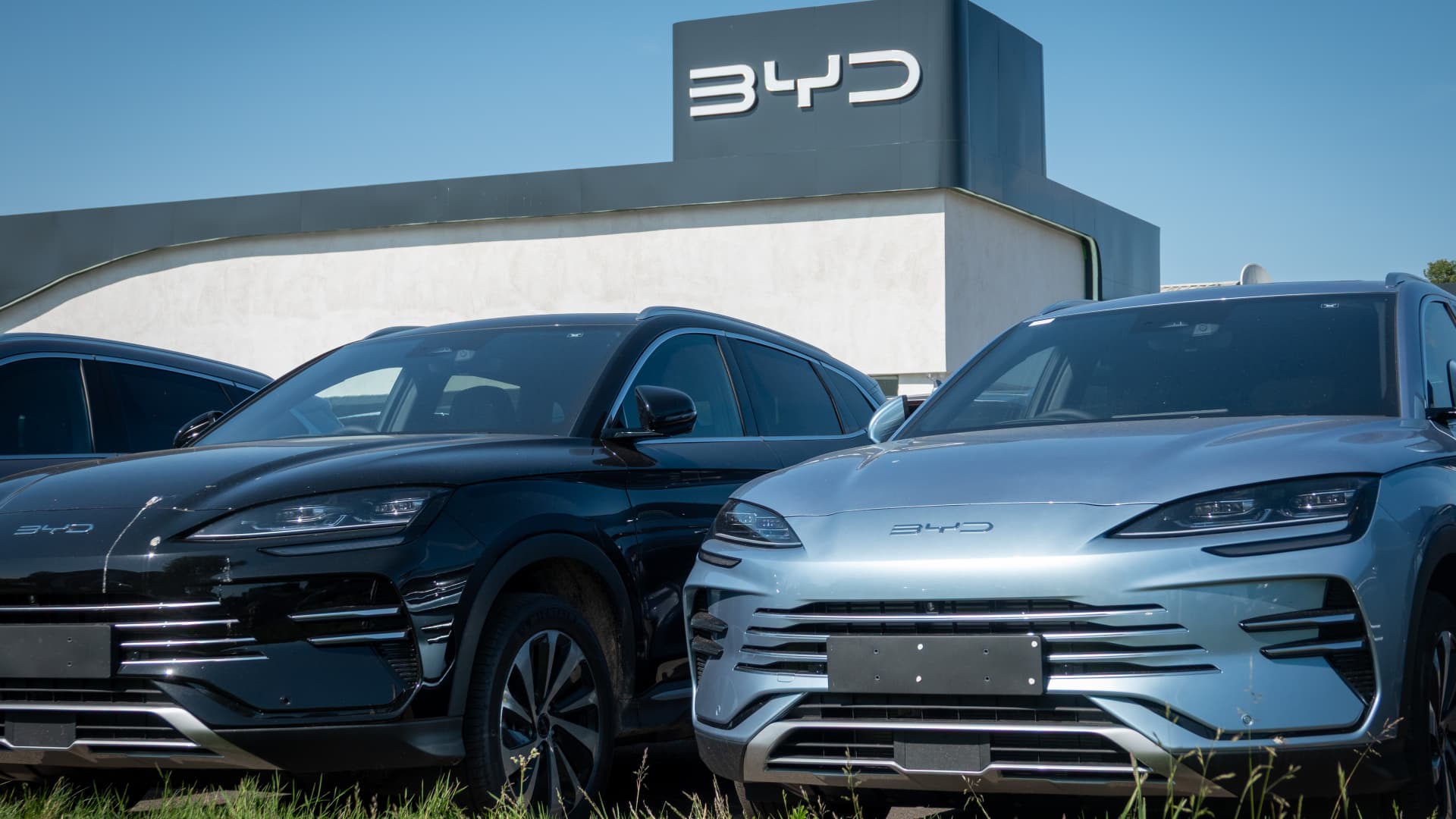
BYD's Hong Kong shares fall nearly 8% after quarterly profit drop
Hong Kong-listed shares of BYD fell more than 6% after the Tesla rival reported a quarterly profit drop amid a price war in its domestic industry.

3 Top Bargain Stocks Ready for a Bull Run
As the market hovers near its all-time highs, it's tempting to sit on your cash and wait for a downturn before buying more stocks. That might be the prudent move, but there are still plenty of stocks trading at a discount to the broader indexes and their industry peers.

BYD or RRR: Which Is the Better Value Stock Right Now?
Investors interested in stocks from the Gaming sector have probably already heard of Boyd Gaming (BYD) and Red Rock Resorts (RRR). But which of these two stocks offers value investors a better bang for their buck right now?
Why BYD Is The Best Car Stock You Can Buy Right Now (And It's A Bargain)
BYD earns my only Strong Buy rating among automakers, driven by dominant Chinese market share, rapid international expansion, and improving financials at a low valuation. The company benefits from structural EV tailwinds, outpacing Western rivals in China and abroad, with strong momentum in both BEV and PHEV sales. Financial performance is robust: revenues and margins are rising, cash reserves are strong, and the dividend is growing.

BYD: Remains Attractive Despite Disappointing Sales
July 2025 marked BYD's first production drop in sixteen months, with sales growth nearly flat due to weakness in PHEVs. However, there's much hope yet. Battery electric vehicle (BEV) sales surged 36.8% YoY, now surpassing PHEVs in share, signaling potential for renewed sales momentum. Even accounting for the pullback and signs of weakness in the China consumer economy, the company's financial estimates indicate significant upside to BYDDF going forward.

BYD Is The Most Popular EV Everywhere But On Wall Street
BYD is a global EV powerhouse, with strong brand recognition, expanding aggressively into Europe and other international markets, despite regulatory headwinds. Valuation is extremely attractive compared to global peers, supported by a fortress balance sheet, robust profitability, and a nearly 4% dividend yield. Key risks include rising inventory, slowing hybrid sales, and persistent geopolitical and trade war volatility impacting Chinese stocks.

BYD July Deliveries: Pullback Offers A GARP Opportunity (Technical Analysis)
BYD faces near-term selling pressure due to slowing July deliveries. The selling pressure is reflected in several bearish technical indicators and could cause further pullbacks to a $12~$13 support range. Looking past near-term issues, I see a good GARP (growth at reasonable price) pick featuring a well-rounded combination of value, growth, and profitability.

China's BYD breaks growth streak with July slump as EV price war reshapes competition
Major Chinese electric vehicle makers, including BYD, Li Auto and Ni, reported a drop in July deliveries. However, Xpeng shipped a record number of EVs in July.




