










Warren Buffett-Backed BYD Launches Australia's First EV Under $30K: How The Move Could Strengthen Fight Against Elon Musk's Tesla
Electric vehicle company BYD Co BYDDF BYDDY is launching the first electric vehicle to come with a starting price under $30,000 in Australia, a move that could boost the country's electric vehicle market.
China's BYD says 5,000 NEVs set sail for Europe
Chinese carmaker BYD said on Wednesday that a third roll-on/roll-off ship carrying close to 5,000 new energy vehicles bound for Europe has set sail.
Exclusive: BYD brought hundreds of Chinese workers to Brazil on irregular visas-inspector
Electric vehicle producer BYD brought hundreds of Chinese workers on irregular visas to build a factory in Brazil, a key labor inspector told Reuters on Tuesday, adding the company has pledged to comply with local labor laws for the workers remaining in the country.
BYD: The King Of EV, Albeit With Mixed Near-Term Signals (Rating Upgrade)
BYD remains a compelling investment due to its double digit sales growth, focus on competitive pricing, and strong profit margins, partly aided by the recent market pullback. The same has been observed in the management's decision to "asked a supplier to cut its prices by 10%," with it allowing its offerings to remain highly competitive. Even so, BYD faces near-term uncertainties from the potential subsidy cuts and sluggish macroeconomic growth, worsened by the mixed geopolitical sentiments.
BYD: Impressive Performance And Good Prospects (Rating Upgrade)
BYD Company saw a healthy price rise in 2024, which was directly in contrast with the weakness seen in the EV sector as such. Strong fundamentals explain the increase, like its robust sales performance, and double digit growth in revenues and earnings. While there can be challenges ahead owing to a lacklustre Chinese consumer economy and international tariffs, there are reasons to be hopeful too.
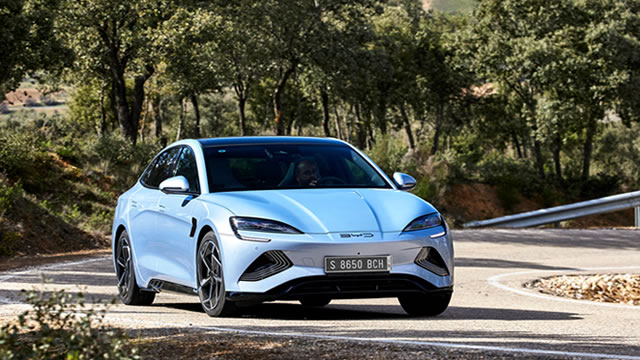
China's BYD sells record 500K EVs in December
Chinese automaker BYD Co. (1211.HK, BYDDF) has shattered its 2024 sales targets, delivering 4.27 million electric vehicles — a 41.3% leap from 2023. The company also hit a monthly sales record in December, posting 514,809 units sold.
Chinese EV makers BYD, Nio, Li and XPeng end 2024 on a sales high
Chinese electric-vehicle makers enjoyed strong sales in December 2024 as the country's EV price war continued.
BYD Will Take the EV Sales Crown From Tesla Again. That's Not Enough for the Stock, Though.
Chinese electric-vehicle makers had a record December, closing out another strong year of growth.
China's BYD surged to a new sales record, challenging Tesla for EV dominance
BYD posted its best-ever sales for Q4, turning up the heat on Tesla. The Chinese carmaker is competing with Tesla to be the world's biggest maker of EVs.
BYD Brazil site rocked by human trafficking allegations: what we know
Shocking news emerged recently as labour officials in Brazil revealed that employees from China working at a construction site linked to BYD Electric Vehicle company are believed to be victims of human trafficking activities. According to a Reuters report, these revelations have sparked controversy and raised concerns for BYD and their market in Brazil. Officials, from the Labour department in Brazil, revealed that 163 workers are being subjected to conditions resembling slavery at a construction site in the state of Bahia. Actions taken by Brazil’s authorities According to Reuters, this situation has triggered anger and demands for responsibility to be taken. Initial steps by the authorities involved the Brazilian Labor Prosecutors Office declaring that BYD and its subcontractor Jinjiang Group have committed to arranging better accommodations for the impacted workers at hotels until their work agreements are rectified. These actions to address the situation mentioned by the Labor Prosecutors Office, without revealing the evidence behind the human trafficking allegations, has raised more questions than answers among the public and media scrutiny of the workers’ welfare conditions. What does BYD say about these allegations? The debate surrounding the issue involving BYD and Jinjiang Groups’ reputations has prompted both companies to work on minimizing any harm to their image. A company’s executive stated that foreign entities and specific Chinese media organizations are working together to damage the image of brands and negatively impact the relationship between China and Brazil. This allegation hints at an issue at hand that adds complexity to the situation. Regarding China’s role and reaction, to these accusations, the Chinese foreign ministry has affirmed its dedication to conduct a thorough investigation on the accusations. Officials stated that in China protecting workers’ rights is a priority and companies are required to follow laws and regulations diligently as well as overseas expansion plans by Chinese businesses globally are part of a broader strategy to portray a positive image globally. Noteworthy, this accusation has opened a strong backlash on social media against BYD, highlighting the discussion about the need for better working conditions worldwide. Brazil’s government allegations Brazil’s government’s response aims to show a separation, from the matter while emphasizing the idea that any problems should be handled at the level. According to Reuters, Brazilian prosecutors unveiled videos of the workers living accommodations, which included bunk beds without mattresses. They claimed the workers worked extremely long hours, often seven days a week, in conditions that the authorities described as demeaning. The Brazilian Labor Prosecutors Office has arranged for a follow-up meeting, with BYD and Jinjiang scheduled for January 7th to discuss resolving the issues surrounding workers’ contracts and conditions in Brazil. Stakeholders from both countries are closely watching these developments to understand the impact they may have on labour relations and foreign investments in the region. A first step to new guidelines for labour standards? The ongoing debate not only brings up concerns about working conditions in ventures but also sheds light on the wider problems of human trafficking and worker rights in global supply chains. As the world economy depends more on labour forces nowadays companies are being closely watched to ensure treatment for all employees regardless of where they come from. The accusations that the company is facing, in the Brazilian context, underscore the complexities involving business ethics and global diplomacy interactions that come into play. The outcomes that unfold in the future are expected to establish guidelines for labour standards not just, within Brazil but also in how Chinese enterprises manage their ventures abroad. The post BYD Brazil site rocked by human trafficking allegations: what we know appeared first on Invezz
What happens next to workers in 'slavery-like conditions' at BYD's site in Brazil?
The 163 Chinese workers found by Brazil's labor ministry in what it described as "slavery-like conditions" at a factory construction site owned by Chinese electric vehicle producer BYD have been removed and taken to hotels, while officials negotiate with BYD and the Jinjiang Group about further measures to protect them, authorities said.
Exclusive: Brazilian suspends temporary work visas for BYD-ministry
Brazilian authorities have suspended the issuance of temporary work visas for Chinese electric vehicle producer BYD , the Ministry of Foreign Affairs said on Friday.




