



Comstock Holding Companies, Inc. (CHCI)


Summary
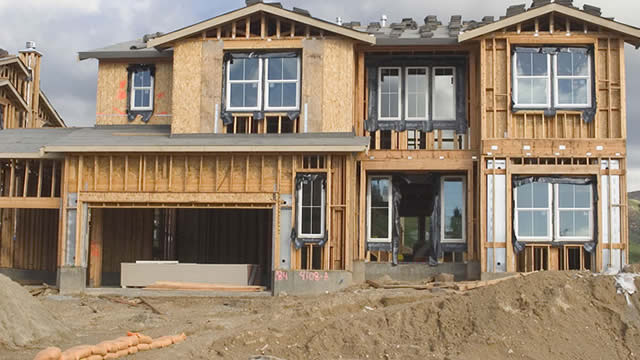
CHCI's Q4 Earnings Surge Y/Y on Fee-Based Growth, Stock Up 36%
Comstock posts year-over-year growth in Q4 earnings per share, supported by robust leasing activity, expanding fee-based revenues, and strategic moves into data centers and institutional ventures.
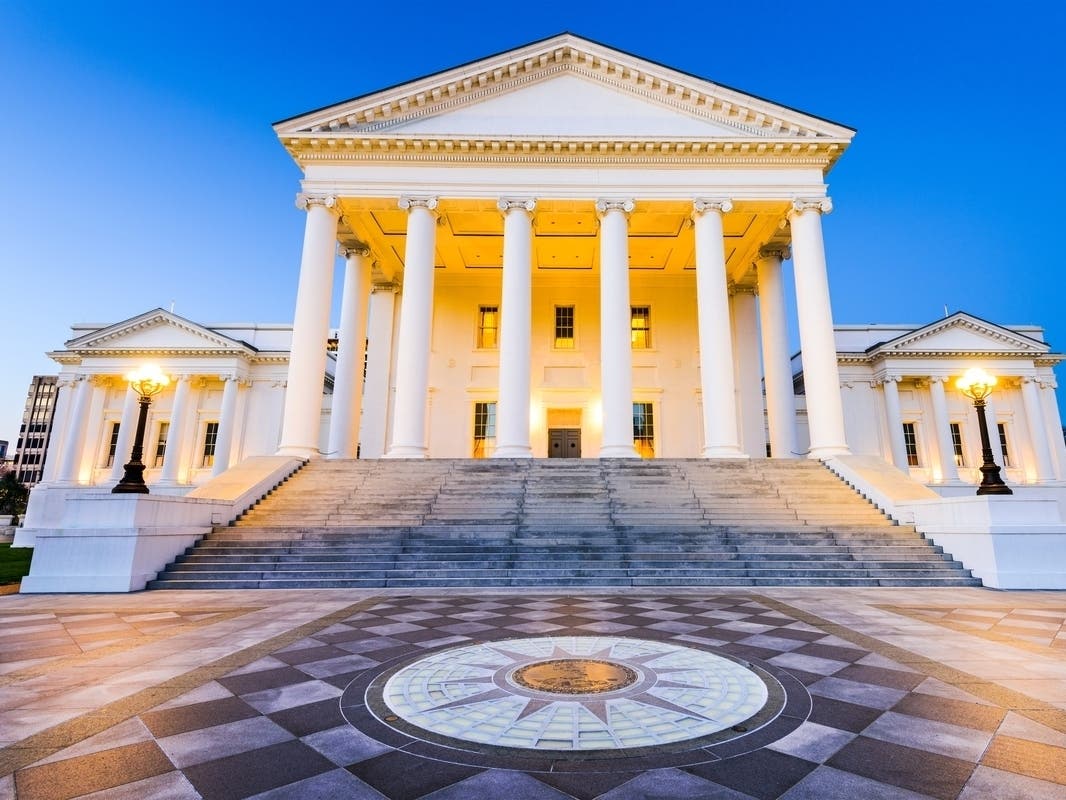
Despite Critics Tysons Casino Bill Faces Another Vote In Legislature
RICHMOND, VA — Two Northern Virginia lawmakers in recent days have criticized the Tysons casino bill working its way through legislative committees, with one delegate saying the proposal lacks local support and another voicing opposition because of the absence of state gaming oversight. The casino legislation was re-referred to the Virginia House of Delegates's appropriations committee at the request of Speaker Don Scott's (D-Portsmouth). After the Virginia Senate approved SB 982 last Tuesday on a 24 to 16 vote, the legislation was referred on Friday to the General Laws Committee, which is due to meet on Tuesday. "The Speaker has requested the bill be re-referred to the Committee on Appropriations," said Del. David Bulova (D-Fairfax), the general laws chair. "So, it will be on the agenda for General Laws full committee on Tuesday, but it will be under administrative actions and won't be debated at that time." Comstock Holding Companies, a Reston-based developer, has spent more than $1.5 million since 2023 to pass legislation allowing a casino to be built on Metro's Silver Line outside the Capital Beltway in Fairfax County. The project would include a 4 million-square-foot entertainment district in Tysons that would feature a high-end hotel with gaming floor, convention center, concert venue, restaurants, retail, and workforce housing. In addition, 200,000 square feet of the district would be dedicated to a casino. Bulova told Patch on Monday that he has been a longtime opponent of casinos in Virginia regardless of their location. Related: Tysons Casino Bill Advances: What To Know "They are difficult investments to maintain — and while they can be revenue generators, it is important to recognize that they come with social costs, including gambling addiction," Bulova said. "But key with SB982 is that Fairfax County has not asked for this. All the other five localities that have held a referendum have come to the General Assembly with a proposed development partner and have asked for that authority. That local buy-in is critical because ultimately the locality will need to 'own' the consequences, both good and bad, of having a casino. To me, it is a dangerous precedent for the General Assembly to short-circuit the process without local buy-in." During a town hall meeting in the Franconia District on Saturday, Del. Paul Krizek (D-Alexandria) told attendees he planned to vote against SB982. As chair of the General Laws' ABC/Gaming subcommittee, he expected to vote in opposition during both the subcommittee and full committee. As a member of the appropriations committee, Krizek told Patch on Monday that he was still planning to vote against the bill when it comes up there. Krizek introduced House Bill 2498, which would establish the Virginia Gaming Commission in order to regulate gaming across the state. The bill failed after reaching the house appropriations committee. “We’ve got to get control of gambling,” Krisek said, during a Feb. 1 town hall in the Mount Vernon District. “My feeling is that we’ve done gaming throughout Virginia. We have five casino licenses, only three of those are up and running. So we’ve got two more to come. Let’s take a deep breath and pause for this.” Although the house appropriations committee is scheduled to meet on Monday afternoon, SB982 was not on the day's agenda as of 11:30 a.m. The committee next meets on Wednesday afternoon. Read all of Patch's reporting on the plan to build a casino on Metro's Silver Line in Fairfax County at Silver Line Casino. Since the proposal to build a casino in Tysons first came to light, a tidal wave of opposition developed in Tysons and the surrounding communities. Most recently, the Vienna Town voted to reaffirm its opposition to the bill. Sixty-six comments were posted on the bill's comment page on the general assembly's website. All 66 commenters said they opposed the legislation. "A casino is not now, nor has it ever been included in Fairfax County’s Comprehensive Plan for Tysons," said Mayor Linda Colbert in a statement. "The consensus from the community is that no amount of monetary gain a casino might bring to our region is worth the negative impacts on our family friendly community. That is why we are encouraging everyone in Vienna and the greater-Vienna area to contact their state representatives and tell them to oppose the casino bill."
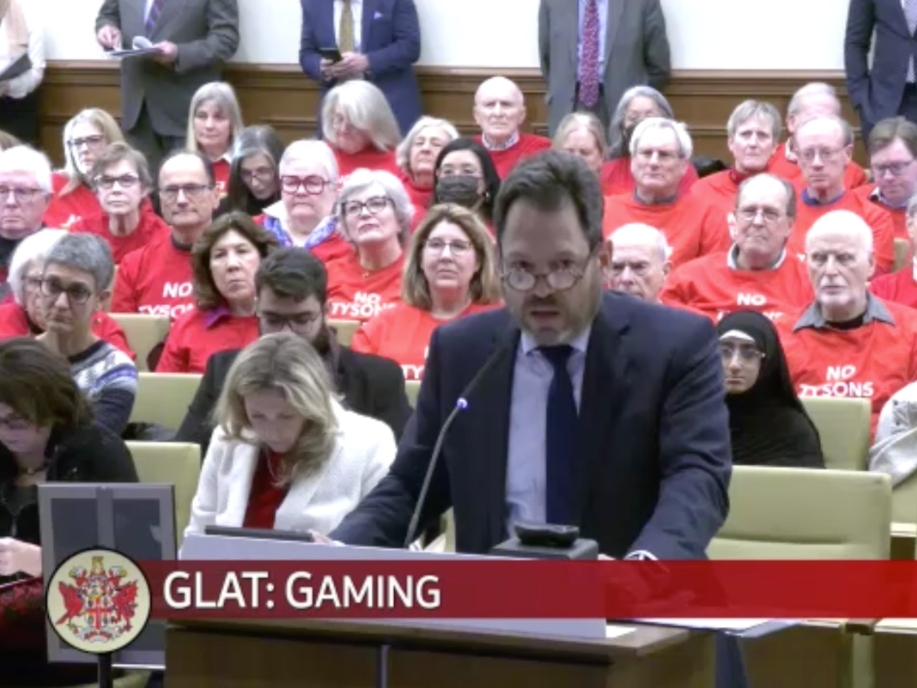
Tysons Casino Bill Passes First Hurdle In VA Legislature
RICHMOND, VA — Legislation that would pave the way for a casino to be built in Tysons was approved Monday by the Gaming Subcommittee of the Virginia Senate. Senate Bill 982 — which would give the Fairfax County Board of Supervisors the power to put a casino referendum on a ballot for residents to decide — passed on a 5-2 vote with Sen. Adam P. Ebbin (D-Alexandria) abstaining. The bill now moves back to the full General Laws & Technology Committee for consideration at its next scheduled meeting on Wednesday. Senate Majority Leader Scott Surovell (D-Mount Vernon), the chief patron of the bill, told subcommittee members that Virginia needed a “crown jewel” like Maryland’s MGM National Harbor Hotel & Casino. “The creation of a mixed-use, transit-oriented entertainment district that would include not only a casino, but a state-of-the-art conference facility and performing arts venue is estimated to contribute an additional $140 million in annual revenue the county, in addition to over millions of dollars for the Commonwealth,” said Julie Coons, president and CEO of the Northern Virginia Chamber of Commerce, who spoke in favor of the bill. "If approved by the Board of Supervisors, a development of this nature would diversify and broaden tax revenue for Fairfax County.” When asked about the vocal opposition to the proposal, Surovell first dismissed opponents from the Reston area, saying they were miles from where the project would be built. He then acknowledged that the Fairfax County Board of Supervisors had not requested the authority to add a casino referendum to the ballot, but the board has not taken an official position on the proposed casino. Patch first reported in September 2023 that Comstock Holding Companies wanted to build a casino somewhere in Fairfax County on Metro’s Silver Line outside the Capital Beltway. During the 2024 session, Marsden added language to the bill narrowing the location to Tysons. Related: Tysons Casino Tramples Neighborhoods, Ignores Residents: Opponents Instead, only two supervisors — Walter Alcorn (D-Hunter Mill) and Jimmy Bierman (D-Dranesville) — have spoken publicly against the casino, which would not be built in either of their districts, according to Surovell. Supervisor Dalia Palchik (D-Providence), who represents the location of the proposed entertainment district, has not taken an official position. Bierman represents McLean, which borders the Tysons district inside the Capital Beltway. The eastern boundary of Alcorn’s district ends at Route 7, which puts it across the street from where the gaming facility would be built. Claudia Arko, a lobbyist representing the board of supervisors, agreed the board has not taken an official position, but Chairman Jeff McKay (D) wrote a letter in January 2024 outlining the county’s concerns. “What you’ll see in the letter is our concern about the revenue split,” she said. “I understand that it’s the same revenue split for the other localities, but obviously when funding formulas are created for Fairfax County, we tend to not get the best deal." "As the law stands today, the Commonwealth would receive over 70 percent of the gaming tax revenue generated by a Fairfax County casino," McKay's letter says. "This is especially relevant given the fact that the location outlined in the bill has the potential to generate significant local tax revenue without a casino." Arko also addressed claims by Surovell that the Tysons casino project would address the county’s budget shortfall and generate funding to help alleviate that. “The real issue for our property tax and the fact that we’re having to increase it so much is that the state just doesn’t fund schools to the degree that they should for Fairfax,” she said. “For example, when you all give a 3 percent raise for teachers, the state pays about 20 percent of that. We pay about 80 percent. So if it costs $100 million, which sometimes it does, you all pay about $20 million and we pay $80 million.” Virginia Diamond, president of the Northern Virginia Labor Federation, AFL-CIO, also spoke in favor of the bill, saying it would generate 5,000 union jobs. She was followed by a long line of union representatives, who each said their chapter supported the proposed project. Connie Hartke of the No Fairfax Casino Coalition was the first of a long line of Fairfax County residents to speak in opposition to the legislation. She asked the senators to delay passing SB982 until after House Bill 2498 is enacted. This bill would create the Virginia Gaming Commission to oversee and regulate all forms of legal gambling. “Any new gaming legislation such as the establishment of a casino in Tysons Corner should be put on hold until this agency is fully operational,” she said. “This will ensure the agency can properly evaluate and regulate new projects to align with its mission. This casino bill is designed to benefit private interests, not the Fairfax County community opposed to the bill.” Related:
Comstock Holding Companies, Inc. Investors
| Name | Quantity | Cost | Value | Profit ($) | Gain (%) |
|---|---|---|---|---|---|
| LN Louis Navellier NAVELLIER & ASSOCIATES Inc. | 37,569 | $589,842.3 | $651,822.15 | $61,979.85 | 10.51% |
| JRP Jay R. Petschek Corsair Capital Management LP | 49,236 | $372,875.53 | $849,321 | $476,445.47 | 127.78% |
| CD Charlie Durham Sterling Capital Management LLC | 57 | $911 | $997.5 | $86.5 | 9.5% |
 Christopher C. Powers Farther Finance Advisors, LLC | 127 | $2,608.58 | $2,222.5 | -$386.08 | -14.8% |
| WM William Mueller Mink Brook Asset Management LLC | 121,473 | $2.18M | $2.07M | -$110,531.43 | -5.08% |
Comstock Holding Companies, Inc. (CHCI) FAQ
What is the stock price today?
On which exchange is it traded?
What is its stock symbol?
Does it pay dividends? What is the current yield?
What is its market cap?
Has Comstock Holding Companies, Inc. ever had a stock split?
Comstock Holding Companies, Inc. Profile
| Real Estate Management & Development Industry | Real Estate Sector | Christopher Clemente CEO | NASDAQ (CM) Exchange | 205684202 CUSIP |
| US Country | 524 Employees | - Last Dividend | 28 Sep 2015 Last Split | - IPO Date |
Overview
Comstock Holding Companies, Inc., founded in 1985 and based in Reston, Virginia, operates primarily in the Washington, D.C. region as a real estate asset manager, developer, and operator. The company focuses on mixed-use and transit-oriented properties, aligning with the modern trends of urban development. Over the years, it has expanded its scope to include the acquisition, development, operation, and sale of residential, commercial, and mixed-use properties. Originally established as Comstock Homebuilding Companies, Inc., it underwent a name change in June 2012 to Comstock Holding Companies, Inc., reflecting its diversified interests and broad expertise in the real estate sector. Its client base is diverse, ranging from institutional real estate investors and high net worth family offices to governmental bodies, all of whom rely on Comstock for superior asset and property management services.
Products and Services
- Residential Development:
- Commercial Development:
- Mixed-Use Development:
- Asset and Property Management:
- Development and Construction Management:
Comstock Holding Companies, Inc. acquires and develops properties for residential use. This includes everything from single-family homes to multi-unit apartments, catering to a wide range of housing needs within the vibrant Washington, D.C. area.
The company engages in the acquisition, development, and operation of commercial properties. Such developments are designed to meet the growing demand for office spaces, retail outlets, and other commercial facilities, enhancing the urban landscape and supporting local economies.
Recognizing the shift towards integrated living and working spaces, Comstock specializes in mixed-use developments. These properties combine residential, commercial, and often recreational facilities, offering a comprehensive environment that supports a modern lifestyle.
Comstock provides specialized asset and property management services to its clients. These services ensure that properties are maintained to high standards, operations run smoothly, and the maximum potential value of each asset is realized. Clients benefit from comprehensive management solutions that include maintenance, tenant services, and financial oversight.
The company also offers development and construction management services, overseeing projects from conception through completion. This includes site selection, design, obtaining necessary permits, construction, and ultimately, sale or lease of the property. This service ensures projects meet the intended specifications, budget, and timeline.
Contact Information




