



Carvana Co. (CVNA)










Carvana Co. (CVNA) Presents at Wells Fargo's 9th Annual TMT Summit Transcript
Carvana Co. ( CVNA ) Wells Fargo's 9th Annual TMT Summit November 18, 2025 3:00 PM EST Company Participants Ernest Garcia - Co-Founder, President, CEO & Chairman Conference Call Participants David Lantz - Wells Fargo Securities, LLC, Research Division Presentation David Lantz Wells Fargo Securities, LLC, Research Division Hi, everyone. Thanks for joining.

Is Carvana (CVNA) Actually In Trouble?
Carvana (NYSE:CVNA ) released its third-quarter earnings report last week, revealing record revenue of $5.6 billion, up 55% year-over-year, driven by 155,941 retail units sold, a 44% increase.

Is Trending Stock Carvana Co. (CVNA) a Buy Now?
Carvana (CVNA) has received quite a bit of attention from Zacks.com users lately. Therefore, it is wise to be aware of the facts that can impact the stock's prospects.
CVNA Q3 Earnings Miss Estimates, Sales Rise Y/Y on High Deliveries
CVNA's Q3 earnings miss estimates despite a 55% revenue jump, fueled by strong retail and wholesale vehicle sales.

Carvana: Buy The Earnings Drop (Upgrade)
Carvana has executed a remarkable turnaround, shifting from bankruptcy fears to record revenues and improved profitability. Q3 results showcased a 55% revenue increase, with solid operating margin expansion and a better balance sheet through debt reduction. With market share at just 1.5% and more expansion potential, the pullback presents a buying opportunity despite a high valuation.

Wall Street Loves Carvana, Coinbase and META
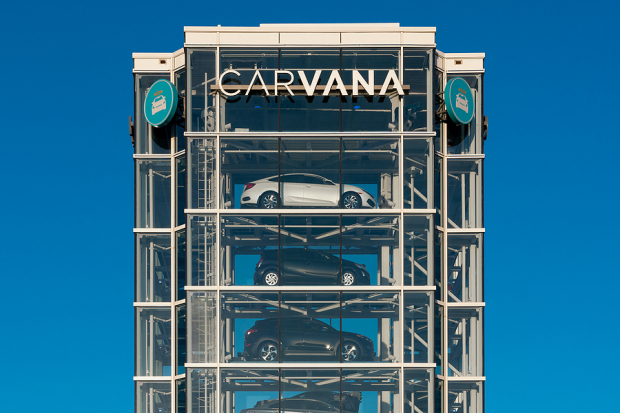
The image featured for this article is © Courtesy of Carvana

Carvana shares in reverse on earnings miss despite record revenue
Carvana Co. (NYSE:CVNA) shares fell almost 14% after the used car retail platform's third quarter earnings fell short of expectations, despite record revenue and strong growth in retail unit sales. The company posted earnings per share of $1.03, below the analyst estimate of $1.33, and down from $1.28 in the prior quarter.

Carvana Co. (CVNA) Q3 2025 Earnings Call Transcript
Carvana Co. ( CVNA ) Q3 2025 Earnings Call October 29, 2025 5:30 PM EDT Company Participants Meg Kehan Ernest Garcia - Co-Founder, President, CEO & Chairman Mark Jenkins - Chief Financial Officer Conference Call Participants Sharon Zackfia - William Blair & Company L.L.C., Research Division Marvin Fong - BTIG, LLC, Research Division Rajat Gupta - JPMorgan Chase & Co, Research Division Brian Nagel - Oppenheimer & Co. Inc., Research Division John Colantuoni - Jefferies LLC, Research Division Christopher Bottiglieri - BNP Paribas Exane, Research Division Daniela Haigian - Morgan Stanley, Research Division Jeffrey Lick - Stephens Inc., Research Division Andrew Boone - Citizens JMP Securities, LLC, Research Division Michael McGovern - BofA Securities, Research Division Michael Montani - Evercore ISI Institutional Equities, Research Division Christopher Pierce - Needham & Company, LLC, Research Division Presentation Operator Good day, and welcome to Carvana's Third Quarter 2025 Earnings Conference Call.

Carvana (CVNA) Q3 Earnings: How Key Metrics Compare to Wall Street Estimates
Although the revenue and EPS for Carvana (CVNA) give a sense of how its business performed in the quarter ended September 2025, it might be worth considering how some key metrics compare with Wall Street estimates and the year-ago numbers.

Carvana (CVNA) Q3 Earnings Lag Estimates
Carvana (CVNA) came out with quarterly earnings of $1.03 per share, missing the Zacks Consensus Estimate of $1.33 per share. This compares to earnings of $0.64 per share a year ago.
Here's Why Carvana (CVNA) is a Strong Growth Stock
Wondering how to pick strong, market-beating stocks for your investment portfolio? Look no further than the Zacks Style Scores.
Carvana Gears Up to Report Q3 Earnings: Here's What to Expect
CVNA is set to report Q3 results, with strong sales growth and rising earnings estimates signaling another potential beat.




