





Drift Protocol
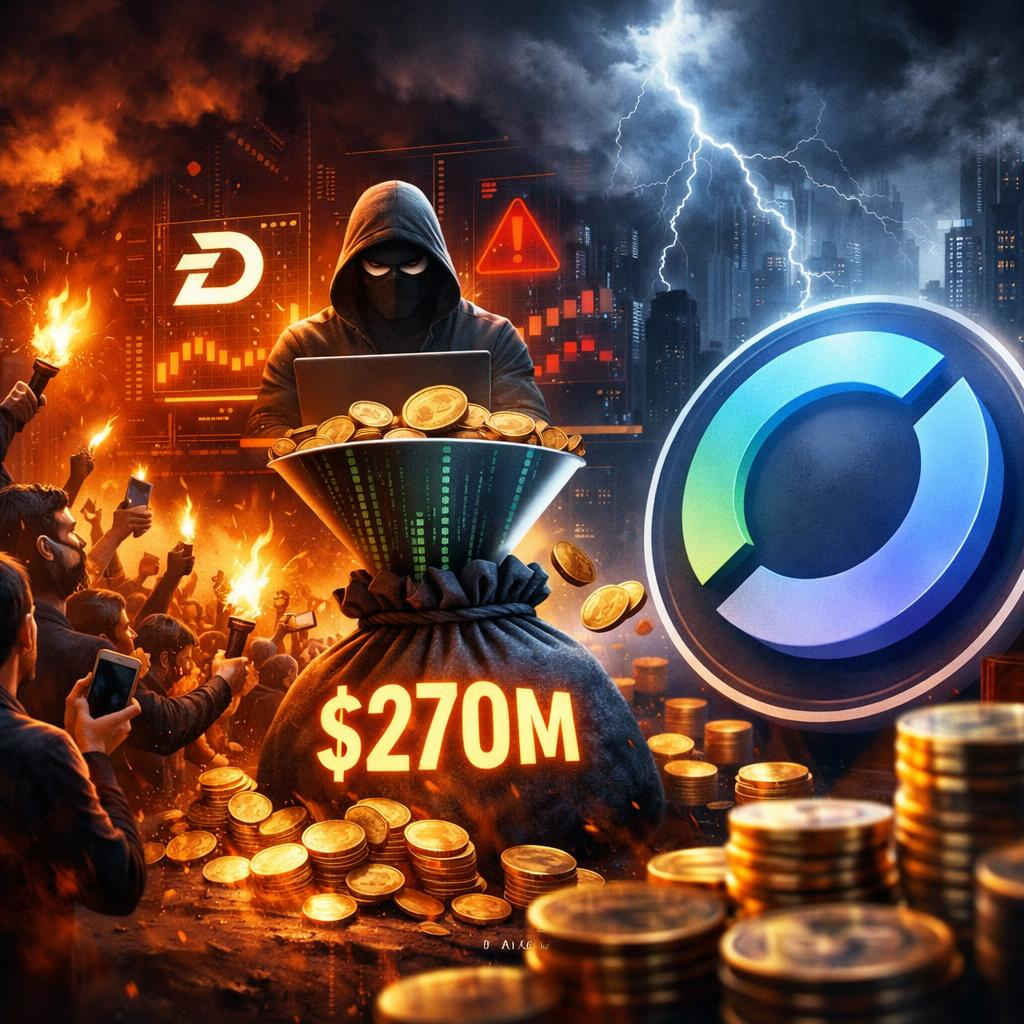
Public Backlash Prompts Circle Response To $270M Drift Protocol Theft: Details
Circle (CRCL) has responded publicly to mounting criticism tied to the exploit of Solana's Drift Protocol, an attack that reports say siphoned roughly $270–$285 million from the decentralized venue.
Circle clarifies USDC freeze policy after Drift exploit, urges passage of GENIUS and CLARITY Acts
Circle's stance highlights the urgent need for regulatory clarity in crypto, balancing centralized control with decentralized ideals. Circle clarifies USDC freeze policy after Drift exploit, urges passage of GENIUS and CLARITY Acts.

Circle defends USDC freeze policy after Drift exploit, calls for faster legal frameworks
Circle has defended its USDC freeze policy, arguing that legal constraints — not inaction — limit how quickly it can respond.

Circle calls for ‘circuit breakers' after $270M Drift Protocol DeFi hack
Solana‑based Drift Protocol's $270m exploit has become a live test of how Circle, DeFi builders and lawmakers share responsibility when stablecoins sit at the center of a hack.

Circle Defends USDC Freezing Powers After $270M Drift Protocol Exploit
Circle CEO addresses stablecoin freezing authority following Drift Protocol's $270M hack, calls for faster legal frameworks to combat crypto exploits.
Circle Shares Tumble 10% on “Sell” Rating, Drift Protocol Scandal
USDC issuer Circle has seen its stock (NYSE: CRCL) tumble by 9.89% over the past day, closing at $85.10. The fall was attributed to an unfavorable analyst review and to its alleged inaction during the Drift Protocol exploit.

Circle stock sinks 10% amid analyst downgrade, Drift Protocol probe
The stablecoin issuer faces pressure after a stock downgrade and Drift Protocol exploit fallout, raising concerns over USDC exposure, crypto regulation and market risk.

After the $285M Drift hack, Stabble scare shows crypto's next security risk may already be inside
The Drift exploit and Stabble's precautionary warning point to a difficult crypto security problem: the next major breach may begin long before funds move on-chain. That is what makes these incidents more than isolated alarms.

Drift Protocol Probes Exploit as Bitcoin Reclaims $70,000 Level
Drift Protocol said it is working with partners on a structured recovery plan following a significant crypto asset theft, as markets digested a fresh mix of security, regulatory and macro headlines that helped push Bitcoin (BTC) back above the $70,000 level. The Solana-based decentralized derivatives venue said it is currently focused on stabilizing conditions and deploying protocol-level protections for affected users and counterparties.

North Korean hackers infiltrated DeFi teams for years ahead of Drift Protocol exploit
Years of silent work inside major projects are reshaping how investigators think about north korean hackers and the decentralized finance ecosystem. Security researcher and MetaMask developer Taylor Monahan revealed that North Korean IT operatives have worked inside more than 40 decentralized finance platforms, including some of crypto‘s best-known names. Their presence, she said, stretches back to the industry's so‑called “DeFi Summer” in 2020, when on‑chain lending, trading, and yield platforms surged in popularity.

Drift Protocol incident uncovered: Did ‘negligence' lead to the $285M loss?
Drift incident exposes months-long security gaps, forcing the industry to proritize protections over scalability.
‘Six Months in the Making': Drift Protocol Says $285,000,000+ Hack Involved North Korean-Backed Impostors at Multiple Crypto Conferences
The recent $285 million hack on the Solana-based DeFi platform Drift Protocol wasn't any run-of-the-mill exploit. Drift Protocol says in a new incident update that the April 1st attack was the result of six months of careful manipulation from North Korean-backed impostors.




