







Should Investors Worry About a Market Correction? ETFs to Consider
Market correction fears are rising amid increased volatility and persistent macroeconomic uncertainty. Here are ETFs to consider amid growing uncertainty.

LGLV: Diversified Exposure, Outperformance Versus Other Low-Volatility ETFs (Rating Downgrade)
The State Street SPDR SSGA US Lg Cap Low Vol Index ETF offers a diversified, volatility-weighted portfolio with modest growth and profitability metrics. LGLV trades at a 7% P/E discount to the Russell 1000, reflecting lower technology exposure and a balanced sector mix, while maintaining lower volatility. The fund has outperformed most low-volatility peers over 3- and 5-year periods, though it lags the broader market during strong rallies and excels in downturns.

VIDEO: ETF of the Week: LGLV
On this episode of the “ETF of the Week” podcast, VettaFi's Head of Research Todd Rosenbluth discussed the State Street SPDR US Large Cap Low Volatility Index ETF (LGLV) with Chuck Jaffe of Money Life. The pair discussed several topics related to the fund to give investors a deeper understanding of the ETF.

ETF of the Week: State Street SPDR SSGA US Lg Cap Low Vol Index ETF (LGLV)
VettaFi's Head of Research Todd Rosenbluth discussed the State Street SPDR SSGA US Lg Cap Low Vol Index ETF (LGLV) on this week's “ETF of the Week” podcast with Chuck Jaffe of “Money Life.” For more news, information, and strategy, visit the ETF Strategist Content Hub.
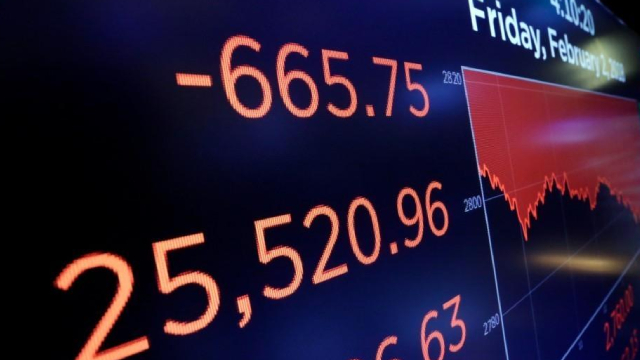
LGLV: Volatility And Convexity Not As Promising As It May Seem
The State Street SPDR US Large Cap Low Volatility Index ETF offers broad sector diversification and mitigates S&P 500 concentration risk. Despite its lower concentration risk, LGLV's low-volatility stock selection does not translate to meaningful downside protection or lower portfolio risk during market drawdowns. LGLV trades at lower multiples and offers a higher yield than SPY ETF, but has slower expected EPS growth.

LGLV: Low Beta, Value Tilt Do Not Translate Into Consistent Outperformance
State Street® SPDR® US Large Cap Low Volatility Index ETF offers exposure to a cohort of U.S. stocks with a weighted average 24-month beta of just 0.5. It makes perfect sense to consider low beta portfolios, but it is worth remembering that low volatility strategies, LGLV included, tend to meaningfully underperform IVV over the long term. Since the index change in 2016, LGLV has underperformed IVV by around 83.2%, as it was incapable of capturing a sufficient share of its upside.
LGLV: Defensive Growth Tilt And Strong Risk-Adjusted Performance
LGLV offers a compelling low volatility approach with impressive sector diversification and a surprising growth/tech tilt, enhancing risk-adjusted returns. The ETF's methodology ensures broad sector representation, limiting concentration risk and providing exposure to defensive and growth-oriented stocks. While LGLV doesn't always outperform in every market downturn, it consistently delivers superior returns versus low volatility peers, especially in growth markets.

LGLV: A Low-Volatility Approach In Different Regimes
LGLV offers diversified, low-volatility large-cap exposure, with modest valuations and sector balance, making it attractive across different market conditions. Short-term risks include liquidity withdrawal, crowded long positioning, and fragile market sentiment, supporting LGLV's tactical appeal. Mid-term headwinds stem from slowing economic growth, uncertain Fed policy, and potential equity-bond rebalancing, favoring defensive strategies like LGLV.

LGLV: A Defensive Alternative Amid Increased Market Volatility
LGLV offers a defensive, low-volatility approach, favoring financials and industrials, suitable for uncertain markets, with ongoing trade and monetary policy risks. Historically, LGLV has underperformed SPY in total returns, but it proved it can shine during periods of extreme market stress. Current macroeconomic conditions—Fed indecision, inflation risks, and trade tensions—make low-volatility exposure like LGLV attractive for cautious investors.
LGLV: A Tactical Play For Low-Volatility Exposure With Growth Potential
SPDR SSGA US Large Cap Low Volatility Index ETF invests in 162 large-cap low volatility stocks with a low expense ratio of 0.12%. LGLV's unique weighting favors low-volatility stocks, resulting in a portfolio tilted towards mid-cap and large-cap value stocks with better growth potential. LGLV outperformed SPLV due to higher technology exposure and lower defensive sector allocation, but it can still face sector-specific risks.

Low Volatility ETFs to Bet on Amid Market Turmoil
Volatility in the stock market has intensified due to rising inflation fears, uncertainty surrounding rate cuts and ambiguity over Trump's tariff policies.

LGLV: Another Low-Volatility ETF With A 'Sharpe' Problem
SPDR® SSGA US Large Cap Low Volatility Index ETF holds 163 low-volatility stocks, focusing on financials and industrials. The LGLV ETF has underperformed the Russel 1000 in return and Sharpe ratio since inception and shows a deeper drawdown, despite low volatility. LGLV features cheap fees and good performance relative to competitors.




