



Li Auto Inc. Sponsored ADR (LI)


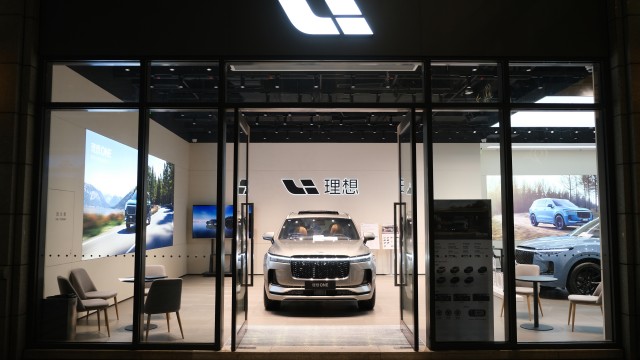
Li Auto: Deep Value For EV Investors
Li Auto missed Q1 expectations on the bottom and top line last week. Vehicle margins declined Q/Q, but the EV company remained profitable. Li Auto continued to lead the start-up sector in terms of vehicle and gross margins.
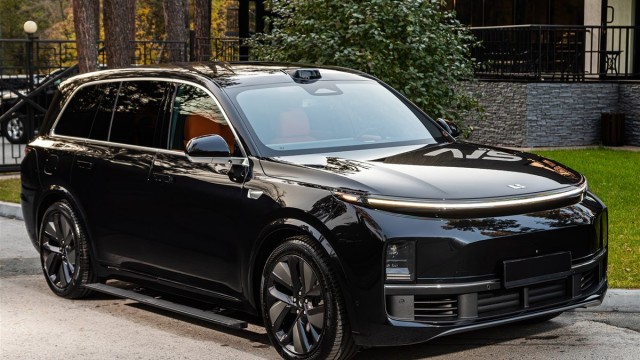
Li Auto Blows a Tire on EPS Miss and Lowered Guidance. Buy Opp?
Chinese electric vehicle (EV) automaker Li Auto Inc. NASDAQ: LI reported a surprise top and bottom line miss on its Q1 2024 earnings report. Li Auto is one of the rare Chinese EV makers that are actually profitable.
Time to Recharge: 3 EV Stocks to Buy on an Electric Vehicle Rebound
The electric vehicle (EV) industry is quite exciting. The companies involved are aiming to radically transform the technology we use as a mode of transport by making it much more sustainable.

3 Auto Stocks to Buy Now: May 2024
Auto stocks are popular options amongst investors, given their consistent demand. Many are cyclical but can produce steady profits over the long run.

How Do Li Auto (LI) & XPeng (XPEV) Stack Up Post Q1 Earnings?
While Li Auto's (LI) net income falls 37% year over year to roughly $82 million in the first quarter, XPeng's (XPEV) bottom line improves as loss narrows 41.4% year over year.
Why Li Auto Stock Keeps Going Down
Li Auto announced that three new electric SUVs that were supposed to arrive this year will arrive in 2025 instead. Li blamed a lack of sufficient chargers for being unable to sell all the new EVs it wants to sell.
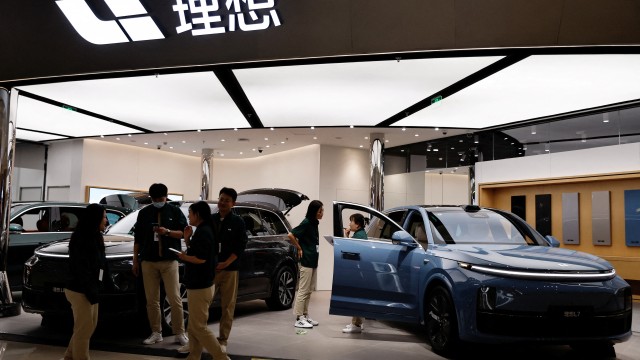
Li Auto delays pure electric SUV launch due to insufficient fast charging network
China's Li Auto said it has postponed plans to launch pure electric SUV models to next year, citing hurdles such as a lack of enough fast chargers, sending its shares down more than 17% on Tuesday.
Li Auto Stock (NASDAQ:LI): Buyers Should Survive, Even after the Cliff Dive
Will Li Auto (NASDAQ:LI) survive after today’s disaster? The buyers are reeling, no doubt, but they shouldn’t despair. As often happens in the financial markets, investors’ fears about the future

Li Auto Earnings Miss Views; China EV Maker Guides Low
Li Auto (LI) reported weaker-than-expected first-quarter earnings and guided low on the current quarter, as the once-hot China electric vehicle maker struggles with increased competition. Li Auto stock plunged Monday. XPeng (XPEV) reports Q1 results early Tuesday. XPEV stock rose before the open, along with Nio (NIO) and newly public Zeekr (ZK). China EV and battery giant BYD (BYDDF) flashed a buy signal late last week. Tesla (TSLA) tilted higher. Li Auto earned 17 cents per U.S. ADR, down 10.5% vs. 19 cents a year earlier. Wall Street had expected 24 cents. Revenue grew 36% vs. a year earlier to $3.6 billion, modestly meeting. As previously disclosed, Li Auto delivered 80,400 vehicles in Q1, up 53% vs. a year earlier but down 39% vs. Q4. The decline vs. Q4 reflected typical softness in China auto sales around Lunar New Year holidays, but also weak March orders. The Mega minivan, Li's first fully battery electric vehicle (BEV), has seen poor demand. The bulk of Li's sales come from SUV line of extended range EVs, essentially a form of plug-in hybrid. On the earnings call, Li Auto now says it will not release any all-electric SUVs in 2024, a shift. It'll release those vehicles in the first half of 2025. Li Auto expects Q2 deliveries of 105,000-110,000 vehicles, up 21%-27% vs. year earlier earlier, but below analyst estimates. Li already delivered 25,787 vehicles in April, so the Q2 guidance assumes May-June deliveries of 79,213-84,213. Revenue should be $4.1 billion-$4.3 billion, up 4%-9% vs. a year earlier. Analysts had expected $5.17 billion. In recent weeks, Li Auto announced hefty price cuts on all its vehicles, except for the brand-new L6 SUV, its smallest and most-affordable vehicle. Earlier this month, the EV maker announced it would lay off more than 18% of its workforce. Li Auto stock plunged 12.8% to 21.71, knifing below the 52-week low of 23.04 set on April 25. Last week, LI stock fell 6.7% to 24.89. XPeng stock edged down 0.2% to 8.28, just above the 50-day line. Early Tuesday, XPeng is expected to a report a 33-cent loss per U.S. ADR vs. a 38-cent loss a year earlier. Revenues should jump nearly 50% to $857 million. Nio stock sank 1.1% to 5.22 on Monday, continuing to hold above the 50-day line but well below its 200-day. Shares climbed 4.1% last week. Nio earnings are due May 29. Last week, Nio formally unveiled the first model from its more-affordable Onvo brand. The L60 crossover is a new Model Y rival. Zeekr stock popped 4.3% to 27.11. Zeekr, a China EV brand of auto giant Geely, came public in the U.S. earlier this month at 21 a share. ZK stock jumped to 29.36 intraday on May 13, but then pulled back. BYD stock, which trades over the counter in the U.S., closed flat. Shares rose 1.2% to 28.73 last week, holding support at the 200-day line, and breaking a downtrend in a handle, offering an early entry. Investors could view the recent action as a high handle to a short consolidation or a traditional handle to a base going back to late 2023. Either way, the official buy point is 29.52. Tesla stock fell 1.4% to 174.95 Monday. Shares rallied 5.3% last week, rebounding from the 50-day line. Tesla faces growing competition from Xiaomi, Nio and BYD in China. Please follow Ed Carson on X/Twitter at @IBD_ECarson and Threads at @edcarson1971 for stock market updates and more. YOU MAY ALSO LIKE: Why This IBD Tool Simplifies The Search For Top Stocks IBD Digital: Unlock IBD's Premium Stock Lists, Tools And Analysis Today Best China Stocks: Tesla Rival, These E-Commerce Plays Near Buy Points Futures: Nvidia Offers Huge Test; 5 AI Stocks Near Buy Points
Li Auto Inc. (LI) Q1 2024 Earnings Call Transcript
Li Auto Inc. (NASDAQ:LI ) Q1 2024 Results Conference Call May 20, 2024 8:00 AM ET Company Participants Janet Chang - Director of Investor Relations Xiang Li - Chairman and CEO Johnny Tie Li - CFO Donghui Ma - President James Liangjun Zou - Senior Vice President Conference Call Participants Bin Wang - Deutsche Bank Tim Hsiao - Morgan Stanley Tina Hou - Goldman Sachs Yingbo Xu - CITIC Paul Gong - UBS Yuqian Ding - HSBC Ming Hsun Lee - Bank of America Operator Hello, ladies and gentlemen. Thank you for standing by for Li Auto's First Quarter 2024 Earnings Conference Call.

Why Li Auto Stock Dropped 14% Today
Li Auto crushed its quarterly earnings report three months ago, but was crushed by earnings today. The automaker missed expectations and reported a $0.08 per share GAAP loss for Q1.
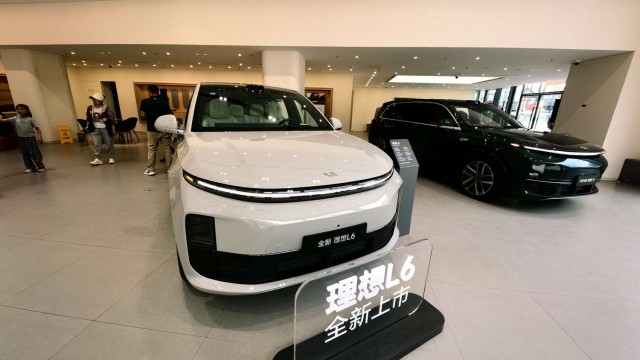
Li Auto Sinks on Q1 Profit Slump
American depositary receipts (ADRs) of Li Auto (LI) are down 14% in intraday trading Monday after the Chinese electric vehicle (EV) manufacturer posted a 36% year-over-year drop in first-quarter net income as it lowered car prices.




