Lockheed Martin offers reliable, growing dividends with a 22-year streak and a current yield of 2.83%, making it ideal for dividend growth investors. The company has a robust capital allocation strategy, including significant share buybacks, resulting in a shareholder yield of 5.25%. Lockheed Martin's strong balance sheet and recession-proof cash flows from government contracts ensure financial stability and consistent shareholder rewards.
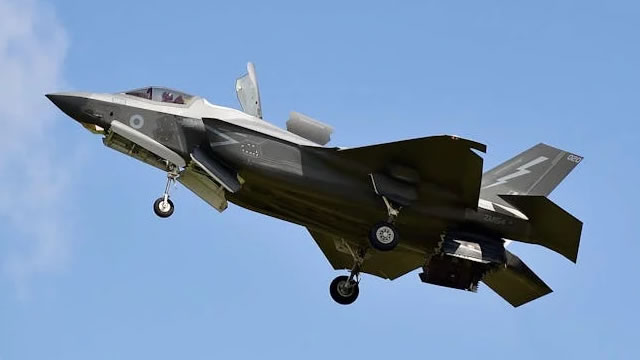
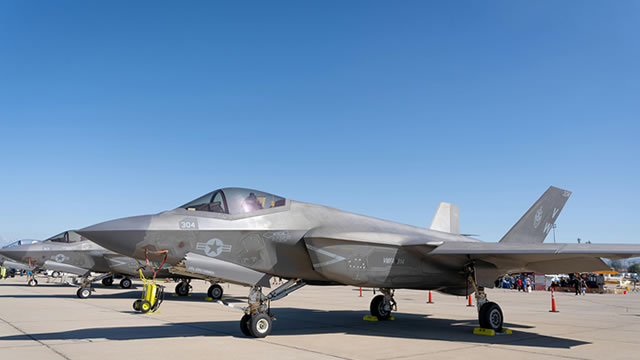
Lockheed Martin delivered a total of 110 F-35 fighter jets to the United States and its allies in 2024, the Bethesda, Maryland-based defense contractor said in a statement on Wednesday.
MarketBeat keeps track of Wall Street's top-rated and best performing research analysts and the stocks they recommend to their clients on a daily basis.
In the most recent trading session, Lockheed Martin (LMT) closed at $485.94, indicating a +0.53% shift from the previous trading day.
Lockheed Martin (LMT) reachead $483.37 at the closing of the latest trading day, reflecting a -1.15% change compared to its last close.
LMT wins a modification contract to provide continued logistics support for delivered F-35 jets.
Investors interested in LMT stock should wait for a better entry point, considering its premium valuation and dismal performance at the bourses lately.
The news recently emerged that Pakistan was planning on purchasing 40 J-35s, a fifth-generation stealth multirole combat aircraft, from China. Should this sale go through, it would be the first sale of these fifth-generation jets to an ally for China. The J-35 is incredibly stealthy. It has the ability to travel at high speeds up to Mach 2 (approximately 1,534 mph), has a high payload capacity, and is cheaper and easier to manufacture than some previous versions. The J-35 is also a prime example of how stealth aircraft design and capabilities have shifted over the years. When stealth technology was first conceptualized in World War I, the manufacturers had no idea how far the technology would come to this day. (You won’t believe how fast these military stealth planes fly.) Stealth aircraft are especially valuable for military forces because of their ability to evade radar detection. Along with advanced warfare systems and sensors, and new weapon capabilities, stealth planes allow militaries to gain a stronger understanding of who they’re up against — and strike first, should the need arise. While some countries are still using stealth aircraft from decades ago, others have pivoted to more modern stealth planes. To identify the oldest and newest stealth planes in world militaries or on order, 24/7 Wall St. reviewed the report 2023 World Air Forces from FlightGlobal, an aviation and aerospace industry website, as well as other sources. We ordered these stealth aircraft, including uncrewed aerial vehicles and aircraft on order, chronologically. Supplemental data regarding the type of aircraft, top speed, manufacturer, and armament came from Military Factory. Data on notable countries that operate these aircraft came from FlightGlobal. Why We’re Discussing Stealth Aircraft Covert air operations began in World War I with militaries attempting to reduce the visibility or sound of their aircraft. Technology in this regard has made leaps and bounds since the First World War. Companies that manufacture these jets for the military, like Lockheed Martin (NYSE:LMT), make billions in sales every year, and it’s worth understanding how these companies operate if you’re considering investing in them. Here are the oldest and most cutting-edge military aircraft still used to this day: 1. A-12 Archangel Top speed: 2,212 mph Countries that use this aircraft: United States Manufacturer: Lockheed Weapons: None (was used to spy by CIA on Soviet Union) Year first used: 1963 2. SR-71 Blackbird Maximum speed: 2,274 mph Countries that use this aircraft: United States Manufacturer: Lockheed Weapons: None Year first used: 1966 3. AQM-91 Firefly Maximum speed: 505 mph Countries that use this aircraft: United States Manufacturer: Ryan Aeronautical and Teledyne-Ryan Weapons: None (used for drone reconnaissance) Year first used: 1968 4. F-117 Nighthawk Maximum speed: 646 mph Countries that use this aircraft: United States Manufacturer: Lockheed Weapons: Laser-guided bombs, drop bombs, HARM anti-radiation missiles, Maverick missiles, Sidewinder missiles Year first used: 1982 5. B-2 Spirit Maximum speed: 628 mph Countries that use this aircraft: United States Manufacturer: Northrop Grumman Weapons: Free-fall nuclear bombs, air-to-surface missiles, cruise missiles, drop bombs, joint direct attack munitions Year first used: 1997 6. J-11 Flanker B+ Maximum speed: 1,553 mph Countries that use this aircraft: China Manufacturer: Shenyang Aircraft Corporation and the Aviation Industry Corporation of China Weapons: 30mm GSh-30-1 internal cannon, air-to-air missiles, air-to-surface missiles, air-to-surface missiles, laser-guided bombs, conventional drop bombs, cluster bombs, rocket pods Year first used: 1998 7. F-22 Raptor Maximum speed: 1,599 mph Countries that use this aircraft: United States Manufacturer: Lockheed Martin and Boeing Weapons: 20mm internal automatic canon, Sidewinder missiles, AMRAAM missiles, joint direct attack munitions, air-launched cruise missiles, guided bombs Year first used: 2005 8. RQ-170 Sentinel Maximum speed: 590 mph Countries that use this aircraft: United States Manufacturer: Lockheed Martin Weapons: Unknown Year first used: 2007 9. J-16 Red Eagle Maximum speed: 1,522 mph Countries that use this aircraft: China Manufacturer: Shenyang Aircraft Corporation and Aviation Industry Corporation of China Weapons: Anti-radiation missiles, rocket pods, anti-ship missiles, laser-guided munitions, drop bombs, internal cannons, several types of air missiles Year first used: 2013 10. RQ-180 Maximum speed: 590 mph Countries that use this aircraft: United States Manufacturer: Northrop Grumman Weapons: None Year first used: 2015 11. WZ-10 Cloud Shadow Maximum speed: 390 mph Countries that use this aircraft: China Manufacturer: Chengdu Aircraft Industry Group Weapons: Air-to-surface missiles, precision-guided bombs, light cruise missiles Year first used: 2016 12. F-35 Lightning II Maximum speed: 1,199 mph Countries that use this aircraft: Canada, Germany, Israel, Italy, Japan, United States Manufacturer: Northrop Grumman and Lockheed Martin Weapons: Rockeye II cluster bombs, joint direct attack munitions, guided bombs, air-to-air and air-to-surface missiles, Sidewinder missiles Year first used: 2016 13. J-20 Black Eagle Maximum speed: 1,305 mph Countries that use this aircraft: China Manufacturer: Chengdu Aircraft Industry Group and Aviation Industry Corporation of China Weapons: Internal cannons, air-to-air missiles, air-to-surface missiles, anti-radiation missiles, laser-guided bombs, conventional drop bombs Year first used: 2017 14. GJ-11 Gongji Maximum speed: 621 mph Countries that use this aircraft: China Manufacturer: State Factories Weapons: Laser-guided bombs, drop bombs, air-to-surface missiles Year first used: 2019 15. Su-57 Felon Maximum speed: 1,616 mph Countries that use this aircraft: Russia Manufacturer: Sukhoi OKB and the United Aircraft Corporation Weapons: Internal cannon, air-to-air missiles, air-to-surface missiles, guided bombs Year first used: 2019 16. XQ-58 Valkyrie Maximum speed: 652 mph Countries that use this aircraft: United States Manufacturer: Kratos’ Unmanned Systems Division Weapons: Precision-guided bombs, drop bombs Year first used: 2020 17. CH-7 Maximum speed: 550 mph Countries that use this aircraft: China Manufacturer: Chinese Aerospace Science and Technology Corporation Weapons: Air-to-surface missiles, anti-radiation missiles, precision-guided bombs, drop bombs Year first used: 2022 18. Su-75 Checkmate Maximum speed: 808 mph Countries that use this aircraft: Russia Manufacturer: Sukhoi OKB and Rostek State Corporation Weapons: Internal cannons, air-to-surface missiles, air-to-air missiles, laser-guided bombs, conventional drop bombs Year first used: Expected in 2026 19. B-21 Raider Maximum speed: 621 mph Countries that use this aircraft: United States Manufacturer: Northrop Grumman Weapons: Precision-guided drop bombs, conventional drop bombs, nuclear ordnance Year first used: Expected in 2028 20. Tupolev PAK DA Maximum speed: 559 mph Countries that use this aircraft: Russia Manufacturer: Tupolev and the United Aircraft Corporation Weapons: Air-launched cruise missiles, precision-guided bombs, conventional drop bombs Year first used: Expected in 2032 Take This Retirement Quiz To Get Matched With An Advisor Now (Sponsored) Are you ready for retirement? Planning for retirement can be overwhelming, that’s why it could be a good idea to speak to a fiduciary financial advisor about your goals today. Start by taking this retirement quiz right here from SmartAsset that will match you with up to 3 financial advisors that serve your area and beyond in 5 minutes. Smart Asset is now matching over 50,000 people a month. Click here now to get started. The post This Is What Nearly 60 Years of Stealth Aircraft Development Looks Like appeared first on 24/7 Wall St..
It's a fascinating document. Anduril, an up and coming emerging tech firm in the defense sector, has published a “mission document” entitled “Rebooting the Arsenal of Democracy.
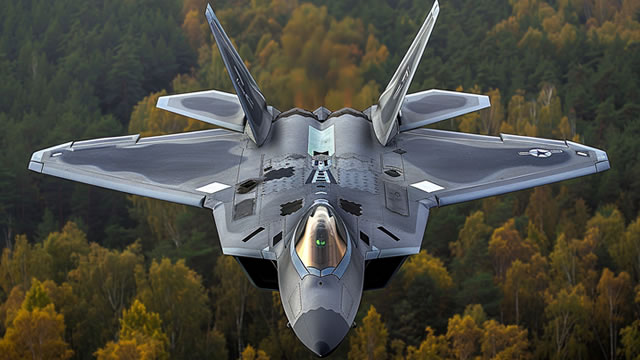
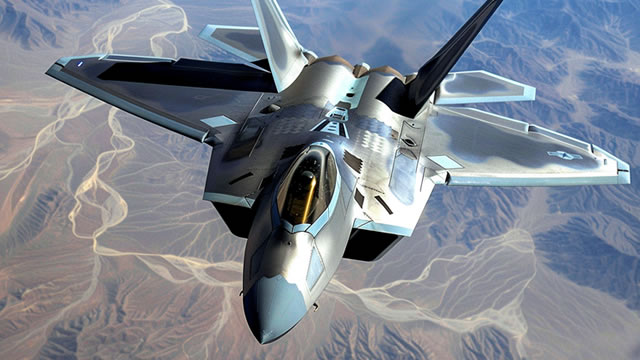
The strength of NATO’s air power lies in a select fleet of combat aircraft that are widely flown by its 30 member states. These aircraft play integral roles in upholding NATO’s air superiority and standing on the world stage. These jets, which include some of the most technologically sophisticated and operationally proven models, are central to NATO’s strategy of deterrence and rapid response. Here, 24/7 Wall St. is taking a closer look at the most widely used combat aircraft across all NATO countries. To identify the most widely flown combat aircraft in NATO, 24/7 Wall St. reviewed the 2024 World Air Forces report from FlightGlobal, an aviation and aerospace industry publication. We ordered these aircraft by how many are currently in active service. We also included supplemental data on the type of aircraft and top speed. We excluded trainer aircraft. Here is a look at the most widely flown combat aircraft of NATO: Why Are We Covering This? Understanding the combat aircraft in NATO’s arsenal is important because they are at the heart of the alliance’s defensive capabilities and its influence on global security. Each aircraft serves a distinct purpose within NATO, ranging from air superiority fighters to long-range bombers, and even electronic warfare aircraft that disrupt enemy systems. Knowing which aircraft that NATO countries deploy gives insight into the overall military strategies of the alliance. 26. KAI T-50 / FA-50 Golden Eagle Type: Light attack aircraft / advanced trainer Year introduced: 2005 Active aircraft: 2 Top speed: 990 mph Armament: 20mm A-50 Vulcan internal cannon, Sidewinder missiles, Maverick missiles, cluster bombs, rocket pods, general purpose bombs, guided drop bombs The KAI T-50/FA-50 Golden Eagle was designed and manufactured by Korea Aerospace Industries (KAI) in collaboration with Lockheed Martin. It was introduced in 2005 and can hit speeds around 1,000 mph. The Golden Eagle is an advanced trainer and light combat aircraft that has been developed into several variants to meet a range of needs like the T-50B aerobatic version, the TA-50 light attack variant, and the FA-50, which features fighter capabilities. 25. AC-130W Stinger II Type: Special operations fixed-wing gunship Year introduced: 2010 Active aircraft: 3 Top speed: 300 mph Armament: 30mm Bushmaster II GAU-23/A gatling gun, Viper Strike missiles, Griffin missiles, Hellfire missiles The Stinger II is a step up from the legacy AC-130 gunships, notably integrating advanced missile systems. Built by Lockheed Martin, this gunship only recently entered service in 2010. Armed with a 30mm Bushmaster II GAU-23/A gatling gun, along with Viper Strike, Griffin, and Hellfire missiles, The Stinger II is designed to deliver serious firepower in support of ground forces. 24. Su-25 Grach Frogfoot Type: Combat aircraft Year introduced: 1981 Active aircraft: 5 Top speed: 590 mph Armament: 30mm GSh- internal cannon, rocket pods, guided munitions, conventional drop bombs, air-to-surface missiles, air-to-air missiles Recognized by the NATO reporting name “Frogfoot,” the Su-25 is a dedicated close-air support and ground attack aircraft. Although these jets have a relatively slow top speed of 590 mph, they can equip a wide array of armament including a 30mm GSh internal cannon, rocket pods, guided munitions, conventional bombs, air-to-surface missiles, and air-to-air missiles. There are currently 176 of these aircraft in active service. 23. MiG-21 Fishbed Type: Multirole fighter aircraft Year introduced: 1959 Active aircraft: 11 Top speed: 1386 mph Armament: 23mm GSh-23 internal automatic cannon, air-to-air missiles, Molniya missiles, drop bombs The MiG-21 Fishbed is one of the most widely produced fighter aircraft in aviation history. Originally developed by Mikoyan-Gurevich during the 1950s, this jet has gone on to see service across the globe as a fighter and interceptor aircraft. 22. Aero L-159 ALCA Type: Light combat aircraft Year introduced: 2000 Active aircraft: 16 Top speed: 582 mph Armament: 20mm ZVI Plamen PL-20 cannons, air-to-air missiles, air-to-surface missiles, laser-guided bombs, conventional drop bombs, rocket pods The Aero L-159 ALCA (Advanced Light Combat Aircraft) is a Czech-built attack jet, primarily designed for light combat and reconnaissance missions. It was developed by Aero Vodochody and intended to bridge the gap between advanced jet trainers and heavier combat aircraft. 21. B-2 Spirit Type: Strategic stealth heavy bomber Year introduced: 1997 Active aircraft: 17 Top speed: 628 mph Armament: Air-launched cruise missiles, strategic free-fall nuclear bombs, conventional drop bombs, joint direct attack munitions, JASSM missiles Introduced in 1997, the B-2 Spirit is a strategic stealth heavy bomber with a top speed of 628 mph. It is designed to deliver a wide range of ordnance including nuclear bombs. Although there are only 17 of these aircraft in active service (all in the U.S. Air Force), they can punch far above their class in terms of what they can deliver in payload. 20. AMX Type: Light strike / advanced trainer aircraft Year introduced: 1989 Active aircraft: 19 Top speed: 651 mph Armament: 20mm M61A1 Vulcan internal cannon, Sidewinder missiles, Piranha missiles, Paveway II laser-guided munitions, rocket pods, cluster bombs, conventional drop bombs, Skyshark munition dispenser, Opher imaging infra-red guided bomb The AMX is a ground attack aircraft designed for battlefield interdiction, close air support, and reconnaissance missions. This jet came from a collaboration between Italy and Brazil through the AMX International consortium and it was introduced to service in 1989. 19. AC-130J Ghostrider Type: Ground attack / close-air support Year introduced: 2017 Active aircraft: 29 Top speed: 416 mph Armament: 30mm ATK GAU-23/A automatic cannon, 105mm M102 field howitzer, Griffin missiles, Viper Strike precision-guided bombs, Hellfire missiles, drop bombs The Ghostrider is the latest in the AC-130 gunship series. Although these gunships do not carry nukes, they can equip practically any other ordnance, even a gun meant for ground artillery. The Ghostrider is easily one of the most heavily armed aircraft in the U.S. Air Force. Most notably in Ghostrider’s arsenal is its 105mm howitzer, which is typically seen on ground artillery platforms. This big gun delivers serious firepower with pinpoint accuracy from far above the battlefield, giving it an incredible tactical advantage. Outside of the 105mm howitzer, Ghostrider can equip a variety of missiles like Hellfires or Griffins, precision-guided bombs, or even just the basic conventional drop bombs. 18. Su-22 Fitter Type: Strike fighter Year introduced: 1970 Active aircraft: 32 Top speed: 718 mph Armament: 30mm autocannons, conventional drop bombs, guided bombs, rocket pods, gun pods, air-to-air missiles, air-to-surface missiles The Su-22 Fitter is a tactical bomber and ground attack aircraft developed by the Soviet Union and a derivative of the Su-17 series. It was introduced in 1970 and has become a staple of many air forces across Eastern Europe, the Middle East, and Africa during the Cold War era and continues to serve in several militaries to this day. 17. MiG-29 Fulcrum Type: Lightweight multirole fighter aircraft Year introduced: 1984 Active aircraft: 34 Top speed: 1,519 mph Armament: 30mm GSh-1 internal automatic cannon, Alamo missiles, Adder missiles, rocket pods, conventional drop bombs, guided bombs Even though the MiG-29/35 Fulcrum makes up the backbone of Russia’s fleet of fighter jets, there are still a handful of these aircraft in NATO air forces. Introduced in 1984, these jets can hit speeds up to 1,519 mph. They come equipped with a 30mm GSh-1 internal automatic cannon standard, as well as Alamo and Adder missiles, rocket pods, and both conventional and guided bombs. The MiG-35 variant includes advanced avionics, improved radar systems, and can perform multi-role missions like ground strikes and interception. 16. B-1B Lancer Type: Strategic heavy bomber Year introduced: 1986 Active aircraft: 42 Top speed: 833 mph Armament: Joint direct attack munitions, general purpose bombs, naval mines, cluster munitions, SRAM missiles, JASSM missiles, JSOW missiles, freefall nuclear bombs Introduced in 1986, the B-1B Lancer is a strategic heavy bomber that is capable of reaching speeds up to 833 mph, which makes it one of the fastest bombers in the U.S. Air Force. It carries a wide range of armaments, including joint direct attack munitions, general-purpose bombs, JASSM missiles, and even freefall nuclear bombs. 15. B-52H Stratofortress Type: Long range strategic heavy bomber Year introduced: 1955 Active aircraft: 72 Top speed: 595 mph Armament: ACLM cruise missiles, Harpoon missiles, CALCM cruise missiles, joint direct attack munitions, freefall nuclear bombs The B-52 is one of the longest serving aircraft in the U.S. Air Force, introduced in 1955. It was originally developed in the post-World War II years to succeed the B-29 Superfortress, which dropped the bomb on Japan. The B-52s were designed to carry larger payloads than the B-29, including nuclear weapons. The Stratofortress acted as a strong nuclear deterrent throughout the Cold War as well. 14. F-4 Phantom II Type: Strike fighter Year introduced: 1960 Active aircraft: 80 Top speed: 1,473 mph Armament: 20mm M61 Vulcan, Skyflash missiles, Sparrow missiles, Sidewinder missiles, rocket pods, gun pods, conventional drop bombs, guided bombs The F-4 Phantom II played an important role during the Vietnam War, where it was used extensively for ground-attack missions and air superiority roles, making it one of the most important military aircraft of the 20th century. It was introduced to service in 1960. In its time, the F-4 has set numerous speed and altitude records, and was notable for its ability to carry large payloads. 13. JAS 39 Gripen (Griffen) Type: Multirole 4th generation fighter aircraft Year introduced: 1997 Active aircraft: 95 Top speed: 1370 mph Armament: 27mm Mauser BK-27 Revolver internal automatic cannon, Sidewinder missiles, Skyflash missiles, Meteor missiles, MICA missiles, Maverick missiles, anti-ship missiles, cluster bombs, rocket pods, conventional drop bombs, laser-guided bombs The JAS 39 Gripen is a multirole fighter aircraft developed by the Swedish aerospace company Saab. It was introduced in 1997 and can hit speeds up to nearly 1,400 mph. The Gripen is designed to fulfill a variety of roles, including air defense, ground attack, and reconnaissance, within a single airframe. 12. Panavia Tornado IDS Type: Low-level strike aircraft Year introduced: 1979 Active aircraft: 104 Top speed: 1491 mph Armament: 27mm Mauser internal cannon, air-to-air missiles, air-to-surface missiles, conventional drop bombs, guided bombs, cruise missiles, special mission pods The Panavia Tornado IDS (Interdictor/Strike) is a multirole combat aircraft developed and manufactured jointly by Italy, the United Kingdom, and Germany. It was introduced in the late 1970s and can hit speeds around 1,500 mph. The Tornado excels in low-altitude penetration at high speeds, making it particularly effective for ground attack missions in heavily defended enemy areas. These aircraft also come with the firepower to back up this speed. 11. AV-8B/+ Harrier II Type: Short take-off and vertical landing strike aircraft Year introduced: 1985 Active aircraft: 113 Top speed: 665 mph Armament: 30mm ADEN cannons, drop bombs, laser-guided bombs, Maverick missiles, Harpoon missiles, cluster munitions, Sidewinder missiles, AMRAAM missiles, joint direct attack munitions The AV-8B Harrier II is an iconic example of vertical/short takeoff and landing (V/STOL) aircraft. It is primarily used by the United States Marine Corps. Developed by McDonnell Douglas and BAE Systems, the Harrier II stands out for its ability to operate from carriers, forward bases, and even makeshift forward operating bases. 10. Mirage 2000-5F Type: Multirole fighter aircraft Year introduced: 1979 Active aircraft: 120 Top speed: 1,453 mph Armament: 30mm DEFA internal automatic cannon, Magic 2 missiles, Matra missiles, laser-guided bombs, conventional drop bombs, anti-runway munition dispensers, cluster bombs, Exocet anti-ship missiles, nuclear stand-off missiles The Mirage 2000-5F is one of the mainstays of NATO combat aircraft. These fighter jets were introduced in 1979, developed by Dassault Aviation. With a top speed of 1,453 mph (just under Mach 2), it is one of the fastest jets in France’s arsenal, making it ideal for both interception and strike roles. These jets come armed with a 30mm DEFA internal automatic cannon standard, along with Magic 2 missiles, laser-guided bombs, and even Exocet anti-ship missiles. The Mirage 2000-5F can also carry nuclear stand-off missiles which are a key component of France’s nuclear deterrence strategy. The Mirage 2000-5F has been deployed in various international missions, including NATO operations in Kosovo and Libya. 9. Dassault Rafale Type: Multirole fighter aircraft Year introduced: 2001 Active aircraft: 151 Top speed: 1,383 mph Armament: 30mm GIAT 30/M791 internal automatic cannon, MICA missiles, Meteor missiles, Exocet missiles, laser-guided bombs, conventional drop bombs, rocket pods, cruise missiles, Apache missiles, nuclear stand-off missiles The Dassault Rafale is the main asset of the French Air and Space Force, and it has found its way into many other NATO air forces. This jet was introduced in 2001 and has found its way into a few other air forces across Europe. With a top speed of 1,383 mph (Mach 1.8), the Rafale is ideal for strike operations as well as air superiority missions. Its advanced armament includes a 30mm GIAT 30/M791 internal automatic cannon, MICA and Meteor missiles, Exocet anti-ship missiles, laser-guided bombs, and nuclear stand-off missiles. The Rafale also plays a key role in France’s nuclear deterrence strategy as it is capable of launching nuclear stand-off missiles. Also, the advanced targeting system on these jets can engage up to 40 targets, which allows for greater situational awareness for the pilot. The Rafale is capable of operating from both land-based airstrips and aircraft carriers, offering a lot of flexibility for NATO in various scenarios. 8. F-22 Raptor Type: 5th generation air dominance fighter aircraft Year introduced: 2005 Active aircraft: 178 Top speed: 1,599 mph Armament: 20mm automatic cannon, Sidewinder missiles, AMRAAM missiles, joint drop munitions, drop bombs, air-launched cruise missiles The F-22 Raptor is one of the elite fifth-generation aircraft, introduced in 2005. It features some of the newest stealth technology and can hit speeds around Mach 2. It comes equipped with a 20mm automatic cannon standard and can be outfitted with Sidewinder and AMRAAM missiles, as well as joint drop munitions and air-launched cruise missiles. In addition to its impressive speed and firepower, the F-22 Raptor is known for its unmatched agility and advanced avionics, making it a dominant force in both air superiority and strike missions. One interesting fact about this aircraft is that the Raptor’s supercruise ability enables it to sustain high-speed flight without the need for afterburners. This sets it apart from most other fighters, which typically require afterburners to exceed the speed of sound. The F-22 Raptor can sustain speeds of Mach 1.5 to Mach 2 in supercruise mode. 7. A-10C Thunderbolt II Type: Close-air support / forward air control Year introduced: 1976 Active aircraft: 270 Top speed: 439 mph Armament: 30mm GAU-8/A gatling gun, Maverick missiles, Sidewinder missiles, rocket pods, drop bombs, cluster bombs, Paveway bombs Introduced in 1976, the A-10C Thunderbolt II is a specialized close-air support and forward air control aircraft. It is armed with a 30mm GAU-8/A gatling gun, which can fire up to 3,900 rounds per minute, along with a variety of missiles and bombs, including Mavericks and Sidewinders. Built by Fairchild Republic, the A-10 is known for its toughness, earning its nickname as the “Warthog”. One aspect about the A-10 is its “titanium bathtub” cockpit, which provides the pilot with protection from ground fire. 6. F/A-18A/C/D Hornet Type: Carrier-based strike fighter aircraft Year introduced: 1983 Active aircraft: 331 Top speed: 1,190 mph Armament: 20mm M61 Vulcan cannon, Sidewinder missiles, Sparrow missiles, Maverick missiles, Harpoon missiles, HARM missiles, laser-guided / precision drop bombs, gun pods, rocket pods, nuclear-tipped ordnance Developed originally by McDonnell Douglas, and later by Boeing, the F/A-18 Hornet is a versatile multirole aircraft. It serves as a fighter and attack aircraft, capable of operating from aircraft carriers and land bases. The Hornet was introduced in 1983 and can hit speeds of roughly 1,200 mph. It has seen extensive service across numerous conflicts, proving its combat effectiveness and adaptability in various situations. The F/A-18 (and the upgraded Super Hornet) continues to be a backbone for U.S. and allied forces around the world. 5. F-15EX Eagle II Type: Combat aircraft Year introduced: 1976 Active aircraft: 377 Top speed: 1,650 mph Armament: 20mm M61A1 automatic cannon, Sidewinder missiles, Sparrow missiles, Maverick missiles, HARM missiles, laser-guided bombs, joint direct attack munitions, cluster bombs, nuclear bombs Developed by McDonnell Douglas (now Boeing) in the 1970s, the F-15 Eagle and Strike Eagle variant stand as some of the most iconic and successful fighter jets in the world. With a top speed over Mach 2, the F-15 can outrun almost anything in the sky. Its twin-engine design provides serious thrust, allowing some variants to carry over 16,000 pounds of ordnance, including air-to-air missiles and bombs. One thing that stands out with this jet is its combat record. Since its introduction, the F-15 has claimed more than 100 air-to-air victories without a single loss in combat. The F-15 has been used in several conflicts, including Operation Desert Storm, where it proved its air superiority by downing numerous Iraqi aircraft. The Strike Eagle has seen extensive combat as well, especially in ground-attack operations in Iraq, Afghanistan, and Syria. 4. Eurofighter Typhoon Type: 4th generation multirole aircraft Year introduced: 2003 Active aircraft: 411 Top speed: 1,550 mph Armament: 27mm Mauser BK-27 internal cannon, Sidewinder missiles, IRIS-T missiles, Meteor missiles, Storm Shadow missiles, MATRA missiles, Taurus stand-off missiles, anti-ship missiles, anti-radiation missiles, laser-guided bombs, conventional drop bombs The Eurofighter Typhoon is a 4th generation multirole combat aircraft, which entered service in 2003. Capable of achieving speeds up to 1,550 mph, the Typhoon can equip a number of weapons including a 27mm Mauser BK-27 internal cannon standard, as well as various missiles like Sidewinder, IRIS-T, and Meteor, as well as Storm Shadow and Taurus stand-off missiles. It can also deploy both laser-guided and conventional bombs. 3. F/A-18E/F Super Hornet Type: Carrier-based strike fighter aircraft Year introduced: 1999 Active aircraft: 421 Top speed: 1,187 mph Armament: 20mm M61A1 Vulcan automatic cannon, Sidewinder missiles, AMRAAM missiles, Harpoon missiles, HARM missiles, Maverick missiles, joint direct att munitions, Rockeye II bombs, general purpose bombs The F/A-18 Super Hornet was introduced in 1999 as a carrier-based strike fighter aircraft. There are currently over 400 of these aircraft in service of the U.S. Navy. These jets are capable of reaching speeds up to 1,187 mph and are typically armed with a 20mm M61A1 Vulcan cannon and a variety of missiles and bombs, including Sidewinders, AMRAAMs, Harpoons, HARMs, Mavericks, as well as precision joint direct attack munitions and conventional bombs. The Super Hornet is designed with a larger airframe, more advanced radar systems, and greater fuel capacity than its predecessor, the original F/A-18 Hornet. These upgrades significantly improve the Super Hornet’s range and endurance. 2. F-35A Lightning II Type: Multirole 5th generation aircraft Year introduced: 2016 Active aircraft: 488 Top speed: 1,199 mph Armament: 25mm GAU-12/U automatic cannon, Sidewinder missiles, Paveway guided bombs, Rockeye II bombs, Brimstone missiles, Storm Shadow missiles, drop bombs Introduced in 2016, the F-35A Lightning II boasts a top speed of 1,199 mph and can equip a wide variety of weapons. It is one of the newest fifth-generation aircraft to enter service. Currently, there are 488 in active service across NATO members (roughly half are in service of the U.S. military) but hundreds more are on order from Lockheed Martin for many NATO member states. 1. F-16C Fighting Falcon Type: Multirole 4th generation fighter aircraft Year introduced: 1978 Active aircraft: 1185 Top speed: 1,317 mph Armament: 20mm M61 automatic cannon, Sidewinder missiles, AMRAAM missiles, Maverick missiles, Penguin missiles, Runway denial bombs, cluster bombs, laser-guided bombs, conventional drop bombs Originally introduced in 1978 to the U.S. Air Force, the Fighting Falcon is a multirole fourth generation fighter jet. Over the years this jet has undergone upgrades and improvements, but it is still relatively cheap compared to the newest generation of fighter jets. It has become popular with many militaries around the world, and many are looking to procure these jets. Early variants of the F-16 sell for roughly $13 million with more recent variants starting between $25 and $30 million. However, the most advanced versions of this aircraft can cost anywhere upwards of $60 million. The F-16 comes standard with a 20mm internal automatic cannon and can be equipped with a range of air-to-air missiles and air-to-ground missiles. It can reach speeds of roughly 1,300 mph and has an operational range of 2,600 miles. The Fighting Falcon fills a variety of roles for any air force but it is primarily used for interception and general strike missions. Want to Retire Early? Start Here (Sponsor) Want retirement to come a few years earlier than you’d planned? Or are you ready to retire now, but want an extra set of eyes on your finances? Now you can speak with up to 3 financial experts in your area for FREE. By simply clicking here you can begin to match with financial professionals who can help you build your plan to retire early. And the best part? The first conversation with them is free. Click here to match with up to 3 financial pros who would be excited to help you make financial decisions. The post Over 40 Years Old, This Is the Most Widely Flown NATO Combat Aircraft appeared first on 24/7 Wall St..
Lockheed Martin (LMT) reachead $488.13 at the closing of the latest trading day, reflecting a +0.34% change compared to its last close.
Recently, Zacks.com users have been paying close attention to Lockheed (LMT). This makes it worthwhile to examine what the stock has in store.