






Why These 3 Tech Stocks Could Be the Best Opportunities You're Overlooking
The Magnificent Seven—the tech-focused firms among the largest and most influential companies in the world—absolutely dominate the broader market, accounting for a full one-third of the S&P 500. The Roundhill Magnificent Seven ETF BATS: MAGS provides equal-weight exposure to these seven stocks and has returned nearly 20% year-to-date (YTD).

MAGS: You're Now Paying 77x Earnings For The Magnificent 7
Roundhill Magnificent Seven ETF trades at a true 77x earnings multiple when accounting for capex and stock-based compensation. Capital expenditure has now risen to 14% of total sales for the Magnificent 7 stocks, compared to depreciation and amortization expenses of just 6.5%. The free cash flow yield on these stocks is likely to be less than 1% over the long term, meaning that almost all returns must come from growth.
Mag-7 Earnings: Trick or Treat for ETF Investors?
Mag 7 earnings came in at mixed but AI momentum strong, which could prove to be a bullish setup for ETFs like MAGS, FNGS, MGK & XLG.

MAGS Delivers Rich AI Monetization Prospects, Maintain Buy
MAGS remains a great Buy after a moderate dip, thanks to the holdings' robust AI monetization cadence across the infrastructure and SaaS layers during the multi-year cloud super cycle. This is significantly aided by the numerous growth tailwinds into the upcoming Q3'25 earnings season, with companies such as TSLA and NVDA likely to report double beat performances. Those in the cloud/ advertising segments may also outperform, attributed to the growing compute demand and improved ad targeting/ higher user engagement.
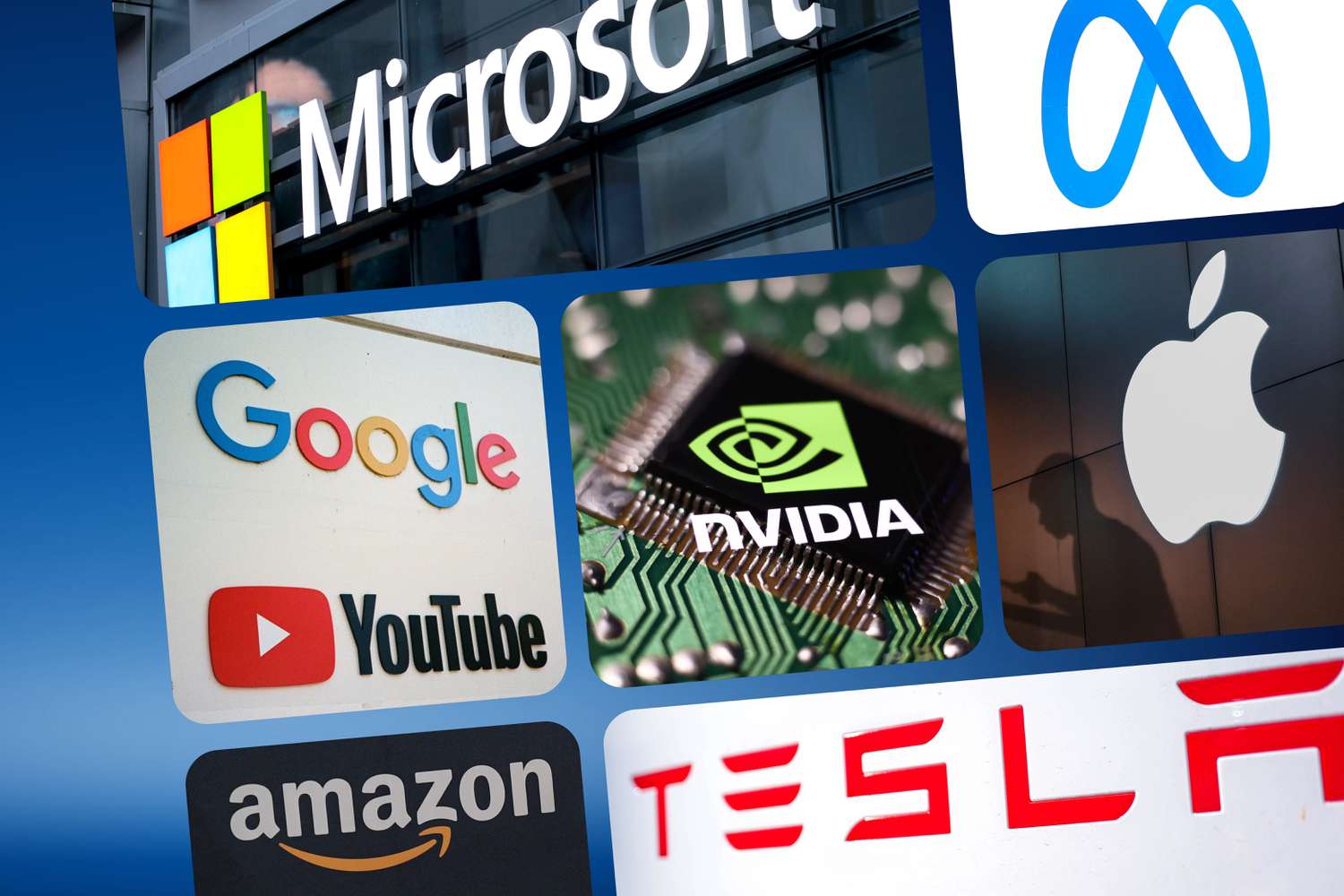
The Magnificent Seven Stocks Are Roaring Again. Can They Keep Climbing?
Last year's Magnificent 7 tech leaders are rolling again.
The AI Stock Rally Stumbled This Week. Here Are 3 Reasons Analysts Say to Stay the Course
Big tech stocks slid throughout most of the week amid a risk-off pivot, but some analysts say there are several structural reasons to remain bullish on tech giants.

Big Tech Earnings Coming Up: Spotlight on Mag 7 ETFs
MAGS, FNGS and TOPT ETFs are in focus as Microsoft, Meta, Apple and Amazon prepare to report key Q2 earnings this week.
MAGS: Still Magnificent, Despite Maturing Growth & Premium Valuations
MAGS has indeed recovered by the rich double-digits after the recent April 2025 meltdown, thanks to the holdings' robust long-term prospects. Particularly, all of the ETF's holdings currently hold the top 6 positions of the most valuable companies in the world, aside from TSLA currently at 11th position. Despite the near-term tariff/ legal risks, most of the Magnificent 7 stocks remain the clear market leaders in their respective end markets, aided by the ongoing AI boom.
4 ETFs That Could Soar as the Fed Cuts Rates This Year
The Federal Reserve suggested that it will cut interest rates twice this year for a total reduction of 0.50%. These rate cuts make it more affordable for consumers and companies to borrow money and can boost consumerism. Those catalysts are huge, and it explains why stock market participants pay so much attention to the Fed’s meetings. It seems like rate cuts are a certainty in the second half of 2025, and if you want outsized returns when that happens, you may want to give these four ETFs a closer look. Key Points The Federal Reserve plans to cut rates by 0.5% by the end of the year. These growth ETFs should outperform the market when the Fed finally makes its move. Are you ahead, or behind on retirement? SmartAsset’s free tool can match you with a financial advisor in minutes to help you answer that today. Each advisor has been carefully vetted, and must act in your best interests. Don’t waste another minute; get started by clicking here.(Sponsor) Roundhill Magnificent Seven ETF (MAGS) The Roundhill Magnificent Seven ETF (BATS:MAGS) only contains seven stocks. Its full focus on the Magnificent Seven stocks has resulted in outperformance since its inception. This ETF is for the investors who believe that the winners keep on winning, and with artificial intelligence still in its early innings, those winners may indeed keep on winning. MAGS has a 0.29% expense ratio and $2.3 billion in total assets. The fund equally distributes its assets across all of the Magnificent Seven stocks and rebalances its portfolio at the end of each quarter. Investors who believe big tech companies will continue to grow and that artificial intelligence is a valuable long-term tailwind may want to monitor this ETF. iShares Semiconductor ETF (SOXX) If you believe in artificial intelligence as an investment but want more diversification than MAGS, the iShares Semiconductor ETF (NASDAQ:SOXX) should be on your watch list. This fund has 31 equity holdings and pours 58% of its capital into its top 10 holdings. Advanced Micro Devices (NASDAQ:AMD), Nvidia (NASDAQ:NVDA), and Broadcom (NASDAQ:AVGO) are the top three positions, and they make up more than 22% of the fund’s total assets. Advanced Micro Devices is the worst performer of these three stocks, with its 175% return over the past five years. With Advanced Micro Devices the “slowest” of the top three picks, it’s no wonder SOXX has an annualized return of 23.3% over the past decade. Vanguard Growth Index Fund ETF (VUG) The Vanguard Growth Index Fund (NYSEARCA:VUG) offers more diversification than the other two funds while still giving you the potential to beat the market. VUG has historically outperformed with its annualized 15.7% r return over the past decade. The fund’s 0.04% expense ratio is a nice cherry on top, which means you’re keeping almost all of your gains. The tech-heavy fund is filled with Magnificent Seven stocks in its top 10 holdings, and half of the fund’s total assets are in tech. That’s still the most diversification we have seen at this stage, with some sectors like consumer cyclical and communication services individually making up more than 10% of the fund’s total assets. Invesco S&P 500 Top 50 ETF (XLG) The Invesco S&P 500 Top 50 ETF (NYSEARCA:XLG) is suitable for investors who believe that less is more. When you invest in the S&P 500, you’re getting a lot of deadweight companies that don’t do much for the index. While these companies typically make up a low percentage of the index, all of those small companies add up and translate into a lot of missed opportunities. XLG eliminates most of those companies by only holding the 50 largest companies that trade on the S&P 500. This investing criteria has been a winning strategy in the long run based on the fund’s annualized 15.1% return over the past decade. It also comes with a 0.80% yield and a 0.20% expense ratio.The post 4 ETFs That Could Soar as the Fed Cuts Rates This Year appeared first on 24/7 Wall St..

4 ETFs That Could Soar as the Fed Cuts Rates This Year
The Federal Reserve has been slow to make any rate cuts this year but forecasted two rate cuts by the end of the year.

Tech Tactically Trimmed: Why I'm Holding MAGS But With Caution
I remain bullish on big tech long-term, but current Magnificent 7 valuations and macro headwinds warrant caution and selective exposure. MAGS offers a unique hybrid structure balancing growth and risk, but its performance can be replicated with a DIY approach, albeit with more hassle. Valuations are stretched for some Magnificent 7 names, but Microsoft, Google, Apple, and Amazon still offer reasonable upside potential.

Mag 7 ETFs Surge: Will the Rally Keep Rolling?
MAGS surged 10% in May as the Mag 7 roared back, powering 62% of the S&P 500 gains in their best month in nearly two years.




