







THD: The Shining Star Of The ASEAN ETF Pack Faces A Tricky Outlook
The iShares MSCI Thailand ETF which covers 82 Thai stocks has delivered nearly 38% total returns over the past year, outperforming its other ASEAN peers in a big way. THD's heightened exposure to Delta Electronics, an AI hardware play, has worked well, but it also makes it vulnerable to some profit booking, more so due to steep valuations. Thailand's macro outlook is weakening, with GDP growth expected to dip below 2% for the first time in 3 years, while the prospects of the THB don't look great either.
Thai Central Bank Stays on Hold as It Gauges Risks
The Bank of Thailand kept interest rates on hold while it reassesses the economic impact of the war in the Middle East as the U.S. and Iran work on a lasting peace deal.
THD: Thailand Stocks Defy Bearish News In Early 2026, But Too Early To Buy The Dip
iShares MSCI Thailand ETF offers broad exposure to Thailand's stock market, but has a history of poor performance. Despite ongoing political volatility, THD's valuation appears attractive for contrarian investors, with recent market dips becoming shallower. Uncertainty around key economic policies is receding, with clearer paths emerging for initiatives like the digital wallet and visa reforms.

THD: Some Useful Qualities, But Not Very Compelling Right Now
The iShares MSCI Thailand ETF offers broad exposure to Thai equities, including small-caps, and is not overly exposed to any one sector. THD's largest holding, Delta Electronics (DLEGF), which accounts for 15% of the portfolio, could benefit from the ongoing spurt in AI computing workloads, but its valuations are extremely concerning. Thailand's macroeconomic outlook is weak, with sluggish GDP and consumer spending, while its long-term earnings growth profile is less attractive than other Asian EMs.

THD: This Thailand ETF Won't Make You Smile
THD has underperformed the other Asian ETFs, with limited diversification, due to heavy concentration in a few stocks. The Thai baht's strength provided some backwind for THD, but this may reverse in the near future. Thailand's economy faces headwinds from declining tourism, especially from China, weak private consumption, and negative inflation.


THD: Dissecting The Big Thailand Rally
Not much has actually changed for the long-term Thailand investment case. Recent drivers have been short-term oriented and are likely to fizzle out eventually. I won't be chasing the recent Thai rally.
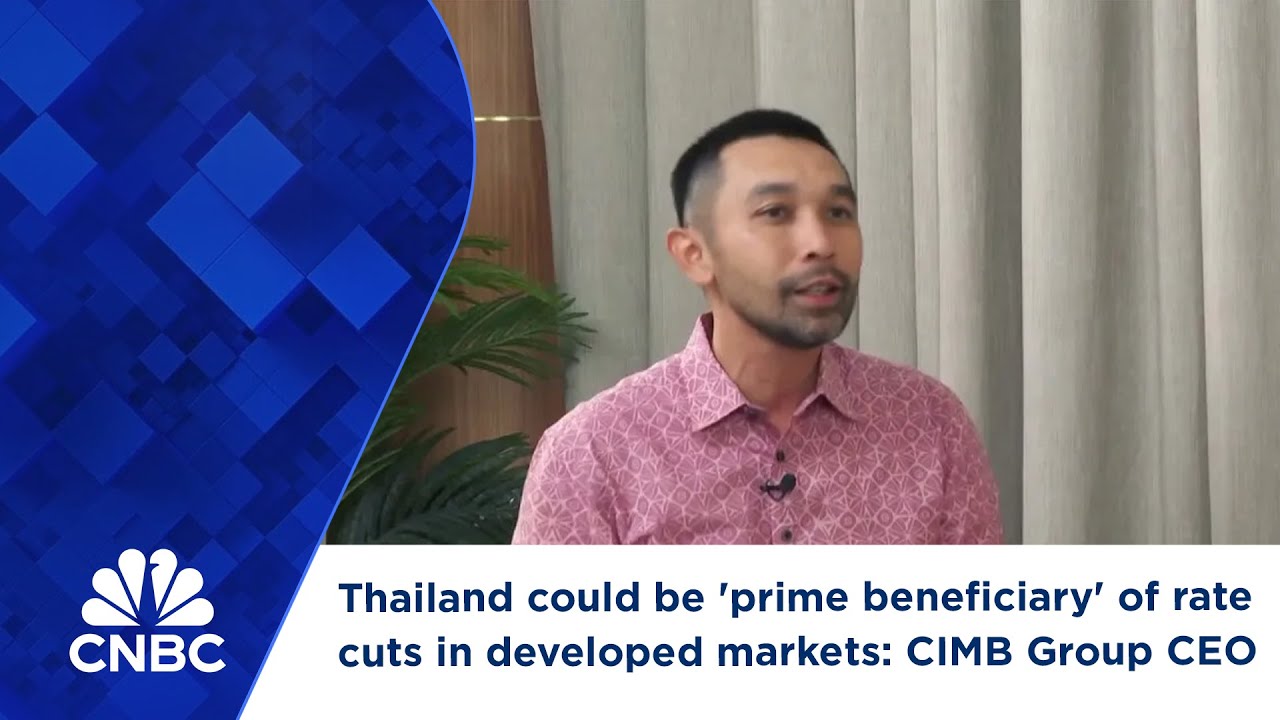
Thailand could be 'prime beneficiary' of rate cuts in developed markets: CIMB Group CEO
Novan Amirudin, CIMB's Group CEO, talks about the banking environment across Southeast Asia, and why he's positive about Thailand's position relative to global & developed markets.
THD: Macro Improvements Point To Full Recovery In 2025
Thailand's economy should fully bounce back by late 2024 or early 2025, but growth still lags behind regional peers. The World Bank projects Thailand's economy to grow by 2.4% in 2024 and 2.8% in 2025, slower than other regional markets. Thailand's tourism industry is showing signs of recovery, with the potential for tourist arrivals to reach pre-pandemic levels in 2025.

THD: Thailand Stocks Continue To Weaken, Look For A Buying Opportunity
Thailand stock market underperforms due to weak tourism, exports, and political instability, leading to a significant decline. The decline has seen some cheapening up of valuations, particularly compared to some of its Southeast Asian neighbors. Government measures coming up soon include cash handouts, relaxed visa rules, and specific measures to boost stocks.

THD: Baht Suffers From Governance Issues
Thailand's political situation is pretty unstable, and markets are reacting to a corollary of that, which is a scramble to get political rate policy done at the central bank. The baht is down, and market reforms after some accounting incidents have led to a difficult 2023 and also the beginning of 2024. The market is also quite richly valued, led by the businesses that might have been interesting in a weak baht environment.




