



Uber Technologies, Inc. (UBER)















Uber & Ace Hardware Collaborate on Delivery Business: Upside in Store?
UBER expands into home improvement as Ace Hardware's 3,700 stores join Uber Eats, pushing its retail delivery ambitions beyond food.
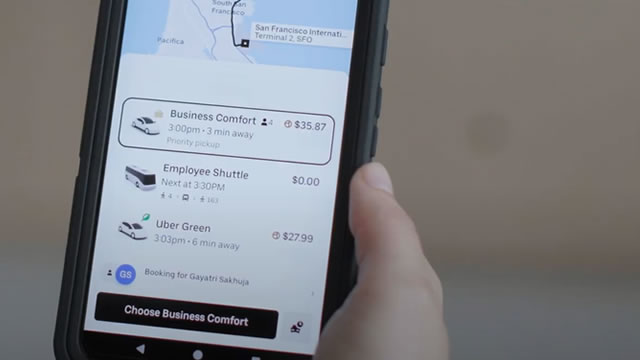
Uber Is Becoming A Demand Layer For Autonomous Vehicles
I reiterate Uber Technologies (UBER) as a Strong Buy, driven by robust growth, capital discipline, and an advantaged position in the autonomous vehicle ecosystem. UBER's core mobility and delivery businesses continue to compound, with Q4 gross bookings up 20% and 26% year-over-year, respectively, and strong adjusted EBITDA performance. The company's AV strategy focuses on owning the marketplace, routing, and customer relationships, benefiting from industry advances without heavy capital risk.

Uber: Why I'm Betting Big
I am increasing my stake in Uber Technologies, Inc., viewing the recent pullback as a compelling entry on quantitative and fundamental grounds. UBER trades at 1.71 standard deviations below its 252-day rolling mean and below key SMAs, signaling potential undervaluation and a possible reversal. Operating leverage, stabilizing SG&A, and segmental synergies are driving ROE and ROIC higher, with my 2026 price target set at $99.88 (39% upside).
Wall Street Sees 43% Upside in Uber (UBER) Despite Recent Growth-Stock Selloff
Uber Technologies (NYSE:UBER | UBER Price Prediction) currently trades at $72.38, while the Wall Street consensus price target sits at $103.58.

Uber Bears Are Missing the Story and Our $123.73 Price Target Shows Why
Uber Technologies (NYSE:UBER | UBER Price Prediction) trades at $73.23 as of writing, sitting 29% below its 52-week high of $101.99 and down 11.6% year-to-date.

Uber is the latest to be won over by Amazon's AI chips
On Tuesday, Amazon announced that Uber was expanding its contract for AWS cloud services to run more of its ride-sharing features on Amazon's chips. Uber will particularly expand its use of AWS's Graviton (a low-power, ARM-based server CPU) and start a new trial testing Trainium3, AWS's Nvidia competitor AI chip.

Here is What to Know Beyond Why Uber Technologies, Inc. (UBER) is a Trending Stock
Uber (UBER) has received quite a bit of attention from Zacks.com users lately. Therefore, it is wise to be aware of the facts that can impact the stock's prospects.

Uber Inks Deal to Acquire Blacklane: Is it a Growth Catalyst?
UBER's planned Blacklane buy aims to scale chauffeur-driven Uber Elite and boost premium travel reach -- pending approvals, closing by end-2026.

Uber and Lyft Offer Gas Price Relief, but Drivers Say It's Not Enough
As fuel costs go up, making a living as a gig driver is harder than ever.

The Zacks Analyst Blog Uber, WeRide and Amazon's
Uber launches fully driverless robotaxis in Dubai with WeRide, marking a major AV milestone as it scales partnerships and real-world deployments globally.

Dubai Robotaxi Push by Uber & WeRide: AV Growth Story Heating Up?
UBER expands its AV push as fully driverless robotaxis launch in Dubai with WeRide, marking a key step in scaling revenue-generating autonomous mobility.

The Zacks Analyst Blog Exxon, The Coca-Cola and Uber
ExxonMobil leads analyst picks as production growth and strong earnings shine, while Coca-Cola and Uber navigate mixed demand and growth challenges.




