




USD/JPY

USD/JPY Forms a Major Head & Shoulders Pattern as Oil Crumbles – FX Analysis
USD/JPY was once again the main target for US Dollar bulls amid the ongoing major US-Iran War, which began on February 27 (with a positive twist in the past week and a half).

USD/JPY slides as Iran reopens Hormuz, WTI plunges and USD weakens
USD/JPY slides as Iran reopens Hormuz, WTI plunges and USD weakens

USD/JPY forms a major Head & Shoulders pattern as Oil crumbles – FX Analysis
USD/JPY Technical Analysis: The Japanese Yen enters corrective phase as the US and Iran announce the reopening of the Strait of Hormuz, easing the immense pressure on Asia's energy imports. With the Bank of Japan's rate hike expectations fading and a bearish Head and Shoulders pattern taking shape, traders weigh an end to the US Dollar's recent dominance.

USD/JPY falls as Hormuz reopening, risk mood hit US Dollar
USD/JPY falls as Hormuz reopening, risk mood hit US Dollar
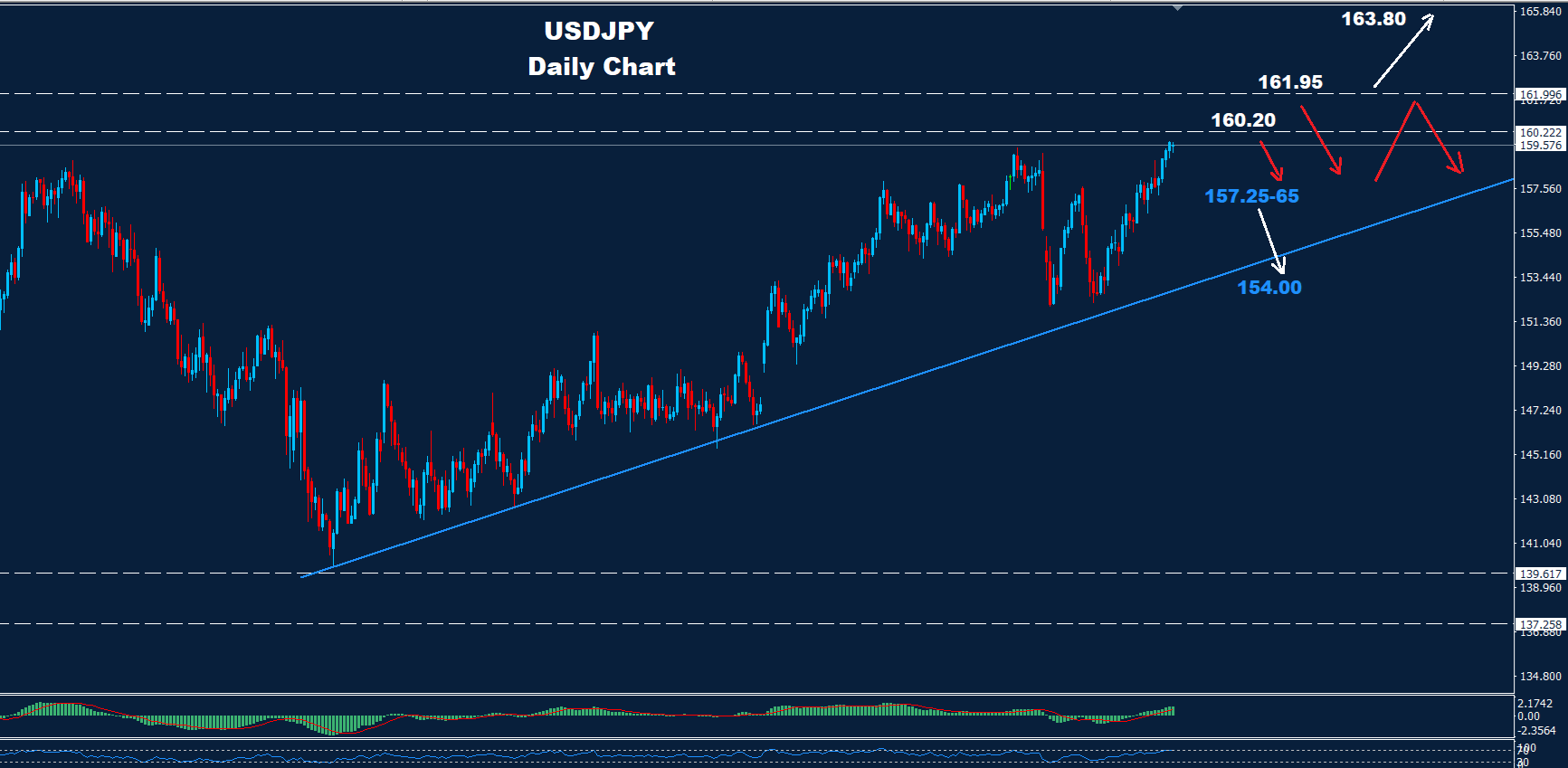
USD/JPY –17.04.2026
The pair managed again to hit another correction while still facing the support zone of 157.25-65, which could hold prices inside this trading zone toward resistances 160.20 or 161.95. Above 161.95 the market could enter a new uptrend wave with first target toward 163.80.

USD/JPY in Positive Territory: Yen Erases All Weekly Gains
USD/JPY rose to 159.40 on Friday, with the Japanese yen surrendering all the gains accumulated since the beginning of this week. Pressure intensified following comments from Bank of Japan Governor Kazuo Ueda, who failed to provide clear guidance on rates ahead of the next meeting.

USD/JPY Builds Positioning Ahead of Signals from the Bank of Japan
USD/JPY dynamics continue to be driven by the persistent yield gap between US and Japanese government bonds. With the Federal Reserve maintaining a relatively hawkish stance and keeping rates elevated as of April 2026, the Bank of Japan remains extremely cautious in its path towards policy normalisation.

USD/JPY Price Forecast: Climbs to mid-159.00s; remains confined in a familiar range
USD/JPY Price Forecast: Climbs to mid-159.00s; remains confined in a familiar range

USD/JPY Upside Risks Fade Near 159.60, Bulls Face Key Test
Looking at the 4-hour chart, the pair settled above the 158.80 level and the 200 simple moving average (green, 4-hour). There was a clear move above the 50% Fib retracement level of the downward move from the 159.86 swing high to the 158.26 low.

USD/JPY Price Forecast: Reclaims 159.00 but RSI divergence caps upside
USD/JPY Price Forecast: Reclaims 159.00 but RSI divergence caps upside


Japanese Yen Forecast: USD/JPY Consolidation Masks Rising Intervention Risks
With headlines out of the Middle East seemingly trending in the right direction (for today at least!), traders are refocusing on more traditional market drivers like economic data and policy decisions.




