





Zcash

Zcash's rally runs into a test as traders cut leveraged bets
ZEC has fallen sharply after a steep two-month rise. One venue's open interest contracted faster than the token's price, suggesting positions were closed as the market turned.

Grayscale Files With SEC for Zcash High-Yield ETF Application
The proposed fund would seek income by selling call options tied to a Zcash exchange-traded product.
Zcash Leads Crypto Market With $28.73 Million in Liquidations
Zcash liquidations exceeded those for Ether and Bitcoin during the same period as ZEC fell nearly 10% over 24 hours to 1,404 USDT.

Zcash Falls 10.7% in 24 Hours as Price Drops to $1,356
ZEC was trading near $1,389 after briefly reaching $1,356. The token had nearly doubled in September before the sharp pullback.

ZEC Whale Adds 4,200 Tokens as Holdings Reach About $31.7 Million
The wallet has received about 41,700 ZEC and sent out roughly 18,700, leaving a net balance of about 23,000 tokens.
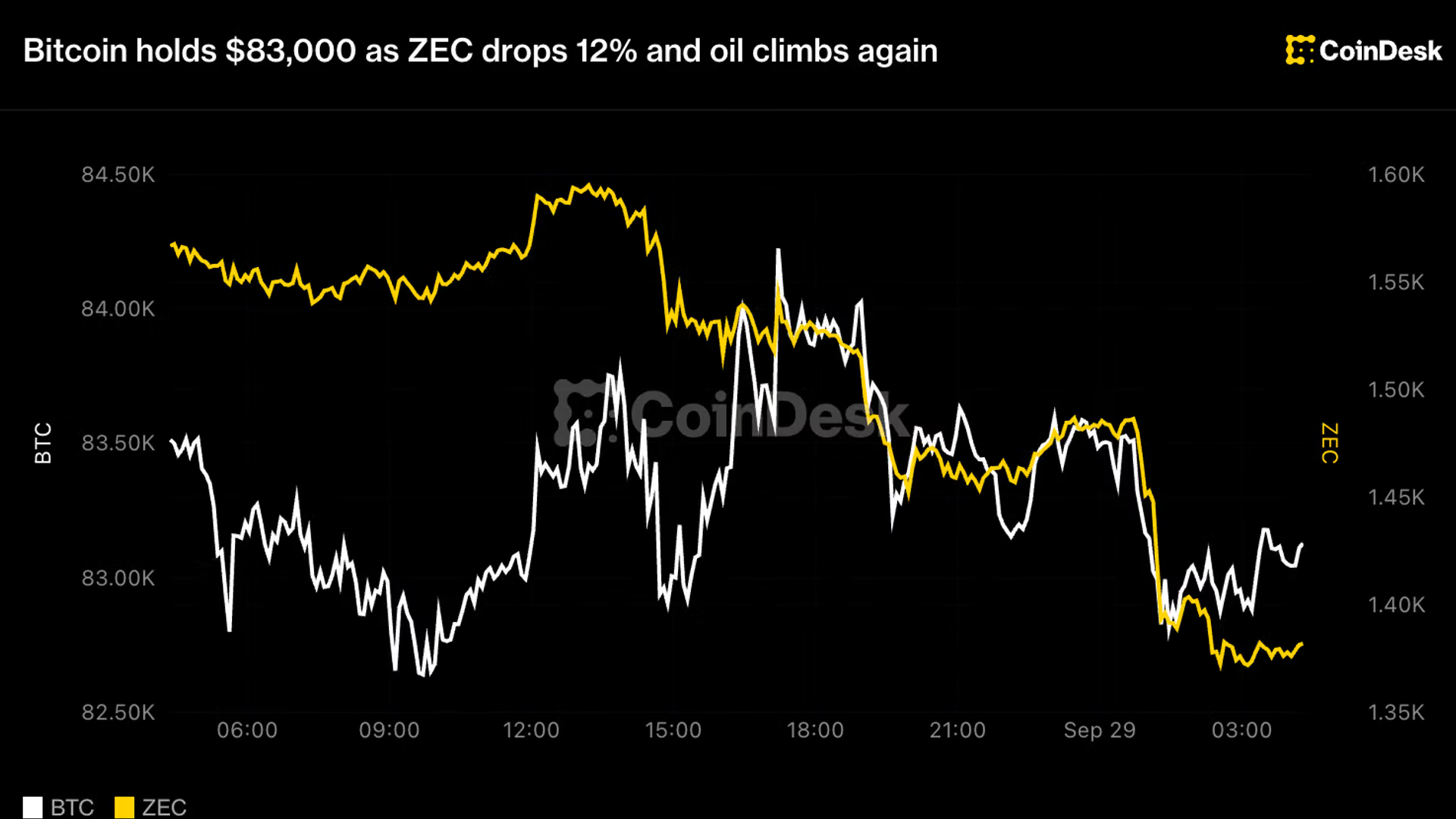
Bitcoin holds $83,000 as ZEC drops 12% and oil climbs again
Global stocks fell to a one-week low as Brent rose for a second day and traders added to bets on more Federal Reserve rate hikes ahead of Wednesday's PCE inflation data.
Zcash Whale-Linked Addresses Receive 8,605 ZEC in Fresh Transfers
Six associated addresses now hold 65,158 ZEC worth about $91.13 million after receiving funds through three crypto exchanges.

Whale Withdraws 8,100 ZEC as Linked Holdings Reach $55.7 Million
Six linked addresses now hold 34,510.73 ZEC after withdrawals from Binance and OKX, with an estimated unrealized gain of $4.83 million.

Wallets Add ZEC as Holdings Reach $91.1M
Six associated addresses now hold 65,158 ZEC after receiving about 8,605 tokens since Sept. 28, with the position valued at roughly $91.1 million.
Zcash Falls 12% as $20 Million in Long Positions Near Liquidation
ZEC fell to $1,379 before recovering to $1,388.40, while two large long positions faced estimated liquidation levels between $1,357.59 and $1,359.45.

Zcash Falls 6.05% in One Hour to $1,390 as Long Liquidations Hit $10.08M
Zcash was down 11.98% over 24 hours, while short liquidations totaled $30,000 across three major exchanges.

Zcash Liquidations Hit $10.11 Million, Led by Long Positions
Long positions accounted for $10.08 million of liquidations as Zcash fell 5.53% to $1,396 over the hour ending at 9:23 p.m. ET.




