





Zcash

Zcash Crash Just Wiped Billions From the Privacy Coin's Market Cap—Can ZEC Recover?
The price of Zcash cratered following the disclosure of a serious vulnerability for the privacy coin. Can ZEC make a comeback anytime soon?

Cameron Winklevoss defends Zcash as bug sparks market panic
Cameron Winklevoss has defended Zcash after the privacy coin plunged as much as 45% and Cypherpunk Technologies shares dropped 37% following disclosure of a critical bug that could have allowed unlimited counterfeit ZEC to be created.

Zcash Plunges 30% After Critical Orchard Bug Raises Counterfeiting Risk
Zcash (ZEC) plunged roughly 30% in 24 hours to around $400 after its core development steward, Electric Coin Co.'s nonprofit arm Shielded Labs, disclosed a critical bug that could have enabled 'unlimited counterfeiting' inside its Orchard privacy pool. The shock rippled across broader risk markets, with South Korean equities tumbling more than 6% on semiconductor weakness and foreign selling, while Solana (SOL) slid toward a 52-week low amid a wave of crypto liquidations.
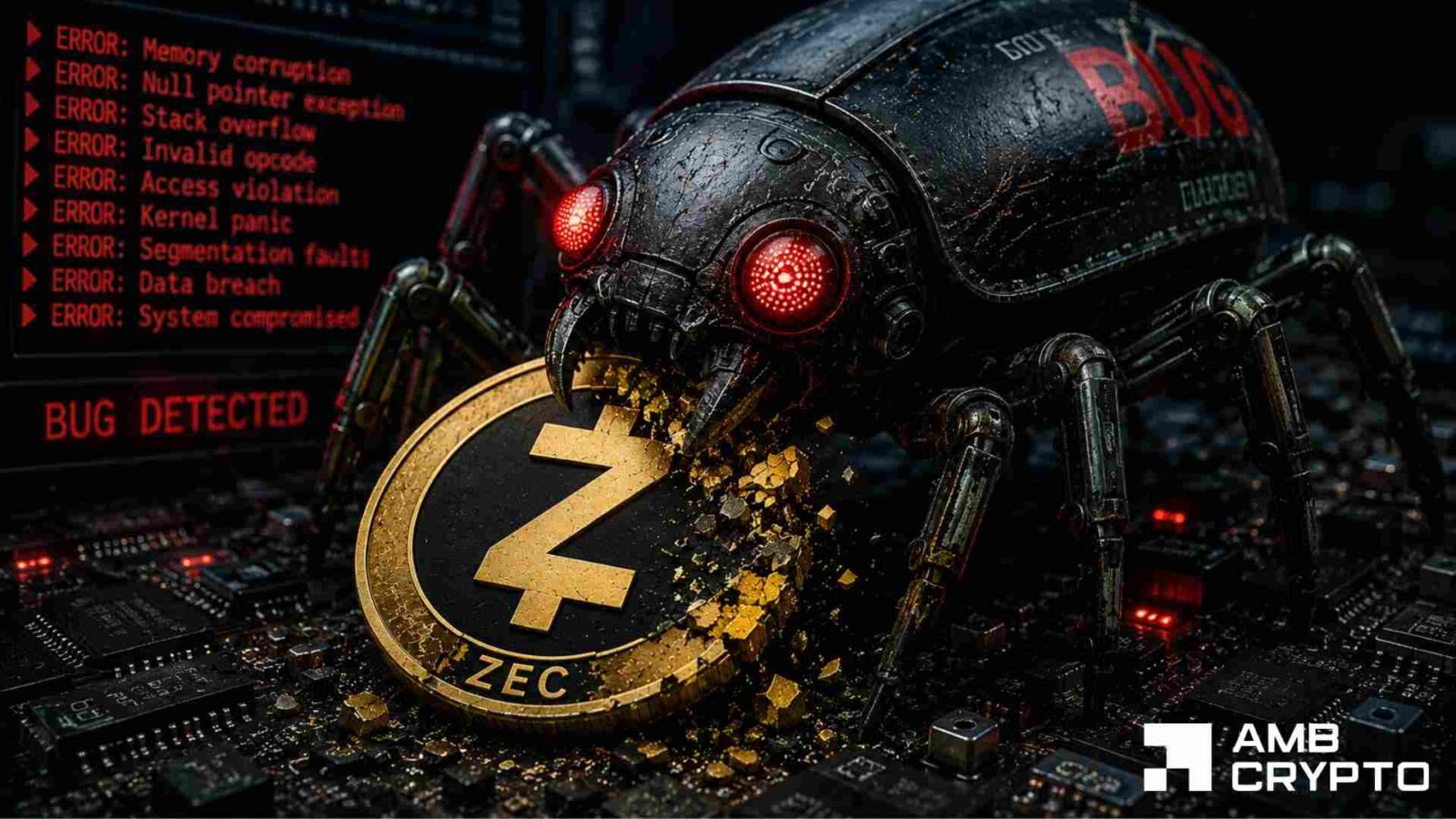
‘Not a cause of alarm' – Gemini's co-founder defends Zcash bug as Hayes dumps ZEC
The team couldn't verify whether the largest pool of shielded ZEC (Orchard) was exploited or not.

Winklevoss-Backed Zcash Treasury Plunges Nearly 40% on ZEC Privacy Bug Concerns
Cypherpunk Technologies shares tumbled to their lowest point since March as jitters tied to a Zcash bug knocked the Winklevoss-backed firm.

Zcash says Orchard bug could have enabled undetectable counterfeit ZEC
The flaw reportedly allowed unlimited counterfeit ZEC generation inside Orchard, though developers say there is no evidence it was exploited.

Crypto : ZEC suffers a massive crash and loses 60%
ZEC dropped sharply after the revelation of a critical vulnerability in Zcash, capable of creating counterfeit tokens in its private Orchard pool. The crypto market did not just react to a bug.

Zcash Plans Upgrade Following Orchard Counterfeit Bug
Zcash developers review turnstile accounting and a second Orchard pool following a patched counterfeiting vulnerability.

Zcash Crash: ZEC Coin Falls 40% After AI Bug Scare — Here Are the Next Supports
Zcash crashes over 40% as AI-linked bug fears, whale shorts, liquidations, and weak crypto sentiment hit $ZEC.

AI-assisted Zcash flaw exposes the supply integrity gap an emergency fork could not fully close
The exploit that nearly broke Zcash originated inside the zero-knowledge proof circuit that powers Orchard, Zcash's newest shielded pool, and the cryptographic core of its private transaction system. Taylor Hornby, a security researcher at Shielded Labs, found it on May 29 during a targeted protocol security review.

Zcash: Discovery of a Serious Bug Triggers a Drop of Over 42%
Zcash dropped 42.2% in just 24 hours after a critical bug in its Orchard Privacy Pool was disclosed, having gone undetected for four years. The vulnerability allowed unlimited and undetectable minting of fake ZEC tokens; it was discovered on May 29 with the help of Anthropic's Opus 4.8 AI model.
Will Zcash (ZEC) price crash below $100 dollars in 2026?
As Zcash (ZEC) price plunged over 40% over the past two days, the fear of a potential crash below $100 remained palpable.




