





ZRO

LayerZero price reclaims $1 – But ZRO's 14% rally faces THIS test
ZRO's 14% rally gained derivatives support, while an overbought RSI introduced fresh short-term risks.

LayerZero Unlock on August 20: How to Calculate ZRO's Monthly Dilution
On August 20, 2026 the next monthly tranche of LayerZero's ZRO token comes off its lock-up, and not for the first time, because no single deadline ends here at once. How to work out the monthly dilution yourself from allocation, total supply and schedule, why the data platforms report different numbers, and why the amount released is rarely the amount sold.

Top Token Unlocks This Week: ZK, KAITO, ZRO, MET and Other Tokens Face Fresh Supply
The week of August 17–23 brings several token unlocks across the crypto market, with ZKsync (ZK), Kaito (KAITO), LayerZero (ZRO), Meteora (MET), SOON and MBG among the tokens releasing fresh supply. The releases range from smaller distributions to larger events that could increase short-term market volatility. Token unlocks do not automatically mean prices will fall.

Crypto market's weekly winners and losers – ZRO, BSV, BEAT, CC
This week, bears took the lead while bulls managed only minor gains.
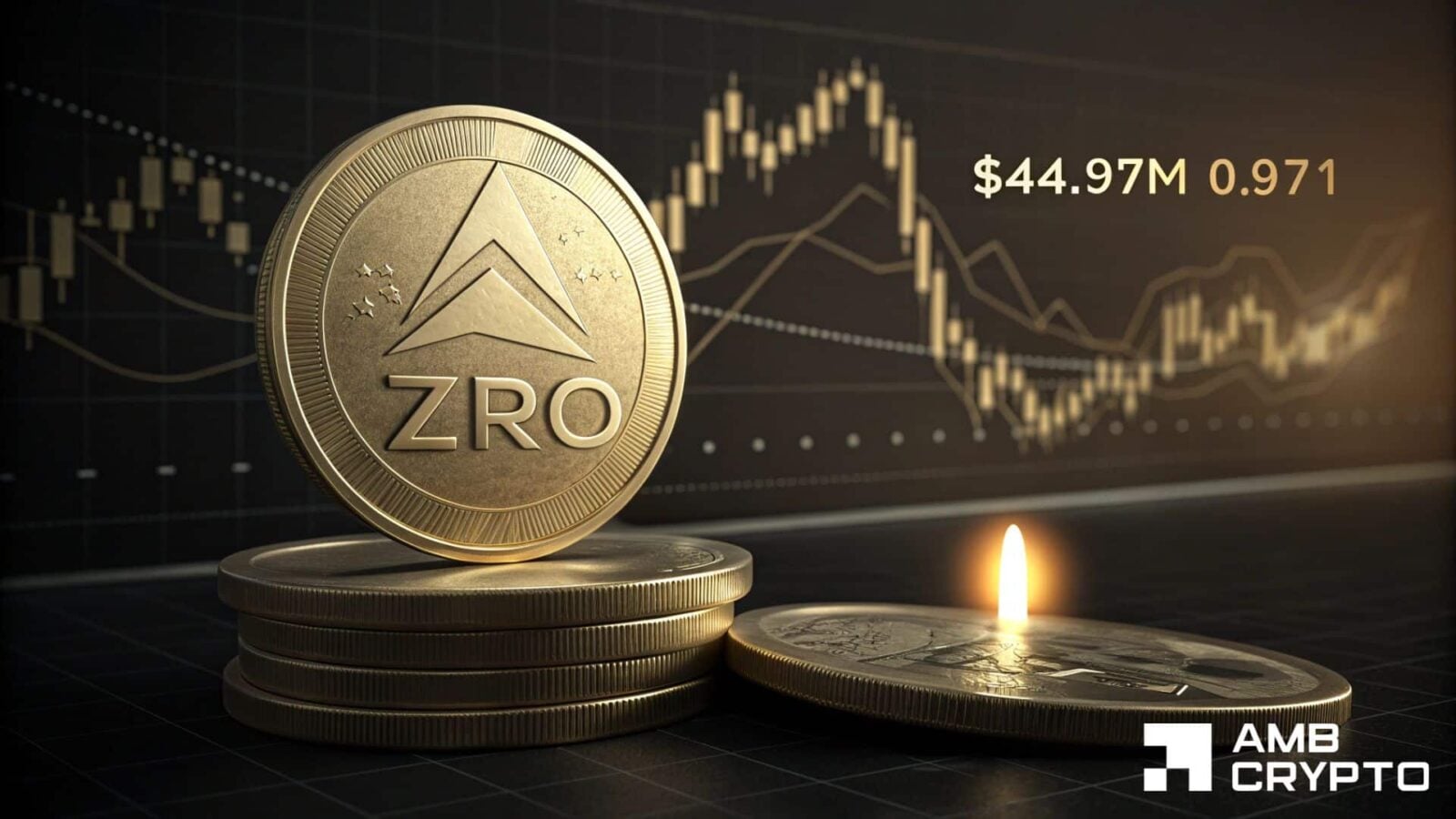
Examining LayerZero's breakout odds as new short-term price target emerges for ZRO
LayerZero rebounded from its pennant support as trading volume doubled to $44.97 million.

LayerZero's OFT standard accounts for 87% of cross-chain transfer volume
LayerZero's dominance in cross-chain transfers highlights the growing importance of interoperability, but faces challenges from emerging competitors. LayerZero's OFT standard accounts for 87% of cross-chain transfer volume.

LayerZero surpasses the world's largest individual remittance corridor in transaction volume
LayerZero's rise in transaction volume signals a shift in global remittance dynamics, challenging traditional financial models and infrastructures. LayerZero surpasses the world's largest individual remittance corridor in transaction volume.

LayerZero down 11% as long liquidations spike – Will ZRO drop further?
Long liquidations, leveraged short orders and upcoming token unlocks amplified ZRO's price decline.
LayerZero's ZRO leads $20M token unlock this week
LayerZero unlocks 25.71 million ZRO tokens on July 20, 2026, worth ~$20M. Here's who gets the tokens and what it means for ZRO's price.

LayerZero executor wallets exploited for $2.4M across multiple chains
The exploitation highlights the critical need for robust security configurations in cross-chain systems to prevent systemic vulnerabilities. LayerZero executor wallets exploited for $2.4M across multiple chains.
LayerZero oracle compromise exposes $292M vulnerability in cross-chain protocols
The LayerZero oracle compromise highlights the critical need for robust, multi-layered security in cross-chain protocols to prevent catastrophic losses. LayerZero oracle compromise exposes $292M vulnerability in cross-chain protocols.

Can LayerZero defend $0.80 after 2mln ZRO Binance transfer?
ZRO faced renewed pressure after a $1.93 million whale transfer and growing bearish positioning.




